
Technical Library: Conservation Guides for Historic and Listed Buildings
A free reference library from the Building Restoration Index. Thirteen guides on how the fabric of historic buildings fails, how to repair it without losing what matters, what needs consent, and how to commission the work, each closing into the Index specialists who do it.
In summary
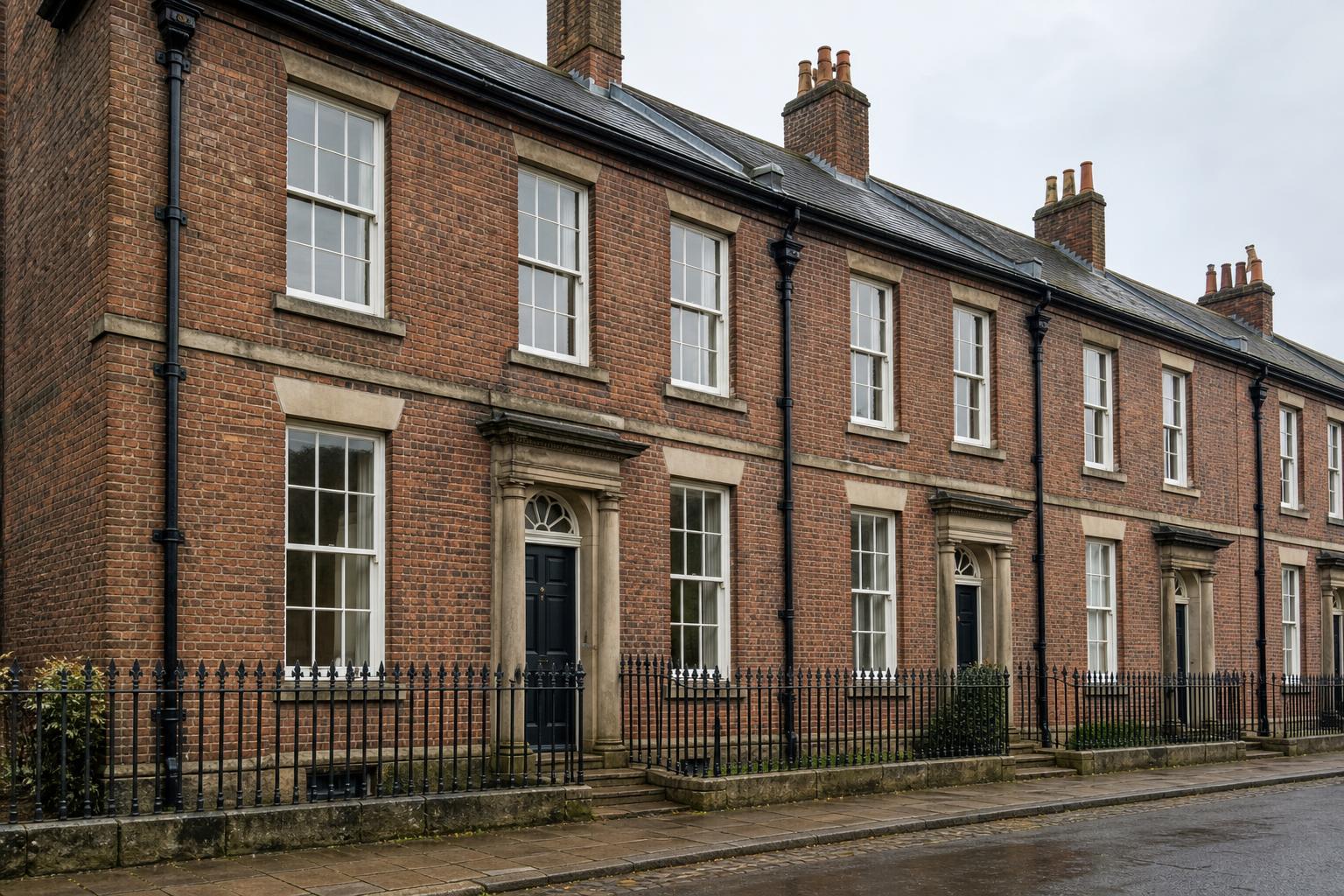
Most avoidable damage to historic buildings comes from a small number of repeated decisions: cement where lime belonged, replacement where repair was possible, treatment before diagnosis, and work started before anyone checked whether it needed consent. The guides in this library are written to be read before those decisions are made. They cover the elements that fail most often, the professional questions that decide whether a project goes well, and the trades that carry it out. Each one ends with the relevant categories of the Building Restoration Index, so that finding the right specialist is the last step rather than the first.
On this page
Who this library is for
The guides are written for anyone about to make a decision on an old building: owners of listed and period property, architects and surveyors preparing a specification, conservation officers checking a proposal, and contractors pricing work they want to get right. They assume no prior conservation knowledge, but they do not simplify the technical content. Where a subject turns on a figure, a standard or a named technique, the guide gives it.
Three kinds of question are covered. Fabric guides explain how a particular element, from ironwork to stone, is built, how it fails and how it is repaired. Professional guides cover consent, surveying and specification, the decisions that shape a project before a trade is appointed. All of them end with the categories of the Building Restoration Index where the relevant specialists are listed.
The guides, by subject
Read in any order. Each guide stands alone, and the cross-references between them are marked where one subject depends on another.
Metalwork, rainwater and finishes
| Guide | What it answers | Index categories |
|---|---|---|
| Historic ironwork: railings, gates and architectural castings | Telling wrought, cast and mild steel apart, repairing rather than replacing, and consent for boundary ironwork | Metalwork · Guttering & Pipework |
| Rainwater disposal on historic buildings | Why gutters and downpipes cause most damp in old buildings, how cast iron systems fail, and when to repair or replace | Guttering & Pipework · Drainage |
| Paint systems for exterior historic metalwork | Preparation, linseed oil and modern coatings, paint removal without damage, historic colours and maintenance cycles | Paints & Finishes · Paint Removal |
Building fabric
| Guide | What it answers | Index categories |
|---|---|---|
| Historic windows and doors | Sash and casement repair, draughtproofing, secondary glazing and thermal upgrade without losing the joinery | Windows and Doors · Fine Joinery |
| Lime plaster and decorative plasterwork | Lime on lath and solid walls, cornices and enrichment, and why gypsum and cement fail on old buildings | Plasterwork · Lime Mortars Plaster |
| Historic timber frames | How frames work and fail, reading distortion and decay, splicing and scarfing, and when an engineer is needed | Timber Frame Builders · Structural Engineers |
| Historic brickwork: repointing, repair and cleaning | Lime versus cement, joint profiles, matching bricks, gauged work and cleaning that does not damage the face | Brickwork · Brick Suppliers |
| Historic roofs: coverings, leadwork and repair | Slate, tile, stone slate, thatch and lead: how they fail, repair before renewal, insulation and consent | Roofing Contractors · Leadwork |
| Damp in historic buildings: diagnosis before treatment | The real causes of damp, why rising damp is over-diagnosed, what meters measure, and remediation in the right order | Damp and Timber Decay · Surveyors |
| Historic stonework: decay, repair and cleaning | How stone decays, indenting and piecing in, mortar repairs, lime pointing, consolidation and cleaning | Stone and Stonework · Masonry Cleaning |
Consent, surveying and specification
| Guide | What it answers | Index categories |
|---|---|---|
| Listed Building Consent: what needs it, what does not | Repair versus alteration, curtilage, conservation areas, pre-application advice and enforcement across the UK | Heritage Consultants · Planning Consultants |
| Commissioning a condition survey on a historic building | Which survey to commission, how to brief the surveyor, what access to arrange and what a useful report contains | Surveyors · Architects |
| Writing a conservation specification that gets comparable tenders | Schedules, named methods, trial areas, contingency and records, so that three prices mean the same thing | Architects · Project Managers |
How the library and the Index fit together
The Building Restoration Index lists several hundred specialists across around eighty trades, professions and suppliers who work on historic, listed and traditional buildings. A directory answers who. It cannot answer what or whether: whether the plaster needs replacing or repairing, what a competent specification for repointing contains, whether the work needs consent at all. The library answers those questions, so that a visitor arrives at a category page knowing what to ask for.
Each guide links to the category pages that match its subject, and each populated category page links back to the guides that apply to it. Listings are shown alphabetically and nothing in the library recommends one business over another. Inclusion in the Index is free and is not a recommendation; check credentials, insurance and comparable projects directly with any business you shortlist.
Ten principles that run through every guide
- Diagnose before you treat. Most damp, decay and cracking has a physical cause that can be fixed. Find it first. See damp in historic buildings.
- Repair before you replace. Retain the maximum original material; replicate only where loss makes repair impossible. See historic ironwork and windows and doors.
- Lime where lime belonged. Solid walls need permeable mortars, plasters and renders. Cement traps moisture and accelerates decay. See brickwork, plaster and stone.
- Water is the enemy, and it usually arrives from the roof. Failed gutters, downpipes and flashings cause more damage than any other single defect. See rainwater disposal and roofs.
- Identify the material before choosing the method. Wrought iron, cast iron and steel; oak and softwood; sandstone and limestone. Each fails and is repaired differently. See ironwork, timber frames and stonework.
- Record before you disturb. Photograph, label and store. Evidence lost on site cannot be recovered, and replication without evidence is invention.
- Check the consent position early. Like-for-like repair may be maintenance; alteration and replacement usually need Listed Building Consent, and the owner is responsible. See Listed Building Consent.
- Commission the right survey, then brief it properly. A valuation is not a survey, and a survey is only as good as its scope and access. See condition surveys.
- Specify so that tenders are comparable. “Repair as necessary” produces three different prices for three different jobs. See conservation specifications.
- Plan the maintenance before the scaffold comes down. Coatings, gutters and pointing all have intervals. Most failure is deferred maintenance. See paint systems.
About the authors
The library is written and edited by Paul Stenning and Mike Walters, Historic Buildings Advisors at Tuscan Foundry Products, a supplier of cast iron rainwater systems and architectural castings to the conservation sector since 1893. The ironwork, rainwater, paint and specification guides draw on that first-hand work. The fabric guides on windows, plaster, timber, brick, roofs, damp and stone are written from established conservation practice and the published guidance of the national heritage bodies, and are open to contribution from specialists listed in the Index.
The library carries the editorial voice of the Building Restoration Index rather than of any one business. Tuscan Foundry Products is credited as publisher. Where a guide touches on cast iron rainwater goods, the subject is treated on its merits and no product is recommended.
Contribute a guide
Specialists listed in the Index are invited to contribute to the library in their own field: a section, a case note, a correction, or a full guide on a subject not yet covered, such as stained glass, thatch, historic floors or fireplaces. Contributions are credited by name with a link to the contributor’s listing, and are edited to the house standard. To offer a contribution or suggest a subject, write to info@tuscanfoundry.com with the subject line “Technical Library”.
Frequently asked questions
What is the Building Restoration Index Technical Library?
A free set of long-form conservation guides published by the Building Restoration Index on tuscanfoundry.com. Each guide explains how a part of a historic building is built, how it fails, how it should be repaired and what consent it needs, and links to the Index categories where relevant specialists are listed.
Who writes the guides?
Paul Stenning and Mike Walters, Historic Buildings Advisors at Tuscan Foundry Products, write and edit the library. Guides outside their first-hand expertise are written from established conservation practice and national heritage guidance, and are open to named contributions from Index specialists.
Is the advice specific to my building?
No. The guides are general information, not project-specific advice. Old buildings vary widely, and statutory requirements differ across England, Wales, Scotland and Northern Ireland. Use the guides to ask better questions of a suitably qualified professional and of your local planning authority.
Do I need Listed Building Consent for repairs?
Often not for genuine like-for-like repair using matching materials and methods, which may be treated as maintenance. Alteration, replacement and changes of material usually need consent, and the owner is legally responsible. The Listed Building Consent guide sets out the position in detail; confirm it with your local planning authority.
Does the library recommend particular businesses?
No. Index listings are shown alphabetically, inclusion is free, and nothing in the library endorses one business over another. Check credentials, insurance and comparable projects directly with any business you shortlist.
Can I use the guides in a specification or a consent application?
Yes, with attribution. The guides may be quoted or referenced in specifications, heritage statements and correspondence. They are not a substitute for a site-specific specification or professional advice.
How do I find a specialist once I have read a guide?
Every guide ends with a Find a specialist section linking to the Index categories that match its subject. Category pages list businesses alphabetically with a short description, location and website, and can be filtered by county.
Will more guides be added?
Yes. The library is being extended to the remaining Index categories, including stained glass, thatch, historic floors, fireplaces and secondary glazing. Specialists in those fields are invited to contribute.
Library information is provided to help visitors understand historic building repair and to identify potentially relevant specialists. It is general information, not project-specific advice, and inclusion in the Index does not constitute a recommendation, approval or guarantee by Tuscan Foundry Products. Always consult your local planning authority and an appropriately qualified professional before undertaking work to a listed or historic structure.