
A cathedral city on the Severn, Victorian spa villas below the Malvern Hills, Georgian river towns, black-and-white timber framing and red brick country houses give Worcestershire a distinctive and much-loved historic building stock. We explain how to specify cast iron gutters, downpipes and hopper heads that suit these buildings, satisfy the county’s planning authorities and cope with heavy rain and a flood-prone river valley.
Technical Summary
Cast iron is the right rainwater material for most listed and conservation-area buildings in Worcestershire. The county’s historic stock — timber-framed houses, Georgian brick town houses in Worcester, Pershore and Bewdley, Victorian villas in Great Malvern, country houses such as Hanbury Hall and Croome Court, and canal and industrial buildings — was largely fitted with cast iron gutters, downpipes and hopper heads from the eighteenth century onwards. Worcestershire’s councils expect historic rainwater goods to be repaired where possible and replaced like for like in cast iron. Because outlets and downpipes carry heavy loads in a wet, low-lying river valley, sizing and maintenance matter as much as appearance. We supply standard profiles from stock for prompt despatch, and copy cast or radius gutters in around 12–14 weeks. Changing material or profile on a listed building normally needs Listed Building Consent, so confirm the position with your council first.
Contents
- Worcestershire’s Heritage Landscape
- Typical Heritage Buildings and Materials in Worcestershire
- How Cast Iron Came to Worcestershire’s Buildings
- Cast Iron on Listed and Conservation Properties in Worcestershire
- Planning, Consent and Conservation Guidance in Worcestershire
- Cast Iron Profiles and Products Commonly Used in Worcestershire
- Rainfall, Flooding and the Severn Valley
- Common Specification Mistakes on Worcestershire Buildings
- Repair or Replace? Assessing Historic Cast Iron in Worcestershire
- Landmark Buildings in Worcestershire
- Working With Us on Worcestershire Projects
- Frequently Asked Questions
- Conclusion
Worcestershire’s Heritage Landscape
For listed and historic buildings in Worcestershire, the right rainwater system is traditional cast iron, matched to the existing profile, fixed in the original way and sized to cope with the county’s heavy rain and exposed hillsides.
Worcestershire has around 6,500 listed buildings. Worcester alone has more than 1,000, one of the largest concentrations in the country, and 19 conservation areas. Wychavon has over 2,500 listed buildings and 64 conservation areas, Malvern Hills District has around 1,890 listed buildings and 21 conservation areas, and Wyre Forest has close to 1,000 listed buildings and 17 conservation areas.
The county’s landscape is just as significant. The Malvern Hills National Landscape forms its western skyline, the Cotswolds National Landscape reaches into the south-east around Broadway, and the River Severn runs through the middle, past Bewdley, Stourport, Worcester and Upton. Worcester Cathedral, Hanbury Hall, Croome Court and Worcester Guildhall are among the county’s Grade I listed buildings.
We supply traditional cast iron gutters, downpipes, hopper heads and bespoke rainwater systems for projects across Worcestershire, from timber-framed cottages to churches and country houses. We work with architects, surveyors, contractors and owners to specify systems that match what was there and satisfy the conservation officer. From our base in Mid Wales, the county is a short journey away.
Typical Heritage Buildings and Materials in Worcestershire
Worcestershire’s historic buildings are dominated by red brick and timber framing, with local sandstone for churches, Malvern stone in the spa town, and Cotswold limestone in the south-east corner.
Timber framing and the black-and-white tradition
Close-studded and square-panelled timber framing survives across the county, in Worcester’s Friar Street and New Street, in villages such as Ombersley, and in farmhouses and barns throughout the Severn and Teme valleys. Many of these buildings had no gutters originally and were given cast iron gutters in the nineteenth century. Overflowing gutters and splashback are a particular risk here, because they soak sole plates and the lower ends of studs.
Georgian brick towns
Worcester’s Foregate Street and the Tything, Pershore’s Broad Street and Bridge Street, Bewdley’s riverside, Upton-upon-Severn and the canal town of Stourport-on-Severn are rich in Georgian brick. Their eaves are typically finished with ogee or moulded cornices, and the cast iron ogee gutter is the natural partner. Dated hopper heads survive on some of the finest houses.
Victorian spa, industry and the railway
Great Malvern grew as a spa town from the mid-nineteenth century, with villas, hotels and churches built of the rugged local Malvern stone. Droitwich developed brine baths, and Kidderminster’s carpet mills and the canal basins at Stourport show the county’s industrial side. These buildings often have larger roofs, valley gutters and more decorative hopper heads.
Stone: sandstone and limestone
Red sandstone was used for Worcester Cathedral and many parish churches, and Cotswold oolitic limestone appears around Broadway and the Vale of Evesham’s southern edge. Our Cotswolds guide covers the limestone buildings of that area in more detail.
How Cast Iron Came to Worcestershire’s Buildings
Cast iron rainwater goods spread through Worcestershire from the late eighteenth century, carried by the Severn and the canals from the ironworks of Shropshire and the Black Country.
Worcestershire sits beside two of the great centres of the British iron industry. Coalbrookdale and the Severn Gorge lie upstream, and the Black Country foundries lie to the north. The Staffordshire and Worcestershire Canal, opened in the early 1770s, and the Worcester and Birmingham Canal, completed in 1815, made heavy castings cheap to move. Cast iron gutters, pipes and hopper heads replaced lead and timber across the county, and the railway brought standardised Victorian patterns from the 1850s.
That history explains the variety you find on site: early, heavy Georgian castings, Victorian catalogue patterns, and later replacements. A surviving original section is the best guide to what should replace it, and our guide to dating historic hopper heads explains how to read the evidence.
Cast Iron on Listed and Conservation Properties in Worcestershire
Cast iron is the normal specification for listed and conservation-area buildings in Worcestershire because it matches the original material, profile and jointing, and because conservation officers expect like-for-like repair.
Historic England’s guidance is that new sections should match the originals in profile and material. In practice that means identifying the existing gutter profile — half-round, beaded half-round, ogee or moulded ogee — and its size, then matching the downpipe diameter, socket and ear pattern, and the way the gutter is fixed.
On timber-framed buildings, fixings need particular care. Brackets driven into sound oak are acceptable, but fixings into infill panels or decayed timber are not, and downpipes should stand clear of the frame so water cannot track into joints. On Georgian brick fronts, the gutter usually forms part of the cornice, and replacing an ogee with a half-round spoils the elevation.
Conservation officers in Worcestershire typically ask for photographs of the existing rainwater goods, a clear specification and, on more significant buildings, a drawing showing outlet and downpipe positions. Early engagement avoids abortive work and delay.
Planning, Consent and Conservation Guidance in Worcestershire
Listed Building Consent in Worcestershire is decided by the district or city council for the area. Like-for-like repair usually does not need consent; changes to material, profile or appearance usually do.
Do I need Listed Building Consent to replace gutters in Worcestershire?
Replacing cast iron gutters and downpipes with identical cast iron sections, in the same profile, size and position, is normally treated as repair and does not usually need consent. Changing the material, profile, size or colour, or moving a downpipe, is an alteration and normally does. The council makes the decision, so confirm the position for your own building before work starts.
Who is the planning authority for my building in Worcestershire?
Worcester City Council covers the city, with Malvern Hills District Council, Wychavon District Council, Wyre Forest District Council, Bromsgrove District Council and Redditch Borough Council covering the rest of the county. Worcester, Malvern Hills and Wychavon share the South Worcestershire Development Plan. The Government has confirmed plans to replace these councils with two unitary councils for north and south Worcestershire, but the existing councils remain the planning authorities until the new councils take over.
What do conservation officers in Worcestershire expect?
Officers generally expect historic rainwater goods to be retained and repaired, and replaced in matching cast iron where necessary. Several councils, including Wychavon, use Article 4 Directions in conservation areas to bring certain external alterations to unlisted houses under planning control, so check whether one applies to your building.
Can I change the gutter profile on a listed building in Worcestershire?
Only with consent, and usually only where there is evidence that the existing profile is itself a later, inappropriate replacement. If you can show that an original ogee was replaced by a half-round in the twentieth century, reinstating it may be supported. Otherwise, match what is there.
Cast Iron Profiles and Products Commonly Used in Worcestershire
The right profile for a Worcestershire building follows its date and status: half-round and beaded half-round on timber-framed and vernacular buildings, ogee and moulded ogee on Georgian brick fronts, and larger sections and hopper heads on churches, country houses and industrial buildings.
| Building type in Worcestershire | Typical rainwater detail | What we usually supply |
|---|---|---|
| Timber-framed houses and cottages | Half-round on brackets, often added in the 19th century | Half-round and beaded half-round gutters, 65–75 mm downpipes on stand-off ears |
| Georgian town houses (Worcester, Pershore, Bewdley) | Ogee or moulded ogee at the cornice; dated hopper heads | Ogee and moulded ogee gutters, matching hoppers and pipes |
| Malvern villas and spa buildings | Ogee or half-round, decorative hoppers, bays and turrets | Standard profiles, radius gutters, decorative hopper heads |
| Churches and chapels | Parapet gutters, hopper heads, large round or rectangular pipes | Hopper heads, round and rectangular pipes, copy-cast heads |
| Country houses and estate buildings | Parapet and box gutters behind balustrades; large catchments | Hopper heads and larger downpipes sized to the roof area |
| Mills, canal and railway buildings | Large half-round or box sections, long runs | Larger sections, matching fittings, copy casting where needed |
Our standard ranges include cast iron half-round gutters, beaded half-round gutters, ogee gutters and moulded ogee gutters, with matching cast iron hopper heads and round cast iron downpipes. For bays, turrets and curved walls we supply bespoke and radius cast iron gutters, and where a surviving profile is no longer made we arrange copy casting from a sound section.
Standard stock is available for prompt despatch, while bespoke, copy cast and radius gutters typically take around 12–14 weeks. Allow for this in your programme, particularly where scaffolding is booked.
Rainfall, Flooding and the Severn Valley
In Worcestershire, the main risks to historic fabric come from heavy rain overwhelming undersized outlets and downpipes, and from flood-prone ground where discharge cannot drain away.
The Malvern Hills and the western uplands catch more rain than the Vale of Evesham, and summer downpours are becoming more intense. A gutter that coped for a century may now overflow at the outlet or the hopper head. Before replacing like for like, check that outlets, hoppers and downpipes have the capacity the roof needs; our guide to hopper head capacity and downpipe sizing shows how.
Along the Severn, in Worcester, Upton-upon-Severn and Bewdley, high river levels can back up below-ground drains, so water from downpipes has nowhere to go. Keep gullies and shoes clear, make sure discharge points direct water away from walls, and inspect after every flood.
- Clear gutters and hopper heads at least twice a year, more often under trees.
- Check outlets and the lowest downpipe section, where leaves and silt collect first.
- Use stand-off ears so pipes can be painted and inspected all round.
- Plan redecoration every five to eight years on sheltered buildings, more often where exposed.
Many owners choose linseed oil paint, a traditional, breathable finish that we supply and apply. It has limitations as well as advantages, including longer drying times and a need for regular maintenance. The finish required on any listed building is a matter to confirm with the conservation officer.
Common Specification Mistakes on Worcestershire Buildings
The costliest mistakes in Worcestershire come from mismatched profiles, poor fixings into timber frames, undersized outlets and downpipes, and drains that cannot cope in a flood-prone valley.
- Replacing an ogee with a half-round on a Georgian brick front in Worcester, Pershore or Bewdley.
- Fixing brackets or pipe ears into infill panels or decayed timber on a timber-framed building.
- Running downpipes tight against oak framing, so water tracks into joints and sole plates.
- Reusing undersized outlets and downpipes on large church or country house roofs.
- Discharging downpipes against walls where ground and drains flood.
- Ordering bespoke items late, so the 12–14 week lead time collides with scaffold hire.
Our guides to bracket spacing and parapet gutters on historic buildings cover these points in more detail, and ten signs that cast iron guttering is failing helps you decide when repair is no longer enough.
Repair or Replace? Assessing Historic Cast Iron in Worcestershire
Sound historic cast iron should be repaired and kept; replacement is justified where sections are cracked, graphitised or missing, and then only in matching cast iron.
Much of the cast iron on Worcestershire’s buildings is well over a century old and still serviceable. Surface rust on its own is not a reason to replace a gutter or downpipe. What matters is the condition of the metal under the paint, the joints and the fixings.
- Look for cracks along the back of gutters and at downpipe sockets, often caused by ice or a blocked outlet.
- Tap suspect sections: a dull sound and soft, graphitised metal suggest corrosion has gone too far to repair.
- Check joints and fixings first; many leaks are failed joint seals or loose brackets, not failed castings.
- Record dated or decorated hopper heads before any work, so they can be repaired or copied faithfully.
Where only some lengths have failed, replacing them with matching sections and resealing the joints keeps most of the historic fabric. Where a whole run has failed, or a profile has been lost to an earlier unsuitable replacement, reinstating the correct cast iron profile is usually the better conservation outcome. On timber-framed buildings, take the opportunity to check that brackets are fixed into sound oak and that pipes stand clear of the frame.
A survey before you decide is worthwhile on any building of significance. It establishes what survives, what can be repaired and exactly what needs to be supplied, so that nothing sound is removed unnecessarily and nothing is ordered twice. Our site survey service is designed to do exactly that.
Landmark Buildings in Worcestershire
Worcestershire’s landmark buildings show how rainwater detailing, exposure and significance interact. They are described for their conservation lessons and are not presented as our projects.
Worcester Cathedral (Grade I)
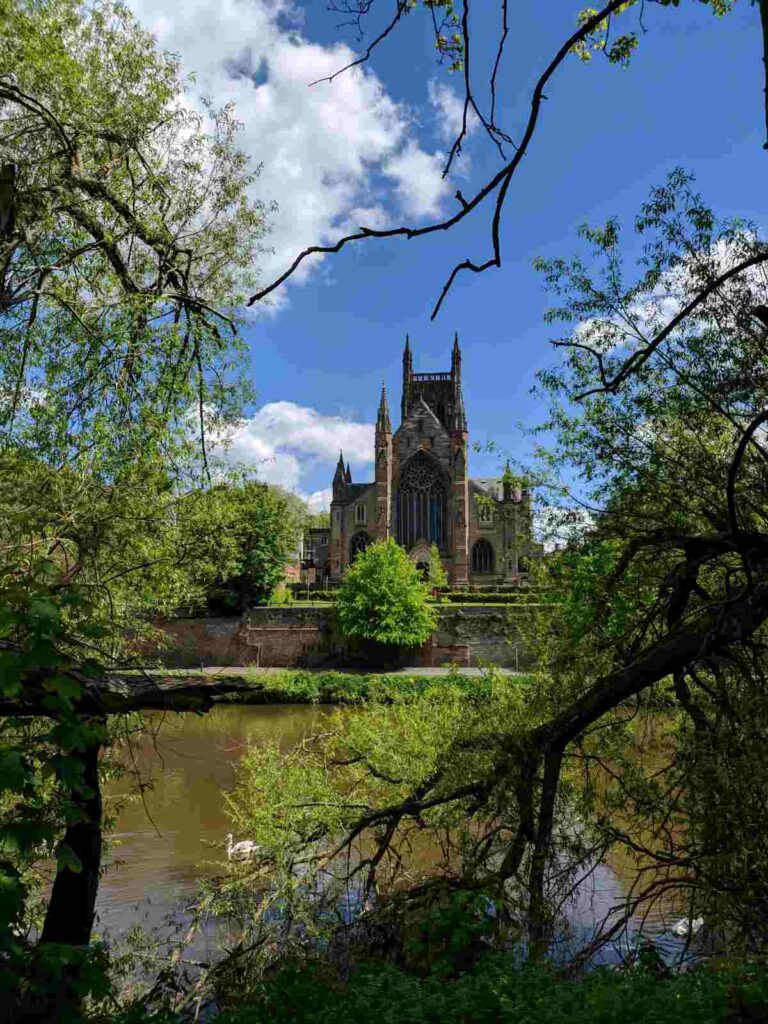
Rising above the Severn, Worcester Cathedral is built largely of sandstone, which weathers badly where water is not shed cleanly. Its parapets, roof valleys, hopper heads and downpipes form a complex system that must be kept clear and in good order. On a building of this scale, maintenance of the rainwater system protects carved stonework that is expensive and slow to replace, and any new castings should match the historic sections.
Hanbury Hall (Grade I)
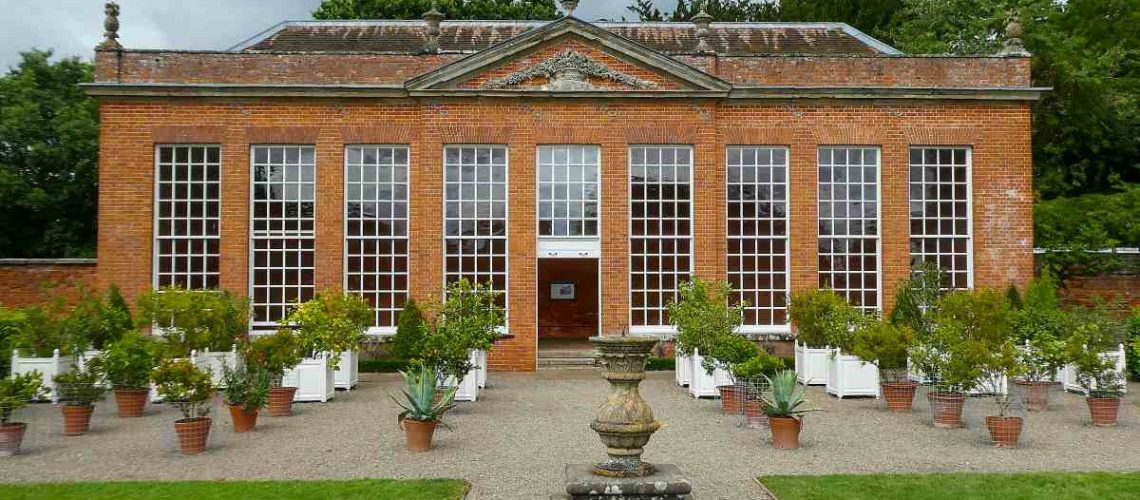
Hanbury Hall, a red brick house of about 1701 built for the lawyer Thomas Vernon and now cared for by the National Trust, is listed at Grade I, with its Orangery and Long Gallery at Grade II*. The Orangery’s roof sits behind a parapet, so outlets and downpipes must be sized and maintained to prevent water ponding behind the parapet and saturating the brickwork.
Worcester Guildhall (Grade I)
Built in about 1721–23, with sculpture by Thomas White, Worcester Guildhall is listed at Grade I, and its forecourt gates and railings are separately listed. Its red brick and stone front, with carved figures at roof level, depends on rainwater being carried away cleanly from the cornice and balustrade. Consistent, well-maintained cast iron goods protect both the stonework and the composition.
Croome Court (Grade I)
Croome Court was designed in 1751–52 by Lancelot ’Capability’ Brown, with advice from Sanderson Miller and interiors by Robert Adam, for the 6th Earl of Coventry. Its Palladian limestone ashlar fronts and red brick service wing show two building traditions side by side. Large roofs behind parapets need generous outlets and hopper heads, and replacement castings should respect the formality of the elevations.
Great Malvern Station (Grade II)
Great Malvern Station was built in 1861–62 for the Worcester and Hereford Railway to designs by Edmund Wallace Elmslie, with sculpture and metalwork by William Forsyth. Its deep platform canopies rest on cast iron columns with richly decorated floral capitals. Canopy gutters and their downpipes must be kept clear, because overflowing water quickly damages decorative ironwork and paint.
Elsewhere in the county we regularly supply half-round and ogee gutters, downpipes and hopper heads for listed farmhouses, timber-framed cottages, chapels, Georgian town houses and Victorian villas. Our earlier article on building conservation in Worcestershire introduces more of the county’s heritage.
Working With Us on Worcestershire Projects
We supply cast iron rainwater systems throughout Worcestershire, including Worcester, Great Malvern, Pershore, Evesham, Bewdley, Kidderminster, Droitwich Spa, Stourport-on-Severn and Bromsgrove.
Most projects follow a simple path: you send photographs, drawings or a sample; we advise on profile, sizes and fixings; we quote; and we deliver to site. Our measure-up checklist shows what to record. For copy casting, send clear photographs with a scale, measured drawings and, ideally, a surviving section or fragment.
For complex restorations, difficult access or missing components, we recommend our chargeable site survey service before the specification is finalised. Our base in Mid Wales is within easy reach of the county, and a survey protects the project by making sure profiles, sizes and fixings are right first time. Standard stock is available for prompt despatch; bespoke, copy cast and radius gutters typically take around 12–14 weeks, and we confirm timings at quotation.
Neighbouring Herefordshire is covered in our Herefordshire guide, and our churches and ecclesiastical buildings page explains how we support parishes. To discuss cast iron rainwater systems for your Worcestershire project, contact us or call 0333 987 4452.
Frequently Asked Questions
Do I need Listed Building Consent to replace cast iron gutters on a listed building in Worcestershire?
Not usually, if the replacement is identical cast iron in the same profile, size and position, because that is generally treated as repair. Changing material, profile, colour or downpipe routes normally needs consent from your district or city council. Always confirm before work starts.
Which council deals with listed buildings in Worcestershire?
Worcester City Council, Malvern Hills, Wychavon, Wyre Forest and Bromsgrove district councils, and Redditch Borough Council each deal with listed buildings in their own areas. They remain responsible until the planned new unitary councils take over.
What type of cast iron guttering suits timber-framed buildings in Worcestershire?
Half-round or beaded half-round gutters on brackets fixed into sound timber usually suit timber-framed buildings. Keep downpipes on stand-off ears so water cannot track into the frame.
What gutter profile is used on Georgian houses in Worcester and Pershore?
Georgian brick fronts in Worcester, Pershore and Bewdley usually have ogee or moulded ogee gutters that complete the cornice line. Match the existing profile and size.
Can cast iron gutters be used in conservation areas in Worcestershire?
Yes. Cast iron is the traditional material in Worcestershire’s conservation areas, and reinstating it where it has been lost is one of the simplest ways to enhance their character.
Do cast iron gutters cope with heavy rain in the Malvern Hills?
Yes, provided outlets, hopper heads and downpipes are sized for the roof area and kept clear. Check capacity before replacing like for like, because rainfall intensity has increased.
Do you supply cast iron rainwater systems to Worcester, Malvern and the rest of Worcestershire?
Yes. We supply and deliver cast iron gutters, downpipes and hopper heads throughout Worcestershire, including Worcester, Great Malvern, Pershore, Evesham, Bewdley, Kidderminster, Droitwich Spa and Bromsgrove.
Can you copy cast a hopper head from a listed building in Worcestershire?
Yes. We arrange copy casting from a surviving sample, supported by photographs and measurements. Copy casting typically takes around 12–14 weeks.
How long does delivery take to Worcestershire?
Standard stock items are available for prompt despatch and delivered direct to site. Bespoke, copy cast and radius gutters typically take around 12–14 weeks; we confirm timings at quotation.
What gutter profiles are found on Worcestershire churches?
Worcestershire churches commonly have parapet gutters behind the walls, with hopper heads and large round or rectangular downpipes, and half-round gutters on lower roofs and chapels. Survey what survives before specifying replacements.
How long do cast iron gutters last on historic buildings?
Properly maintained cast iron gutters and downpipes routinely last more than 100 years. Regular clearing, prompt joint repairs and a sound paint system are the keys to longevity.
Is cast iron a sustainable choice for heritage buildings?
Yes. Cast iron is long-lasting, repairable and fully recyclable, and on listed buildings it avoids the repeated replacement cycles of short-life materials.
Conclusion
Specifying rainwater goods for Worcestershire’s historic buildings rests on a few clear principles: identify and match the original profile, fix carefully into sound timber or masonry, check that outlets and downpipes have the capacity the roof needs, retain and repair historic hopper heads, replace like for like in cast iron, and agree any change with your council before work starts.
Tuscan Foundry Products is the successor to Richards, manufacturers of cast and steel products since 1893. Today we supply and finish UK-cast iron rainwater systems, and from our base in Mid Wales we support architects, surveyors, contractors and owners across Worcestershire with stock profiles, copy casting, radius gutters and on-site surveys. To discuss your project, call us on 0333 987 4452 or visit tuscanfoundry.com.