
Original Cast Iron Rooflights: Identifying, Repairing and Replacing Them
Every conservation rooflight on the market is a copy of the Victorian cast iron original. This chapter is about the originals themselves: how to recognise one, how to repair it, and how to make the case when it genuinely has to be replaced.
In summary
An original cast iron rooflight is a small, top-hung, single-glazed roof light cast in one piece with its upstand and glazing bar, usually dating from the mid-nineteenth to the early twentieth century. Where one survives on a listed building, repair is normally expected before replacement. Most can be repaired: corrosion cleaned back, the glass and putty renewed, the stay refurbished and the frame repainted. Cracked or missing castings can be copy-cast from a surviving pattern. Replacement with a modern steel conservation rooflight is usually reserved for frames that are beyond repair, and it needs listed building consent.
On this page
How to recognise an original cast iron rooflight
Cast iron rooflights were produced in quantity by Victorian and Edwardian foundries and sold from catalogues alongside gutters, hoppers and airbricks. They were intended for attics, stables, workshops and service rooms, so they are modest in size and plain in detail. Most share the same anatomy.
The base frame. A single casting combining the upstand and a wide flange that was laid over the slates or tiles and dressed in with lead. Because the flange sits on top of the roof covering, an original stands slightly proud of the slope rather than truly flush. That is the detail modern conservation rooflights imitate, but recess further into the roof.
The casement. A second casting, hung from the head on simple pin or knuckle hinges, with the glazing bar cast integrally down the middle. The glass sits in rebates bedded and fronted with linseed oil putty.
The stay. Usually a flat iron bar pierced with holes, pivoting from the base and dropping over a peg on the casement, so the light can be propped open at a few fixed positions.
The size. Openings are small and portrait in proportion. Reclaimed examples offered by salvage yards include aperture sizes of around 24 by 16 inches, 24 by 18 inches and 30 by 18 inches (SalvoWEB listing).
A quick check: a magnet will stick to both cast iron and steel, so look at the section instead. Cast iron has rounded, slightly irregular edges and a granular surface where paint has failed. Pressed or laser-cut steel has crisp, uniform edges and an even thickness.
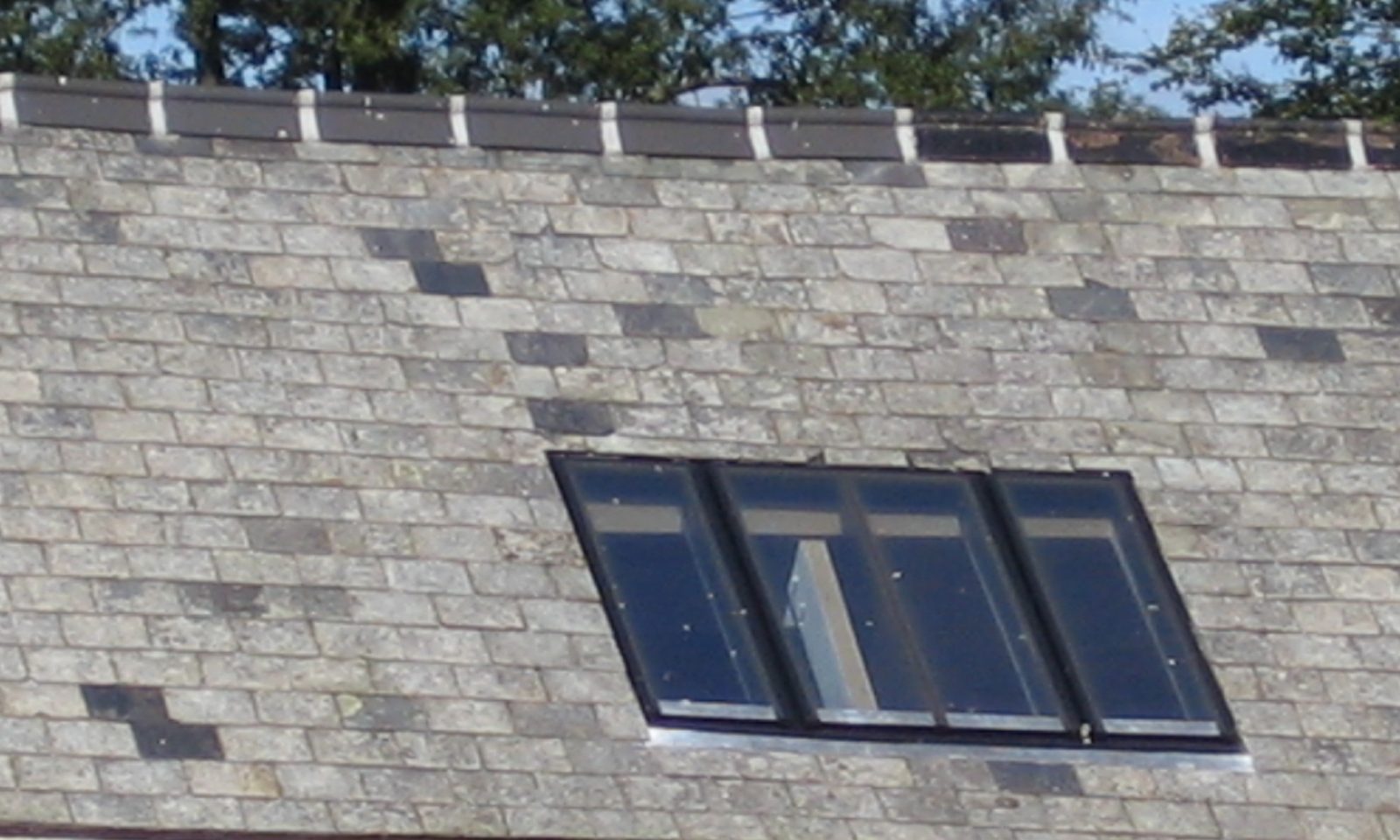
Why originals matter to conservation officers
A surviving cast iron rooflight is part of the historic fabric of a listed building, in the same way as an original sash window. Conservation policy generally favours keeping and repairing fabric over replacing it, and an officer will expect an applicant to show why repair is not possible before agreeing to removal.
Local guidance often makes the material point directly. One council officer’s report, for example, cites the Institute of Historic Building Conservation’s guidance that rooflights in materials other than cast iron will seldom be appropriate, particularly on principal elevations, and criticised the loss of an original cast iron rooflight (Ribble Valley officer report). Removing an original without consent on a listed building is an offence, whatever replaces it.
The practical consequence is simple: if your building has original cast iron rooflights, plan to repair them, and treat replacement as the exception that needs justifying.
Common defects
| Defect | What you see | Usual remedy |
|---|---|---|
| Surface rust | Flaking paint, orange staining on slates below | Clean back to sound metal, prime and repaint |
| Seized hinges | Casement will not open or binds | Free off, clean pins, replace corroded pins |
| Failed putty | Cracked or missing putty, water at the glass edge | Hack out, reglaze, bed and front in linseed oil putty |
| Cracked glass | Visible crack, often at a corner | Reglaze; consider laminated or toughened glass |
| Missing stay | Casement propped with timber or wired shut | Fit a matching stay, new or copy-cast |
| Cracked casting | Hairline or open crack in the frame or bar | Specialist repair or a copy-cast replacement part |
| Failed flashings | Leaks at the head or sides, wet timbers | Renew the leadwork around the existing frame |
Most leaks around an old rooflight come from the leadwork or the putty, not the casting. Diagnose before condemning the frame. The condensation chapter sets out how to tell a leak from condensation.
Repairing a cast iron rooflight
A typical repair follows the same sequence as any piece of historic cast ironwork.
- Record it. Photograph the rooflight inside and out, measure the opening and the castings, and note any maker’s marks. This record supports the consent application and guides any copy-casting.
- Remove the casement. On most originals it lifts off its pins. Repair indoors where possible; temporarily weather the opening.
- Clean back. Remove loose paint and rust by hand or with appropriate abrasive cleaning, taking care with glass that is to be kept. Lead-based paint needs the usual precautions.
- Repair the metal. Minor pitting can be filled. Cracks in cast iron need a specialist; welding cast iron is difficult and often fails, so mechanical stitching or a replacement casting is usually the better route.
- Reglaze. Bed and front the glass in linseed oil putty. Toughened or laminated glass improves safety in rooms below, and is worth considering over stairs and landings.
- Paint. Prime and finish in a system suited to cast iron. A linseed oil paint is breathable, easy to maintain and historically appropriate.
- Refit and reflash. Rehang the casement, fit or refurbish the stay, and have the leadwork renewed by a competent roofer.
Where a casting is missing or broken beyond repair, a foundry can make a new one by copy-casting from a surviving original, either from the same rooflight or from a matching one elsewhere on the building. Tuscan Foundry has copy-cast heritage components for listed buildings since 1893, and bespoke castings typically take 12 to 14 weeks from pattern approval.
Improving comfort without losing the original
A single-glazed cast iron rooflight is cold, and in a heated room it will collect condensation. There are ways to improve it without removing the original:
- Secondary glazing fitted inside the light well, independently of the original, is reversible and usually acceptable on listed buildings.
- Insulating the light well and its reveals reduces the cold surfaces around the rooflight.
- Ventilation of the room, by opening the rooflight or by mechanical extract, deals with the moisture at source.
- Slim or vacuum double glazing may fit some rebates. Whether it is acceptable is a matter for the conservation officer, and it needs consent on a listed building.
For thermal standards and how Building Regulations treat historic buildings, see Building Regulations for conservation rooflights.
When replacement is justified
Replacement becomes a reasonable case where the casting is fractured beyond economic repair, where a later, inappropriate rooflight has replaced the original, or where the room’s new use needs an escape opening or more daylight than a small original can give.
A strong application usually includes:
- photographs and a short condition report showing why repair is not possible
- a drawing of the proposed rooflight showing the frame section, upstand and glazing bar
- confirmation that the new unit will sit in the same opening and at the same size where possible
- the manufacturer’s product sheet
- what will happen to the original (retained, salvaged or reused elsewhere on the building)
The permissions guide covers the consent route in detail, and the specification guide covers what a replacement should look like.
Reclaimed cast iron rooflights
Salvage yards sell original cast iron rooflights, often for around £100 each as found, in a mix of sizes and conditions (The Reclaimed Company). Many need new glass, stays or hinge pins. A reclaimed unit can be a good choice for an unlisted outbuilding, or to replace a lost original with one of the right period, but check three things first:
- the casting is sound, with no cracks at the corners or across the glazing bar
- the size suits the rafter spacing without cutting historic timbers
- on a listed building, the officer agrees in principle before you buy
Common mistakes
- Replacing an original before checking whether it can be repaired.
- Blaming the casting for leaks that come from failed putty or leadwork.
- Welding cracked cast iron, which often cracks again beside the repair.
- Bedding new glass in modern mastic instead of linseed oil putty.
- Throwing away the original instead of recording it and keeping it for reference or reuse.
Where to go next
For the whole process, start with the Conservation Rooflight Guide. For the history of the type, see the history of the conservation rooflight. To find a contractor, browse the rooflights and leadwork categories of the Building Restoration Index.
Speak to the manufacturers directly
The Rooflight Co. — Bourton-on-the-Water, Gloucestershire. Makers of The Original Conservation Rooflight, the Conservation Egress side-hung escape unit and the Conservation Plateau for flat roofs. Tel 01993 833155 · hello@therooflightco.com · therooflightco.com · Index listing
Clement Windows Group — Haslemere, Surrey. Makers of the Clement Conservation Rooflight in separate slate and tile profiles, with a published size and price list and a showroom in Haslemere. Tel 01428 643 393 · info@clementwg.co.uk · clementwindows.co.uk · Index listing
Enquiries go straight to the manufacturer. Tuscan Foundry is not a rooflight supplier and receives no commission; we feature these two because their conservation ranges are made for exactly the buildings this guide covers.
Tuscan Foundry supplies cast iron gutters, downpipes and hopper heads to BS 460 for listed and traditional buildings, with an in-house linseed oil paint finish. Damp that is blamed on a rooflight is often a blocked or overflowing gutter soaking the wall below, so the same inspection should take in the rainwater goods. If the roof is scaffolded, it is the cheapest moment to repair or replace them; stock items dispatch promptly and bespoke castings take around 12–14 weeks.
Frequently asked questions
How do I know if my rooflight is original cast iron?
Look at the section and the surface. Cast iron has rounded, slightly irregular edges, a granular texture where the paint has failed and a glazing bar cast as one with the casement. Modern steel conservation rooflights have crisp, uniform edges and sealed double glazing.
Can an old cast iron rooflight be repaired?
Usually, yes. Rust can be cleaned back, hinges freed, the glass reset in linseed oil putty and the frame repainted. Cracked or missing castings can be replaced by copy-casting from a surviving original.
Do I need consent to repair a cast iron rooflight on a listed building?
Like-for-like repair often does not need listed building consent, but anything that alters the character, such as new glazing types or replacement castings in a different form, may. Confirm with your conservation officer before starting.
Can I double glaze an original cast iron rooflight?
Sometimes. Slim or vacuum units may fit some rebates, but on a listed building this needs consent. Secondary glazing inside the light well is the more common, reversible way to improve comfort.
Will the conservation officer let me replace it with a modern conservation rooflight?
Only if you can show the original cannot reasonably be repaired, or that it has already been lost. The application should include photographs, a condition report and details of the proposed unit.
Where can I buy a reclaimed cast iron rooflight?
Architectural salvage yards sell originals, often unrestored. Check the casting for cracks, match the size to your rafters and, on a listed building, agree it with the officer before buying.
Can Tuscan Foundry cast replacement parts?
Yes. We copy-cast heritage components from surviving originals; bespoke castings typically take 12 to 14 weeks from pattern approval. Call 0333 987 4452 or arrange a site survey.