
Fixed or Opening Rooflights? Ventilation, Escape Windows and Controls
From the outside a fixed and an opening conservation rooflight look the same. Inside, the choice decides whether the room can be aired, whether it counts as an escape route, and what the unit costs to buy and look after. Choose a fixed rooflight where the room already has good ventilation and the rooflight is there for light; choose an opening unit wherever the room needs purge ventilation, an escape route or summer cooling, and decide how it will be operated before you order.
In summary
A fixed conservation rooflight is cheaper, marginally more airtight and has nothing to maintain. An opening unit gives purge ventilation under Part F, night-time cooling in warm weather, and, in side-hung form, an emergency escape route under Part B. Standard opening units are top-hung on a manual winder; the winder can be a hand crank within reach, a pole or telescopic crank for higher units, or a motorised actuator with a wall switch, a remote control and optional rain and temperature sensors. Escape units are side-hung and have their own dimensions and cill height. Decide the operation by room: bedrooms in the roof want escape units, bathrooms and kitchens want opening units alongside their extract fans, stairwells and double-height spaces want motorised units out of reach. Order the winder length with the rooflight, because it fixes the opening angle.
On this page
- Fixed or opening: the short answer by room
- What a fixed rooflight gives you
- What an opening rooflight gives you
- Top-hung, side-hung and escape units
- Manual winders, poles and cranks
- Motorised rooflights: actuators, switches and sensors
- Background ventilation and trickle vents
- Blinds, insect screens and security
- Cost and maintenance compared
- Common mistakes
- Illustrative scenarios
- Where to go next
- Frequently asked questions
Fixed or opening: the short answer by room
A fixed rooflight suits a landing, corridor, hall or any room with a good opening window elsewhere. An opening rooflight suits any room where the rooflight is the main or only window, any room that gets steamy or warm, and any bedroom in the roof.
| Room | Usual choice | Why |
|---|---|---|
| Landing, corridor, stair | Fixed, or motorised opening in a tall stairwell | Light is the purpose; a high opening unit vents the whole house by stack effect |
| Bedroom in the roof | Side-hung escape unit, plus fixed units for more light | Escape route under Part B; purge ventilation |
| Bathroom or shower room | Opening, manual or motorised | Steam; purge ventilation alongside the extract fan |
| Kitchen | Opening, often solar control glass | Heat and moisture; summer cooling |
| Living room, barn double-height space | Mix of fixed and motorised opening | Night purge; out of reach without a pole |
| Home office or studio | Opening, with blind | Comfort; glare control |
| Holiday let | Motorised with rain sensor, or fixed | Guests leave rooflights open in rain |
Both manufacturers in this guide make the same rooflight in fixed and opening versions, so the exterior appearance and the flush profile are unchanged.
What a fixed rooflight gives you
A fixed unit costs less, seals better and has no hinges, winders or motors to maintain. That is the whole case for it, and in the right room it is a strong one.
The cost saving is the ironmongery and the opening mechanism, and it is modest on a small unit. The airtightness gain is real but small on a well-made opening unit with good seals. The maintenance saving lasts the life of the rooflight: nothing to lubricate, nothing to leave open in a storm, and no actuator to fail in year eleven.
The limits are equally simple. A fixed rooflight cannot contribute to purge ventilation, cannot be an escape route, and cannot cool a room at night. In a room where the rooflight is the only glazing, fixed is rarely the right answer.
What an opening rooflight gives you
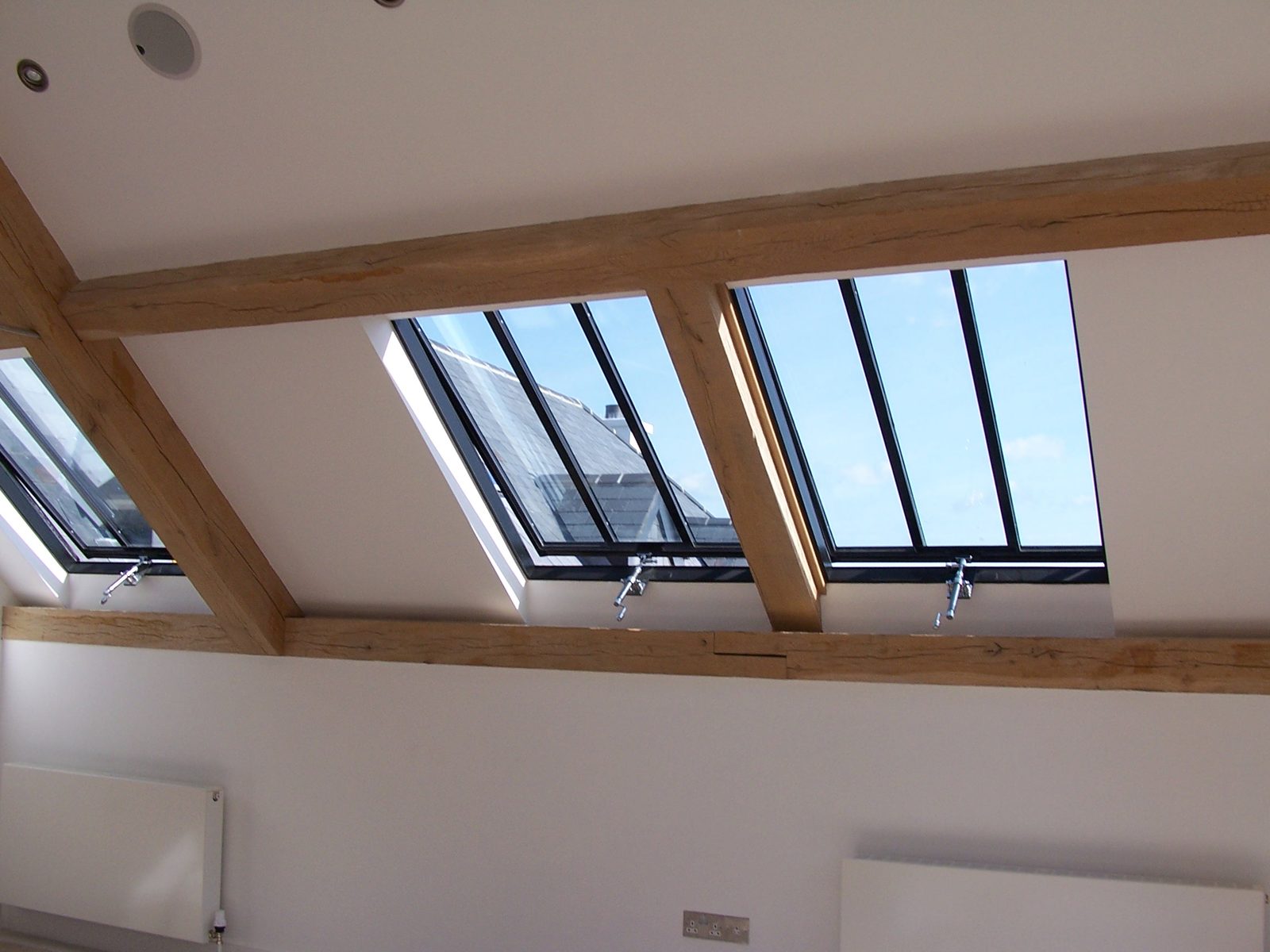
An opening rooflight brings fresh air in at the highest point of the room, where warm, moist air collects. That single fact makes it the most effective ventilator in the house for its size.
Purge ventilation. Approved Document F sizes purge ventilation by the opening angle: a casement opening 30° or more needs a free opening area of one-twentieth of the room’s floor area, one opening between 15° and 30° needs one-tenth, and one opening less than 15° does not count. The winder length sets the angle. The Rooflight Co. offers hand winders giving 150 mm or 300 mm of opening; Clement’s units are top-hung on manual winders with pole and crank options. Ask for the opening angle at each option and check it against the room. Our Building Regulations chapter has the full table.
Stack ventilation. Warm air rises. An opening rooflight at the top of a stair or a double-height barn interior, with a window open low down, draws air through the whole building without a fan. On a hot night this is the cheapest cooling there is.
Condensation control. Steam from a shower or a kettle condenses first on the coldest high surface, which is usually the rooflight glass. Opening it for ten minutes clears the room faster than anything else. Our condensation chapter goes into detail.
Escape. In side-hung form, an opening rooflight is an emergency exit.
Top-hung, side-hung and escape units
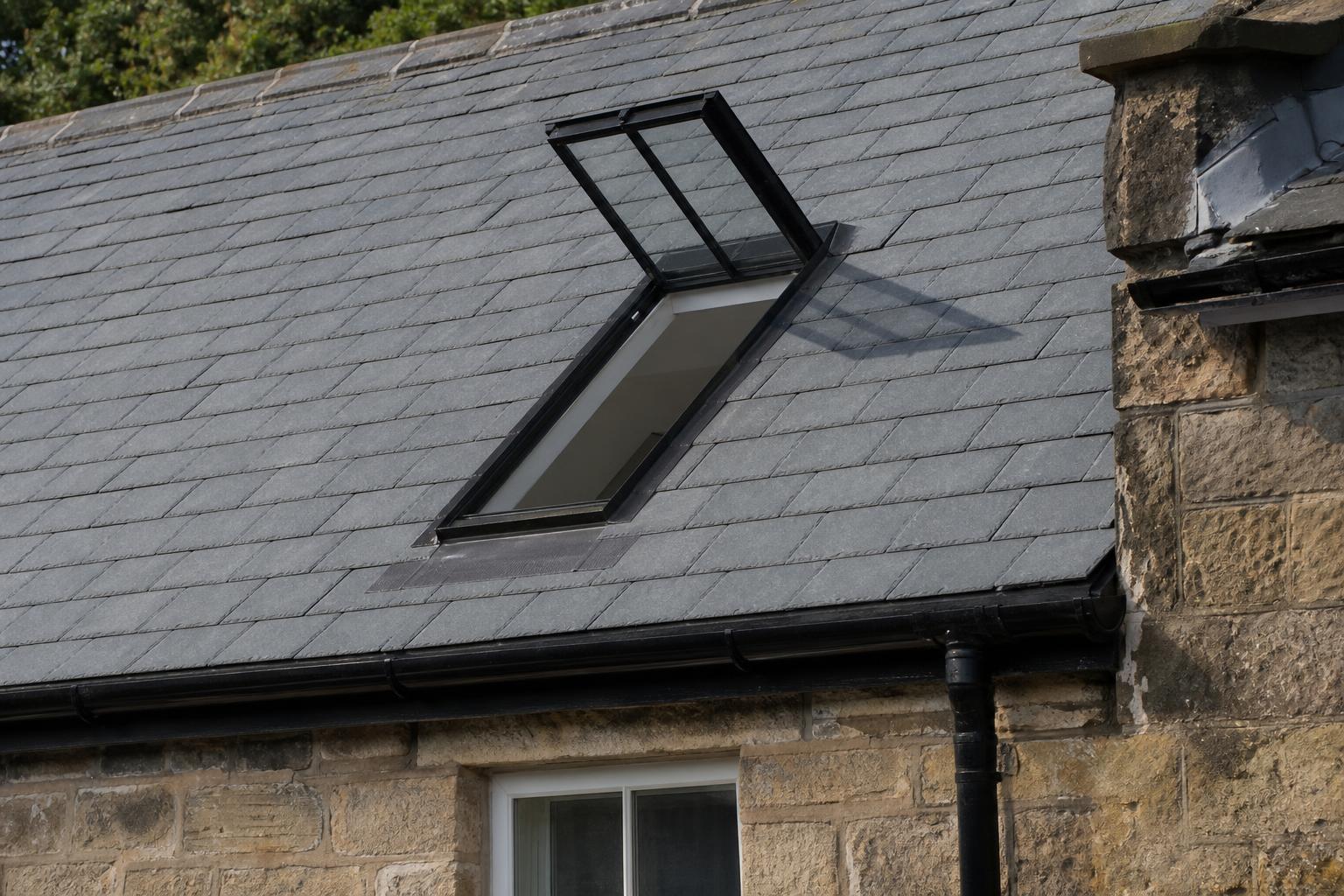
A standard opening conservation rooflight is top-hung: hinged at the head and pushed open at the foot by the winder. An escape rooflight is side-hung so that the whole casement swings clear.
| Type | How it opens | Best for | Notes |
|---|---|---|---|
| Top-hung | Hinged at the top, opens at the bottom | Ventilation in any room | Sheds rain when open a little; cannot be an escape route |
| Side-hung escape | Hinged at one side, swings fully open | Bedrooms and rooms in the roof needing an escape route | Sized to Approved Document B; left- or right-hand; not designed to stand fully open in wind |
| Top-hung escape | Hinged at the top, opens wide | Where side-hung is impractical | Bespoke from some makers |
| Flat-roof unit | Kerb-mounted, opens on actuators | Nominally flat roofs | The Rooflight Co.’s Conservation Plateau |
Approved Document B asks an escape window for an unobstructed openable area of at least 0.33 m², at least 450 mm high and wide, with the bottom of the opening no more than 1,100 mm above the floor, and the ability to stay open unheld. The Rooflight Co.’s Conservation Egress unit is made to those dimensions; Clement offers a side-hung escape unit in its standard range with a bespoke top-hung escape option. On a low-pitched roof with a thick insulated build-up the cill height is the figure most often missed; set it out on section before ordering.
Escape rooflights are for emergencies and occasional airing. Clement notes that its escape units are not designed for continuous full opening, and a side-hung casement standing wide open in wind puts a load on hinges that top-hung units never see. For daily ventilation in the same room, a second, top-hung unit is often the better arrangement.
Manual winders, poles and cranks
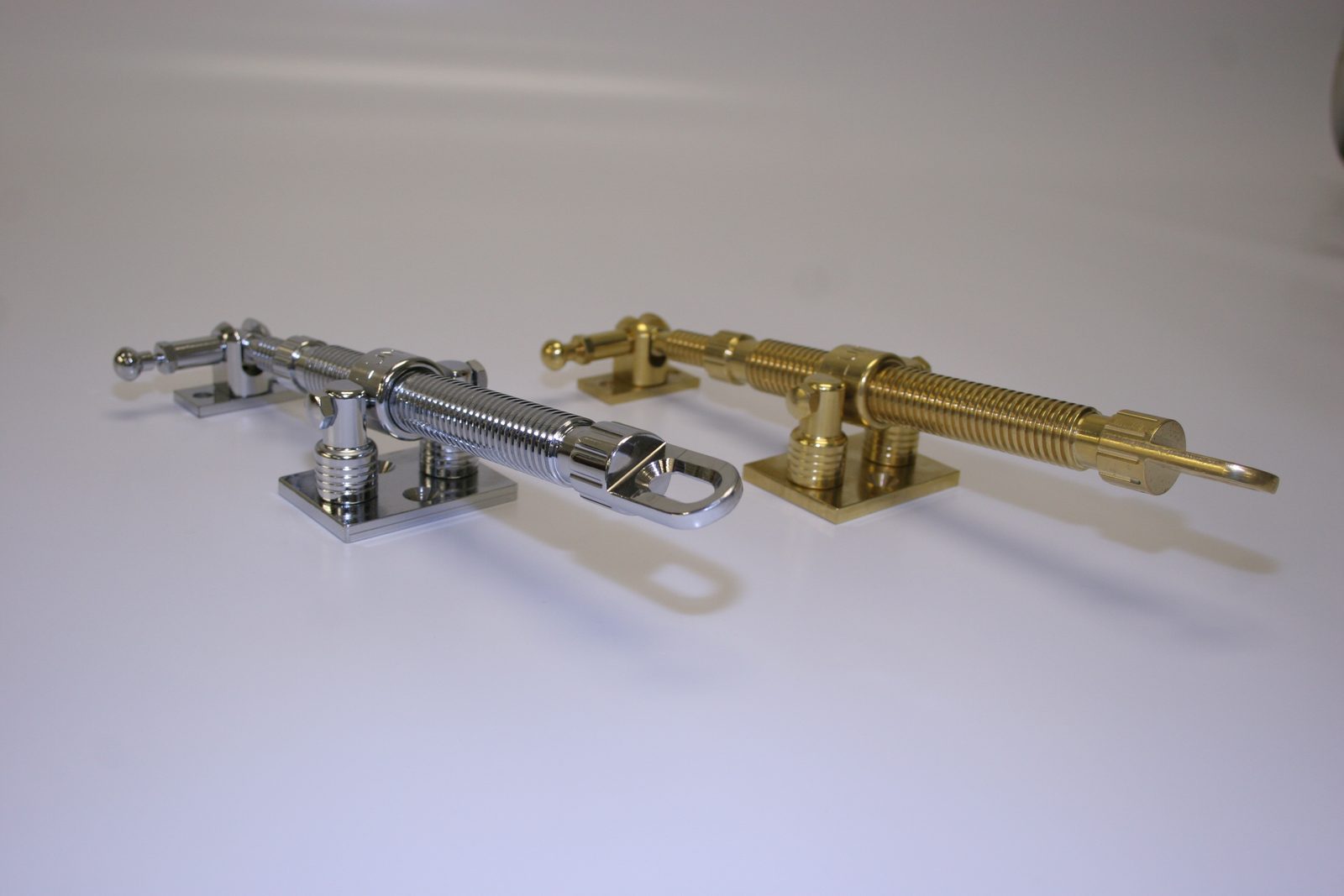
A hand winder is the simplest control and the right one for any rooflight within comfortable reach, roughly up to 1.8 m from the floor to the winder. Above that, a pole or telescopic crank engages a hook on the winder from floor level.
The winder is a threaded spindle, in brass or chrome, and needs a drop of light oil now and then. Winder length decides how far the casement opens, and therefore the purge ventilation it provides; choose the longer option unless there is a reason not to. Clement lists hand, pole and thumb winders and winding cranks in 1 m and 3 m telescopic lengths; The Rooflight Co. offers hand winders and out-of-reach pole winders.
Poles are fine for a landing rooflight opened once a week. They are tiresome for a rooflight that should be opened and closed every day, and they are easy to lose. For anything above about 2.5 m that will be used often, motorise it.
Motorised rooflights: actuators, switches and sensors
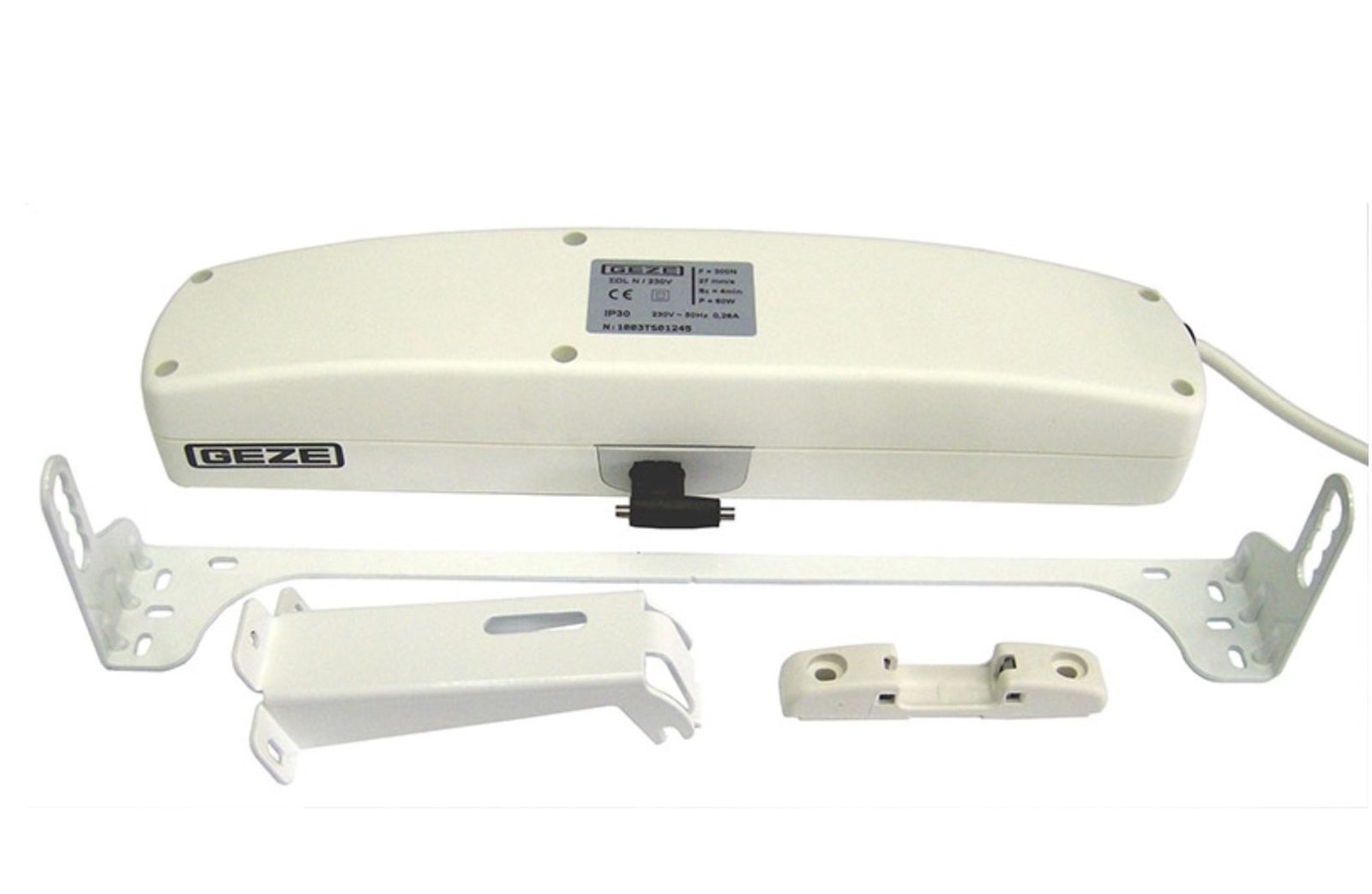
A motorised conservation rooflight uses a low-voltage electric actuator to open and close the casement from a wall switch, a remote control or an automatic sensor. It is the right choice for high rooflights, for rooms that will be left unattended, and for anyone who wants the rooflight to look after itself.
The actuator. A 24-volt chain or spindle actuator mounted on the frame, with a transformer nearby. Some are surface-mounted on the inside of the frame; concealed versions sit within the liner for a cleaner interior. Ask what each manufacturer offers with its own units, because the actuator is tested with the casement.
Controls. A wall switch is the minimum. Remote controls, wall-mounted keypads and integration with a home system are all common. Rain sensors close the rooflight when it starts to rain; temperature sensors open it when a room overheats; some systems add wind sensors and timers. For a holiday let or a room that is often empty, a rain sensor is worth having.
Power and wiring. The electrical work is notifiable under Part P in a dwelling and should be done by a registered electrician. Run the cable before the ceiling is closed. A concealed actuator needs the liner detail agreed with the manufacturer so that the cable route and the transformer position are planned.
Behaviour in wind. An open motorised rooflight is not locked in position: The Rooflight Co. warns that strong wind can drive it closed. Keep hands clear, and treat a rain sensor as a convenience rather than a safety device.
Smoke ventilation. An actuator that opens a rooflight for comfort is not the same as an automatic opening vent for smoke control in a common stair, which is specified and certified to BS EN 12101-2. If a rooflight must serve both purposes, say so at enquiry stage.
Motors, controls and other ancillaries typically carry a 12-month guarantee, shorter than the frame and glass. Run motorised units at least every couple of weeks to keep them free; see the maintenance chapter.
Background ventilation and trickle vents
Conservation rooflights do not normally have trickle ventilators, because the slim, flush frame has nowhere to put one. Background ventilation for the room has to come from elsewhere.
In a new dwelling that usually means trickle ventilators in the vertical windows, or a whole-house mechanical system. In an existing dwelling where a rooflight replaces an older one, Approved Document F expects the room’s ventilation not to be made worse; where the old unit had no ventilator, the new one need not either, but tell building control where the room’s background ventilation comes from. An opening rooflight left on its first notch is not background ventilation in the regulatory sense, though in practice it is how many rooms in the roof are aired.
Blinds, insect screens and security
An opening rooflight needs the same accessories as a window, and they are easier to fit at the start.
Blinds. Both manufacturers offer blinds through partners or their own ranges; blackout blinds matter in bedrooms in the roof, and solar blinds help in south-facing rooms. A blind fitted tight against the glass on a cold night holds a layer of still air and increases condensation on the glass behind it; open the blind in the morning.
Insect screens. Useful on units left open on summer nights, especially in rural settings, and awkward on a side-hung escape unit; ask the manufacturer.
Security. A rooflight on a pitched roof high above ground is a low security risk, but an opening unit within reach of a flat roof, an extension or a lean-to should be lockable, and a motorised unit will close and hold on command. Restrictors on escape units must release without a key in an emergency. Our glazing and security chapter covers laminated and security glass.
Cost and maintenance compared
An opening rooflight costs more than a fixed one by the price of its hinges, seals and winder; motorising adds the actuator, controls and an electrician’s visit. Over the life of the unit, an opening rooflight also needs light lubrication and, if motorised, an occasional run.
| Item | Fixed | Manual opening | Motorised opening |
|---|---|---|---|
| Purchase | Lowest | Plus ironmongery and winder | Plus actuator, controls and wiring |
| Installation | Simplest | Same as fixed | Adds electrical work under Part P |
| Airtightness | Best | Very good with sound seals | As manual |
| Maintenance | Clean only | Oil the winder monthly, hinges yearly | As manual, plus run the motor fortnightly |
| Guarantee on moving parts | None to guarantee | Fittings typically 12 months | Motors and controls typically 12 months |
| Purge ventilation | None | Yes, depending on opening angle | Yes |
| Escape | No | Side-hung units only | Side-hung units only, opened by hand |
Clement’s published price list shows winders as a separate line, from about £25 for a hand winder to about £69 for a 3 m telescopic crank at the time of writing; the rooflight prices themselves are set out in our ordering chapter.
Common mistakes
Ordering fixed units for a room with no other window. The room then has no purge ventilation and no escape route, and a fixed unit cannot be converted.
Choosing the short winder. It limits the opening angle and can halve the purge ventilation the rooflight provides.
Relying on an escape rooflight for daily airing. Side-hung escape units are not designed for continuous full opening; add a top-hung unit for everyday ventilation.
Motorising without a cable route. The ceiling is closed, the transformer has nowhere to go and the actuator is surface-mounted as an afterthought.
Leaving a rooflight open in a holiday let without a rain sensor. Water on a timber floor is the usual result.
Forgetting the cill height on an escape unit. The 1,100 mm maximum is missed on low pitches with deep insulation.
Illustrative scenarios
The scenarios below are illustrative composites drawn from typical projects. They are not specific buildings or Tuscan Foundry commissions.
A loft bedroom in a Victorian terrace, conservation area
One side-hung escape unit at the foot of the slope, cill set at 1,050 mm on section, and one fixed unit higher up for light. The escape unit gives the purge ventilation for the room. A blackout blind is fitted to the escape unit and a solar blind to the fixed one.
A stone barn, mid Wales, double-height living space
Three rooflights on the north slope, the middle one motorised with a rain sensor and a wall switch by the door, the outer two fixed. On summer nights the motorised unit opens with the ground-floor windows and the stack effect clears the space. The actuator cable was run with the first fix.
A cottage bathroom under a low-pitched roof
A single top-hung unit on a 300 mm winder, within reach from the bath. Opened after every shower, it clears the steam faster than the extract fan alone, and the condensation on the glass that the owners had lived with for years stops.
A listed chapel converted to a studio
Two large rooflights high in a slated roof over the workspace, both motorised with concealed actuators to keep the interior clean, and a wind sensor because the site is exposed. Smoke ventilation was considered and confirmed as not required for the building’s use, which kept the specification simple.
Where to go next
For the regulatory figures see the Building Regulations chapter; for sizes, winders and prices see the ordering chapter. All chapters are listed on the Conservation Rooflight Guide page.
Speak to the manufacturers directly
The Rooflight Co. — Bourton-on-the-Water, Gloucestershire. Makers of The Original Conservation Rooflight, the Conservation Egress side-hung escape unit and the Conservation Plateau for flat roofs. Tel 01993 833155 · hello@therooflightco.com · therooflightco.com · Index listing
Clement Windows Group — Haslemere, Surrey. Makers of the Clement Conservation Rooflight in separate slate and tile profiles, with a published size and price list and a showroom in Haslemere. Tel 01428 643 393 · info@clementwg.co.uk · clementwindows.co.uk · Index listing
Enquiries go straight to the manufacturer. Tuscan Foundry is not a rooflight supplier and receives no commission; we feature these two because their conservation ranges are made for exactly the buildings this guide covers.
Tuscan Foundry supplies cast iron gutters, downpipes and hopper heads to BS 460 for listed and traditional buildings, with an in-house linseed oil paint finish. An opening rooflight sheds leaves and grit into the roof’s gutters as well as its own head gutter, and the same six-monthly check covers both. If the roof is scaffolded for rooflight work, it is the cheapest moment to inspect, repair or replace the rainwater goods; stock items dispatch promptly and bespoke castings take around 12–14 weeks.
Frequently asked questions
Should I choose a fixed or an opening rooflight?
Choose fixed where the rooflight is for light and the room already has good ventilation, such as a landing or a hall. Choose opening where the room needs purge ventilation, an escape route or summer cooling, or where the rooflight is the only window. In rooms with several rooflights, one opening unit and the rest fixed is a common and sensible mix.
Do opening rooflights leak more than fixed ones?
Not when they are well made and maintained. A fixed unit is marginally more airtight, but the difference on a modern conservation rooflight with sound weather seals is small. Leaks at rooflights are far more often flashing or head-gutter problems than casement problems.
Can a conservation rooflight be used as a fire escape?
Yes, in side-hung escape form. The unit must give an unobstructed opening of at least 0.33 m², at least 450 mm high and wide, with the bottom of the opening no more than 1,100 mm above the floor, and stay open unheld. Both manufacturers in this guide offer escape units. A standard top-hung rooflight does not qualify.
How far does a conservation rooflight open?
It depends on the winder or actuator. Hand winders typically give 150 mm or 300 mm of opening at the foot of the casement; side-hung escape units swing fully open. The opening angle decides how much purge ventilation the rooflight provides under Approved Document F, so ask for the angle at each option.
Can I motorise a conservation rooflight?
Yes. Both manufacturers offer motorised opening with low-voltage actuators controlled by a wall switch or remote, with optional rain and temperature sensors. Plan the cable route and transformer position before the ceiling is closed, and use a registered electrician because the work is notifiable under Part P.
What is a rain sensor on a rooflight?
A small sensor, usually mounted outside near the rooflight, that signals the actuator to close the casement when it detects rain. It is useful for rooflights left open in unattended rooms and holiday lets. It is a convenience, not a safety device, and it does not lock the rooflight open in wind.
Do conservation rooflights have trickle vents?
No, as a rule. The slim, low-profile frame has no room for one. Background ventilation for the room is provided by trickle ventilators in the vertical windows or by a mechanical system. Tell building control where the room’s background ventilation comes from.
Can an opening rooflight be reached with a pole?
Yes. Pole winders and telescopic cranks engage a hook on the winder from floor level and suit rooflights up to around 3 m. For a rooflight that will be opened daily at that height, a motorised unit is more practical.
Are escape rooflights good for everyday ventilation?
They are designed for emergencies and occasional airing rather than standing fully open all day. Side-hung casements in wind load the hinges in a way top-hung units do not, and Clement notes its escape units are not designed for continuous full opening. Add a top-hung unit for everyday use.
Is a motorised rooflight safe in strong wind?
An open motorised rooflight is not locked in position and strong wind can drive it closed, so keep hands clear and close it in bad weather. A wind sensor can be added on exposed sites. Motors and controls typically carry a 12-month guarantee, so report faults early.
Does an opening rooflight cost much more than a fixed one?
The difference is the hinges, seals and winder on a manual unit, and the actuator, controls and electrical work on a motorised one. On a small unit the manual premium is modest; motorising adds more. Winders are often priced separately, from roughly £25 for a hand winder to under £70 for a 3 m telescopic crank at current published prices.
Can I change a fixed rooflight to an opening one later?
No. The frame, hinges and seals are different, so the unit would need replacing. If there is any chance the room will need ventilation or an escape route, order the opening version now.