
Conservation Rooflight Maintenance: A Practical Care Guide for Steel Rooflights
A conservation rooflight is a small steel window set into one of the most exposed parts of the building. Conservation rooflight maintenance comes down to three things: keep the coating intact, keep water moving off and around the frame, and write down what you did. Done twice a year, it takes less than an hour per unit and protects both the building and the guarantee.
In summary
Modern conservation rooflights are steel protected by a factory coating, and the steel is only as durable as that coating. Keep the finish clean and unbroken, keep the small head gutter clear, and check the flashings around it. Clean the frame and glass at least every six months with warm water and a mild detergent, wipe the weather seals, lubricate winders and hinges sparingly, and run motorised units regularly. Inspect the coating for chips and report damage to the manufacturer rather than improvising a repair. Keep a dated log, because extended guarantees depend on recorded maintenance. Coastal and exposed sites need a conversation with the manufacturer before ordering. The same visit is the right moment to check gutters, hopper heads and downpipes below.
On this page
- Why does maintenance matter on a conservation rooflight?
- A maintenance schedule for conservation rooflights
- How to clean a conservation rooflight
- Ironmongery, hinges, motors and gas struts
- Inspecting the coating and dealing with chips
- Flashings, soakers and the roof around the rooflight
- Condensation or a leak? Diagnosing damp around a rooflight
- Exposure and coastal sites
- Rooflight warranty registration and guarantees compared
- Keeping a building log
- Repairing surviving historic cast iron rooflights
- Inspect gutters, hopper heads and rooflight flashings on the same visit
- Common mistakes
- Illustrative scenarios
- Where to go next
- Frequently asked questions
Why does maintenance matter on a conservation rooflight?
Maintenance matters because a steel rooflight lasts as long as its coating does, and because the longer guarantees are conditional on proof that the unit has been looked after. Neglect shortens both the life of the frame and the value of the paperwork.
Steel gives conservation rooflights their slim, flush profile, but it rusts once water reaches bare metal. The factory coatings, a polyester powder coat classified for highly corrosive environments in one case and a deep black matt paint finish in another, are robust but not self-healing. A chip left open for a few winters becomes a rust blister, and the damage spreads beneath the surrounding finish.
Guarantees are the second reason. Frame finishes carry longer cover than moving parts, and at least one manufacturer ties its extended guarantee to registration and a maintenance record.
The third is the building. A blocked head gutter or lifted soaker lets water into rafters and plaster that are often historic and costly to repair. For the detailing that should be in place from day one, see our installation and flashings chapter.
A maintenance schedule for conservation rooflights
A sensible routine is a light monthly check on anything that moves, a proper clean and inspection every six months, a closer annual review, and a quick look after any major storm. The table below combines the published guidance of both manufacturers into one working schedule.
| When | Task | Notes |
|---|---|---|
| Fortnightly | Open and close motorised units | Keeps motors and chains working; a unit left shut for months can stick |
| Monthly | Light oil on the manual winder spindle | A drop or two only; wipe away excess |
| Monthly | Open and close manual units fully | Regular use keeps seals from bonding to the frame |
| Every six months | Clean frame, glass and seals | Warm water, a little washing-up liquid, soft cloth, rinse clean |
| Every six months | Clear the top gutter of the rooflight | Leaves, moss, twigs and tile chips are the usual culprits |
| Every six months | Inspect the coating | Look for chips, cracks, blistering or rust spotting |
| Annually | Oil hinges sparingly | Light machine oil; avoid getting oil on seals or glass |
| Annually | Check flashings, soakers and roof covering | Look for lifted lead, slipped slates or tiles, open joints |
| Annually | Check internal lining and reveal | Staining, flaking paint or damp are early warnings |
| After storms | Visual check from inside and, if safe, outside | Debris in the head gutter, displaced slates, wind damage to open units |
Near main roads or dusty farm activity, clean more often: grime holds moisture against the coating.
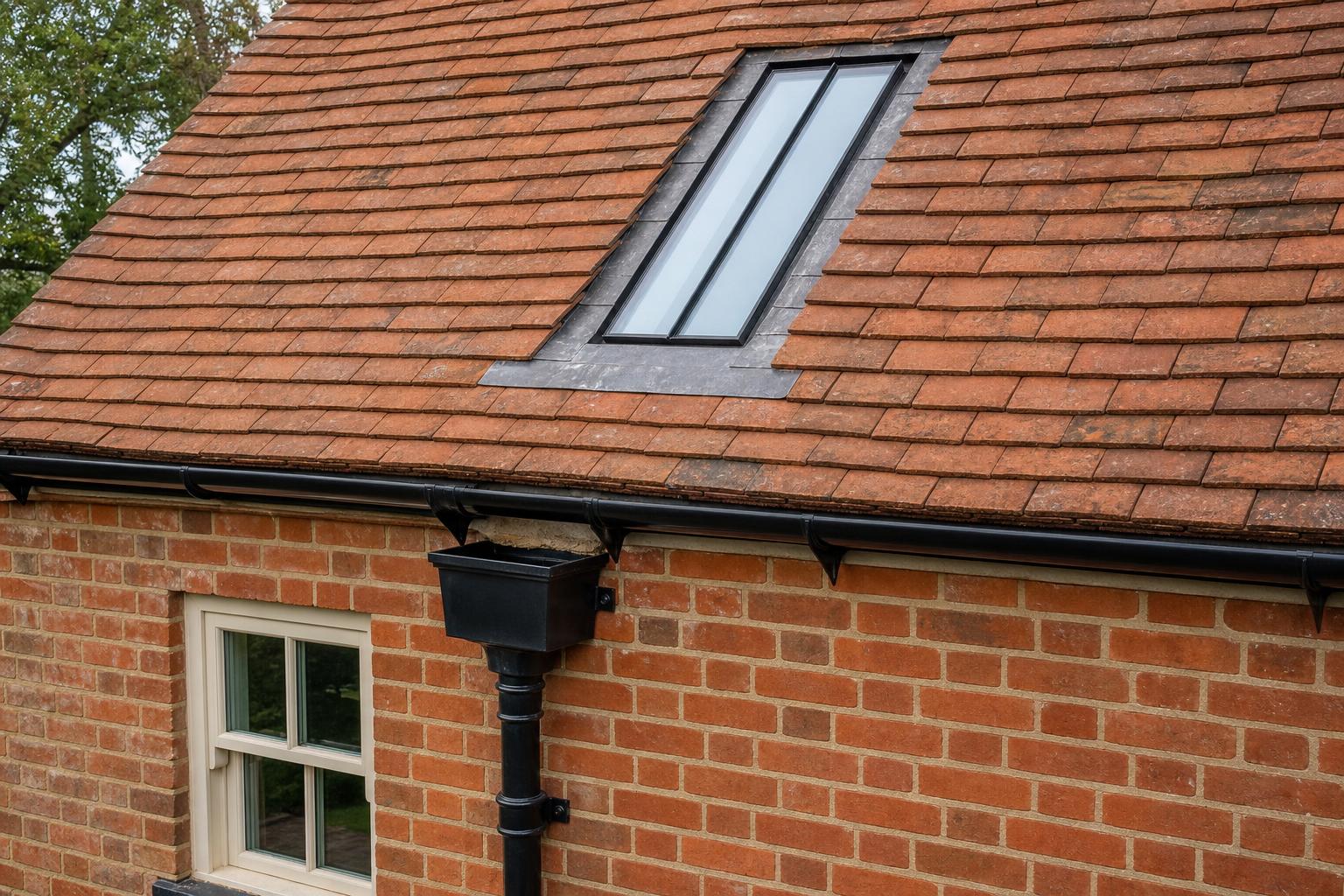
How to clean a conservation rooflight
Clean with warm water, a small amount of mild detergent and a soft cloth or sponge, then rinse with clean water. Never use abrasives, solvents or scouring pads, because they wear the coating you are trying to protect.
Frame. Work from the top down, paying attention to the head and upper corners. Rinse thoroughly, as detergent residue attracts dirt.
Glass. Clean with the same solution and rinse. De-ionised water reduces streaking. If the outer pane has a self-cleaning coating, check the manufacturer’s guidance first, and never use a blade. Our glazing and security chapter covers glass specifications.
Weather seals. Wipe with a damp cloth. Grit on a seal abrades it each time the casement closes and stops it seating properly. Do not grease seals unless the manufacturer says so.
The rooflight’s top gutter. Most conservation rooflights have a small channel across the head that diverts water running down the roof around the sides. It cannot be seen from inside, so it is easily forgotten. Filled with leaves or tile fragments, it backs water up under the frame and holds moisture against the coating. Clear it with a soft brush and rinse it through.
Access. Clean from inside with the casement fully open only where that is safe. On high or steep roofs use a roof ladder, tower or existing scaffold. Never lean out of an open rooflight to reach the head.
Ironmongery, hinges, motors and gas struts
Moving parts need a small amount of lubrication and regular use. The winder spindle wants a drop of light oil monthly, hinges want oiling sparingly once a year, and motorised units should be run at least every couple of weeks.
Manual winders. Hand and pole winders work through a threaded spindle; a little light oil keeps them smooth. If one becomes stiff, do not force it. Check the casement is not binding on its seal first.
Hinges. Oil sparingly once a year and wipe off any excess before it reaches the coating or glass.
Motors. Run motorised units regularly. An open motorised rooflight is not locked in position: strong wind can drive it closed. Keep hands and objects clear of the frame.
Gas struts. Escape units and some larger rooflights use gas struts, which weaken with age. If a casement no longer stays open unaided, have the strut replaced through the manufacturer. On an escape rooflight this is a safety matter, as the Building Regulations expect an escape window to stay open without being held.
Motors, struts, blinds and controls usually carry around 12 months’ cover, so report early faults promptly.
Inspecting the coating and dealing with chips
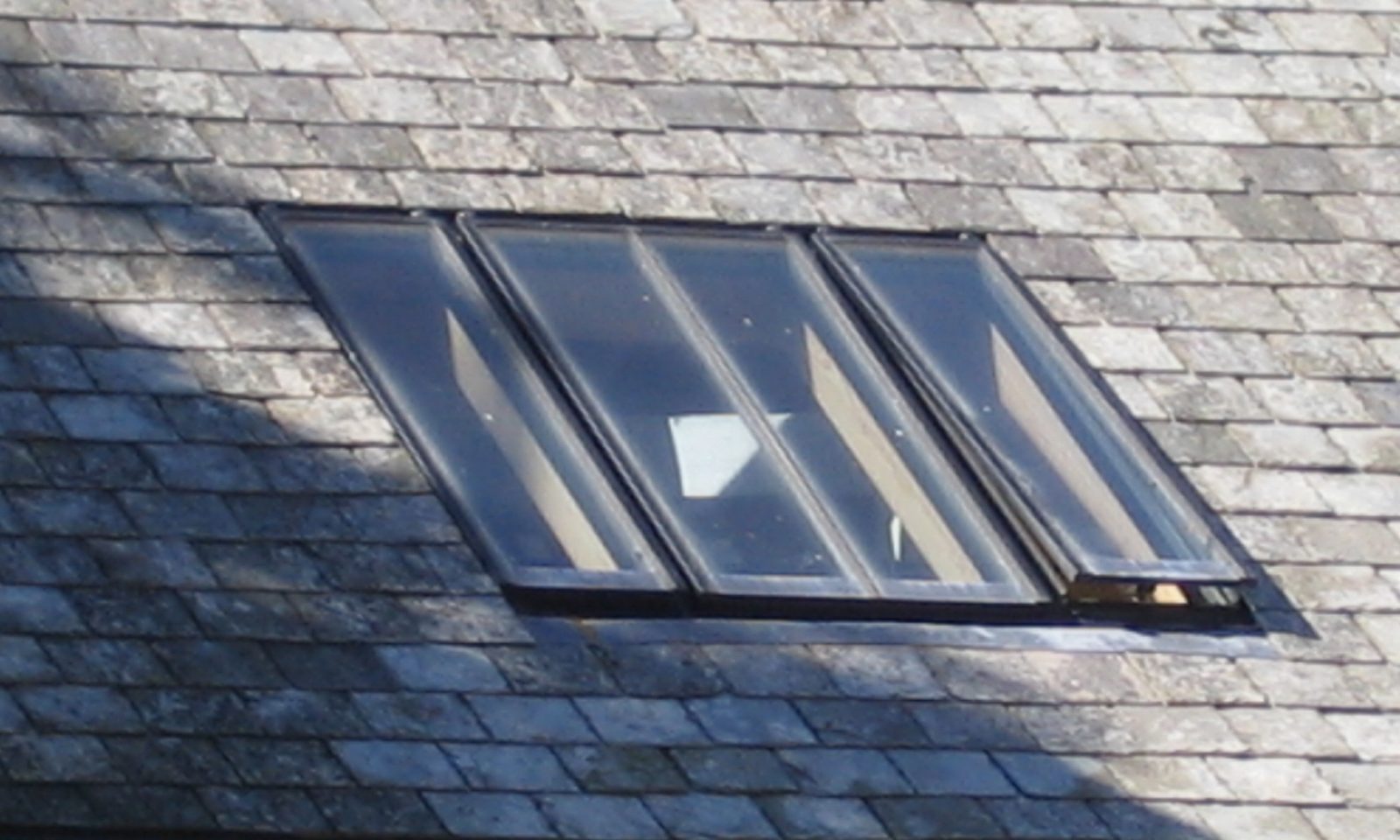
Look over the whole frame every six months for chips, scratches through to bare metal, cracking, blistering or orange rust spotting. If you find damage, photograph it, note the date in the building log and contact the manufacturer for advice on repair.
The usual causes are scaffolding, dropped tools, slipped slates and abrasive cleaning. We do not recommend improvising with a general-purpose paint: an incompatible product can trap moisture or fail to bond, and may affect the guarantee. The manufacturers will advise on the correct method and material for their finish. Clement asks for problems to be reported within 48 hours of discovery; The Rooflight Co. asks owners to report coating damage for assessment.
When other trades work nearby, ask them to board over the frame first. It costs very little compared with a damaged finish.
Flashings, soakers and the roof around the rooflight
Check the flashings, side soakers and surrounding slates or tiles at least once a year. Most leaks blamed on rooflights start in the roof around them.
- Head flashing. Tight to the frame and dressed under the course above.
- Side soakers. Lead soakers at each course are the traditional detail on sensitive buildings. Check none have slipped.
- Cill or apron flashing. Flat, unsplit, and discharging cleanly onto the course below.
- Slates and tiles. Slipped or cracked units above the frame can block the head gutter.
- Lead condition. Splits, fatigue cracking, or white carbonate staining washing onto the glass.
Lead repairs are specialist work; our Index lists leadwork specialists experienced on traditional roofs.
Condensation or a leak? Diagnosing damp around a rooflight
Water inside around a rooflight is either condensation forming on cold surfaces or rain getting in from outside. The pattern tells you which: condensation appears on cold mornings regardless of rain, while leaks follow rainfall and wind direction.
| Sign | More likely condensation | More likely a leak |
|---|---|---|
| Timing | Cold, still mornings; after cooking, bathing or drying clothes | During or after rain, especially wind-driven rain |
| Location | Evenly across the inner glass and frame; runs to the cill | Concentrated at a corner, the head or one side |
| Staining | Mould spotting on reveals and lining | Tide marks on plaster, often spreading below the rooflight |
| Room | Bathrooms, kitchens, bedrooms with doors shut | Any room; not linked to activity |
| Dry weather | Still appears | Stops |
Some rooflights have a condensation channel at the base of the frame that drains outwards through small holes in the cill. If those holes block, the channel overflows and looks like a leak.
Condensation is solved in the room: working extract fans, trickle ventilation, regular opening, and no indoor laundry drying. Our article on the problem with condensation explains the mechanism in older buildings.
For a leak, work outwards: head gutter, head flashing, soakers, roof covering above, then the glazing seal. A hose test run section by section from the bottom up, with someone watching inside, usually isolates the source. The correct detailing is in our installation chapter.
Exposure and coastal sites
Salt-laden air attacks steel coatings far faster than inland air, so coastal and exposed sites need extra care and a conversation with the manufacturer before ordering.
The coating system and its pre-treatment do most of the work. The Rooflight Co. offers a hot zinc spray pre-treatment beneath its powder coat, but its frame guarantee still reduces nearer the sea: ten years beyond 5 km, five years between 500 m and 5 km, and twelve months within 500 m. Clement does not recommend its rooflights for marine environments within five miles of the coast and asks to discuss such sites directly.
On exposed sites:
- Give the manufacturer the distance to the coast and the slope’s orientation at quotation stage.
- Ask what pre-treatment and coating are proposed, and what guarantee applies.
- Clean at least quarterly; salt holds moisture on the finish.
- Inspect more often and report damage immediately.
Rooflight warranty registration and guarantees compared
Guarantees on conservation rooflights vary by component, and the frame finish carries the longest cover. Registering the unit and keeping a maintenance record are what secure the longer terms.
| Component | The Rooflight Co. | Clement Windows Group |
|---|---|---|
| Standard cover | 12 months, extendable on registration | Component-based, see below |
| Frame / finish | Mild steel frame: 10 years (over 5 km from sea). Zinc pre-treated frame: 10 years (over 5 km), 5 years (500 m–5 km), 12 months (within 500 m) | 10 years on the paint surface |
| Sealed glazing unit | 5 years (with silicone) | 5 years on glass unit failure |
| Fittings and ancillaries | 12 months (gas struts, motors, blinds, controls) | 1 year on fittings |
| Internal timber lining | 12 months | Not stated separately |
| Conditions | Register each unit by serial number; correct installation for the location; recorded maintenance | Report problems within 48 hours |
| Coastal note | Cover reduces nearer the sea | Not recommended within five miles of the coast |
Terms change, so confirm them at order stage. Make registration a contractor handover item, with serial numbers noted against each rooflight location.
Keeping a building log
A simple building log, paper or digital, is the best maintenance tool you can have. It records what was installed, what was done and when, and it is the evidence a manufacturer will ask for if something goes wrong.
For each rooflight, record:
- Location, manufacturer, product, size, serial number and installation date
- Glazing specification and options (motor, blind, escape hinge)
- Registration date and guarantee reference
- Installer and leadworker
- Each inspection: date, who, what was done and found, with photographs
- Damage reported, to whom, and the outcome
Log the rainwater goods alongside: profile, when last painted and when last cleared. The record helps with later consent applications and future owners will value it.
Repairing surviving historic cast iron rooflights
Where an original cast iron rooflight survives, repair it before considering replacement. Historic cast iron rooflights are part of the building’s significance, and most defects can be repaired by a competent metalworker.
Victorian and Edwardian cast iron skylights survive on barns, stables, terraces and industrial buildings. Typical faults are corrosion, broken glazing, failed putty, seized stays and decayed upstands. Cast iron corrodes slowly compared with thin steel, so a poor-looking frame often has plenty of sound metal.
A typical repair sequence:
- Record with photographs and measurements before removal.
- Remove loose paint and corrosion, testing old paint for lead first.
- Repair cracks, casting replacement parts from a pattern taken from surviving pieces.
- Prime and repaint. Linseed oil paint suits cast iron frames: it stays flexible and can be maintained by rubbing down and recoating without stripping. See our page on linseed oil paint for cast iron.
- Reglaze with appropriate glass and putty; overhaul the stay.
- Renew flashings and upstand.
On a listed building, repairs that change glass or profile may need consent; our consent and permissions chapter explains when.
Inspect gutters, hopper heads and rooflight flashings on the same visit
The best time to check rooflights is on the same visit as the gutters and downpipes. The access is the same, the weather conditions are the same, and many rooflight leaks start with rainwater goods that are not coping.
Rooflights concentrate water: each head gutter throws it sideways onto the courses below, and the slope discharges into the eaves gutter. A blocked or undersized gutter overflows onto walls and back under the eaves; a blocked hopper head or cracked downpipe does the same lower down. One inspection shows the whole path of the water from ridge to ground.
Cast iron gutters, hoppers and pipes also need a repainting cycle with linseed oil paint every few years, alongside clearing and checking joints. If the rooflight work needs scaffolding, that is the cheapest moment to overhaul them. Our chapter on roof works and rainwater goods covers this in more detail, and our cast iron guttering and rainwater heads pages show the profiles available.
Common mistakes
- Using abrasive cleaners or scourers. They wear through the coating and create the damage you are trying to prevent.
- Forgetting the head gutter. It cannot be seen from inside, and it is where most debris-related leaks start.
- Improvising paint repairs. An incompatible product can trap moisture and affect the guarantee. Ask the manufacturer.
- Not registering, or keeping no log. Extended cover may depend on both.
- Leaving the frame unprotected during roof works. Dropped slates and tools chip coatings.
- Confusing condensation with a leak. Check timing and pattern first.
- Leaving motorised units unused. Faults surface after the guarantee has expired.
- Ordering a standard specification for a coastal site. Discuss exposure first.
- Replacing a repairable historic cast iron rooflight. Repair first.
Illustrative scenarios
The scenarios below are illustrative composites drawn from typical projects. They are not specific buildings or Tuscan Foundry commissions.
A converted stone barn, north Shropshire — unlisted
Four rooflights on a converted barn’s north slope began staining the plaster below after a wet autumn. The owners assumed the glazing had failed. Inspection found the head gutters packed with oak leaves and moss, with water backing under the frame at each head. Clearing and rinsing the gutters cured three units. The fourth had a slipped slate above it, which a roofer refixed. Six-monthly clearing went into the owners’ log.
A Grade II listed rectory, coastal Norfolk
The architect specifying rooflights for a rear roof slope about two miles from the sea contacted both manufacturers at design stage. One advised against its product at that distance; the other proposed a zinc pre-treated frame with a reduced guarantee period to reflect the exposure. The client accepted the shorter cover, programmed quarterly freshwater cleaning into the maintenance plan and recorded the guarantee terms in the building log.
A Victorian terrace, Midlands conservation area
A surviving cast iron skylight over a stairwell had seized, lost several panes and was heavily rusted. A metalworker found the frame largely sound. It was cleaned, a cracked glazing bar was cast new from the surviving one, and the frame was primed and finished in linseed oil paint. The owner used the same scaffold to overhaul the cast iron gutters and replace a cracked hopper head.
A converted stable range, Wiltshire — curtilage listed
Occupants reported water on a bedroom floor below a rooflight every winter morning, but never during daytime rain. The pattern pointed to condensation. The condensation drainage holes in the cill were blocked with dust and paint. Clearing them, fitting a working extract fan in the adjoining shower room and opening the rooflight briefly each morning resolved the problem without any roof work.
Where to go next
Speak to the manufacturers directly
The Rooflight Co. — Bourton-on-the-Water, Gloucestershire. Makers of The Original Conservation Rooflight, the Conservation Egress side-hung escape unit and the Conservation Plateau for flat roofs. Tel 01993 833155 · hello@therooflightco.com · therooflightco.com · Index listing
Clement Windows Group — Haslemere, Surrey. Makers of the Clement Conservation Rooflight in separate slate and tile profiles, with a published size and price list and a showroom in Haslemere. Tel 01428 643 393 · info@clementwg.co.uk · clementwindows.co.uk · Index listing
Enquiries go straight to the manufacturer. Tuscan Foundry is not a rooflight supplier and receives no commission; we feature these two because their conservation ranges are made for exactly the buildings this guide covers.
For existing installations, The Rooflight Co. handles maintenance and guarantee questions at customerservices@therooflightco.com. Other chapters of the Conservation Rooflight Guide cover specification, consent, glazing and installation.
Tuscan Foundry supplies cast iron gutters, downpipes and hopper heads to BS 460 for listed and traditional buildings, with an in-house linseed oil paint finish. A failing gutter below a rooflight undoes good flashing work above it, and a scaffolded roof is the cheapest moment to repair or replace one. Stock items dispatch promptly; bespoke and copy-cast items take around 12–14 weeks from pattern approval, so book our site survey service early in the programme.
Frequently asked questions
How often should I clean a conservation rooflight?
Clean a conservation rooflight at least every six months, using warm water with a little mild detergent and a soft cloth, then rinse with clean water. In polluted areas, beneath trees or near the coast, clean more often, as dirt and salt sit on the coating and hold moisture against the steel.
What should I use to clean a steel rooflight?
Use warm water, a small amount of washing-up liquid and a soft cloth or sponge, then rinse. Avoid abrasive cleaners, scouring pads, solvents and blades. De-ionised water reduces streaking on the glass. If the glass has a self-cleaning coating, check the manufacturer’s guidance before using any cleaning product.
Why is my rooflight leaking?
Most rooflight leaks start at the head, where a blocked top gutter lets water back up under the frame, or in the flashings and soakers around it. Slipped slates or tiles above the rooflight are another common cause. Check whether the water appears only during rain; if it appears on cold dry mornings, it is more likely to be condensation.
How do I tell condensation from a leak around a rooflight?
Condensation appears on cold mornings whether or not it has rained, spreads evenly over the inner glass and frame, and is worse in bathrooms and bedrooms. A leak follows rainfall, often wind-driven rain, and shows up at one corner, the head or one side, with tide marks on the plaster below.
How do I lubricate rooflight hinges and winders?
Put a drop of light oil on the manual winder spindle monthly and oil the hinges sparingly once a year. Wipe away any excess so it does not run onto the coating or glass. Do not oil the weather seals. If a winder becomes stiff, check that the casement is not binding before applying force.
What should I do if the coating on my rooflight is chipped?
Photograph the damage, note the date in your building log and contact the manufacturer for advice on the correct repair method and material. Do not use a general-purpose paint, which may not bond to the factory finish and could affect the guarantee. Report damage promptly; Clement asks for problems to be reported within 48 hours.
Why is my steel rooflight rusting?
Steel rooflights rust when water reaches bare metal through a break in the coating, usually from a chip caused during roof works, abrasive cleaning or debris sliding onto the frame. Salt air on coastal sites accelerates the process. Report rust spotting to the manufacturer early, before it spreads beneath the surrounding finish.
Do I need to register my rooflight for the warranty?
For The Rooflight Co., yes: the standard cover is 12 months, and the longer guarantees apply when each unit is registered by serial number, correctly installed for its location and maintained with a record kept. Check the current terms with whichever manufacturer supplied your rooflight and keep the paperwork with the building records.
How long is the guarantee on a conservation rooflight?
It depends on the component. Frame finishes typically carry up to ten years, sealed glazing units five years, and motors, gas struts, blinds and fittings around one year. The Rooflight Co.’s frame cover reduces closer to the sea. Confirm the current terms with the manufacturer at order stage.
Can I fit a conservation rooflight near the coast?
Possibly, but discuss the site with the manufacturer first. Clement does not recommend its rooflights for marine environments within five miles of the coast. The Rooflight Co. offers a zinc pre-treated frame, with guarantee periods that shorten closer to the sea. Expect to clean and inspect more often on exposed sites.
How often should motorised rooflights be operated?
Run a motorised rooflight at least every couple of weeks to keep the motor, chain and controls working. Remember that an open motorised unit is not locked in position: strong wind can close it. Faults on motors are usually covered for 12 months, so report them early.
Can an old cast iron rooflight be repaired?
Usually, yes. Cast iron corrodes slowly, and a frame that looks poor often has sound metal beneath. A metalworker can clean it, repair or recast broken parts, and repaint it; linseed oil paint suits cast iron well. On a listed building, check whether listed building consent is needed before starting.
Should I check the gutters when I inspect my rooflights?
Yes. Rooflights concentrate water onto the slope below, and a blocked eaves gutter or hopper head causes overflows that can look like rooflight leaks. Inspecting gutters, hopper heads, downpipes and rooflight flashings on the same visit shows the whole path of the water and saves on access costs.