
Cast Iron Gutters in Carmarthenshire: Heritage Rainwater Systems for the Listed Buildings of the Tywi Valley, the Coalfield and the Coast
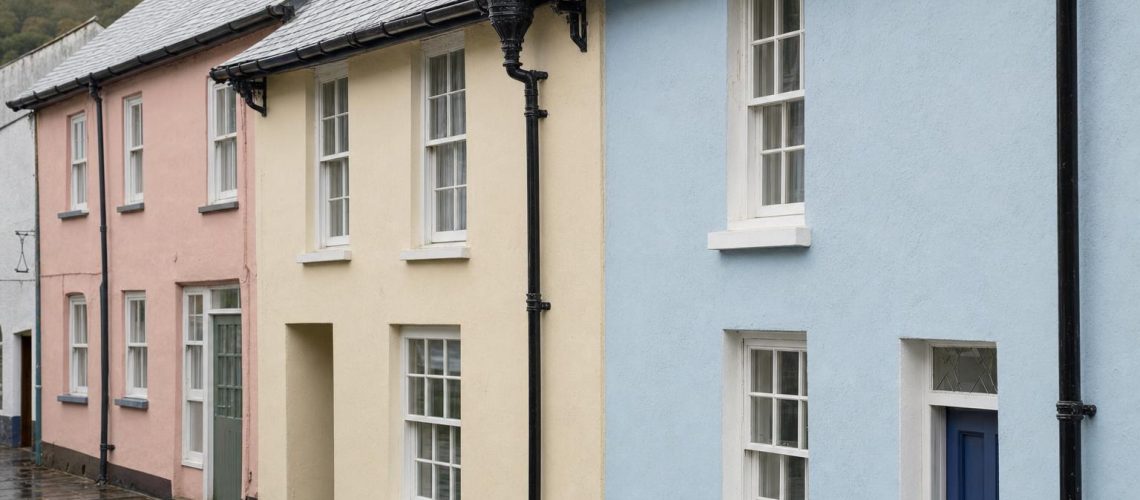
From the colour-washed Georgian streets of Llandeilo and Laugharne to the Grade I Guildhall in Carmarthen and the industrial terraces of Llanelli, Carmarthenshire holds more than 1,800 listed buildings. We explain how to specify authentic cast iron gutters, downpipes and hopper heads that satisfy Cadw guidance and the county’s conservation officers.
Technical Summary
Cast iron remains the correct rainwater material for most listed and conservation-area buildings in Carmarthenshire. The county has around 1,848 listed buildings and 27 conservation areas, and its historic stock — Georgian town houses, chapels, farmsteads and Victorian industrial terraces — was almost all built with cast iron gutters and downpipes, or with lead heads later supplemented by cast iron. Like-for-like replacement in cast iron, matching the existing profile, size, joint and fixing, is the approach Cadw guidance and Carmarthenshire County Council’s Built Heritage team expect. We supply standard half-round, beaded, ogee and moulded profiles from stock for prompt despatch, and copy cast or radius gutters in around 12–14 weeks. Changing material or profile on a listed building normally needs Listed Building Consent, so owners should confirm the position with the council before work begins.
Contents
- Carmarthenshire’s Heritage Landscape
- Typical Heritage Buildings and Materials in Carmarthenshire
- Cast Iron on Listed and Conservation Properties in Carmarthenshire
- Planning, Consent and Conservation Guidance in Carmarthenshire
- Cast Iron Profiles and Products Commonly Used in Carmarthenshire
- Maintaining Cast Iron Rainwater Goods in Carmarthenshire’s Climate
- Common Specification Mistakes on Carmarthenshire Buildings
- Landmark Buildings in Carmarthenshire
- Working With Us on Carmarthenshire Projects
- Frequently Asked Questions
- Conclusion
Carmarthenshire’s Heritage Landscape
For listed and historic buildings in Carmarthenshire, the right rainwater system is almost always traditional cast iron, matched to the existing profile and fixed in the original way, because that is what the buildings were designed with and what Cadw and the county’s conservation officers expect to see retained.
Carmarthenshire is the largest county in south-west Wales and one of the richest in historic buildings. Carmarthenshire County Council records around 1,848 listed buildings: 24 at Grade I, 120 at Grade II* and 1,704 at Grade II. They range from castles and country houses to cottages, chapels, farm buildings, bridges and even telephone kiosks. The county also has 27 designated conservation areas, from Carmarthen’s historic core and Lammas Street to Llandeilo, Llandovery, Laugharne, Kidwelly, Llanelli, Cenarth and Llangadog.
The eastern uplands around the Black Mountain, Llanddeusant and Myddfai fall within Bannau Brycheiniog National Park, which acts as its own planning authority. The rest of the county is covered by Carmarthenshire County Council.
This guide is written for conservation architects, surveyors, contractors and owners of listed and period property in the county. It covers the building types and materials you will meet, what Cadw and the council expect, which profiles suit which buildings, how to maintain cast iron in a wet and partly coastal climate, and the mistakes that most often cause problems. Getting rainwater goods right matters more than their modest cost suggests: a failed gutter or blocked hopper is one of the most common causes of damp, decay and timber rot in historic buildings across west Wales.
We supply traditional cast iron gutters, downpipes and hoppers for projects across the whole county, including Grade I and Grade II* buildings, chapels and conservation-area streets. We work with architects, surveyors, contractors and owners to specify authentic cast iron rainwater systems that satisfy conservation requirements and last for generations.
Typical Heritage Buildings and Materials in Carmarthenshire
Carmarthenshire’s historic stock divides into three broad landscapes: the colour-washed Georgian market towns of the Tywi valley, the Victorian industrial towns of the coalfield around Llanelli and Ammanford, and the farmsteads and chapels of the rural north and west. Each calls for slightly different rainwater detailing.
The Tywi valley market towns
Llandeilo, Llandovery and Carmarthen itself are dominated by Georgian and early Victorian town houses, inns and shops, many rendered and colour-washed in the pastel shades that give Llandeilo’s Rhosmaen Street and King Street their character. Roofs are typically Welsh slate at moderate pitch, with eaves gutters carried on rafter-foot or drive-in brackets. Ogee and half-round profiles both occur, with ogee more common on the better-quality Georgian frontages and half-round on the plainer houses behind.
Carmarthen and Laugharne
Carmarthen has the county’s densest concentration of listed buildings, with more than 300 in the town. Guildhall Square, Quay Street, King Street and Lammas Street retain late Georgian brick and stucco frontages, several with parapets that conceal box or valley gutters behind. Laugharne, on the Tâf estuary, is a small Georgian town of colour-washed houses climbing from the castle and is a conservation area in its own right.
The coalfield and the coast
Llanelli, Burry Port, Pembrey and the Amman valley grew on coal, tinplate and copper. Their Victorian and Edwardian terraces, chapels and civic buildings use Pennant sandstone, local brick and slate, and were fitted almost universally with half-round or deep half-round cast iron gutters and round downpipes. Along Carmarthen Bay, from Laugharne to Burry Port, salt-laden westerly weather shortens paint life and makes good coating practice especially important.
Rural Carmarthenshire
The Teifi valley around Newcastle Emlyn and Cenarth, and the uplands above Llandovery, are farmstead and chapel country. Rubble stone, lime render and limewash, slate roofs and plain half-round or beaded half-round gutters are the norm. Many chapels carry large cast iron hopper heads, sometimes dated or initialled.
Cast iron suits all of these buildings because of its proportion and shadow line. A heavy cast ogee reads correctly against a stuccoed Georgian façade in a way a thin modern section never does, and a half-round gutter on substantial brackets sits naturally on a rubble-stone chapel eaves.
Cast Iron on Listed and Conservation Properties in Carmarthenshire
Cast iron is routinely specified on Carmarthenshire’s listed buildings because the rainwater goods form part of the listed fabric, and the accepted conservation approach is to repair what survives and replace like for like where it cannot be saved.
In Wales, a listing covers the whole building, inside and out, including attached fixtures such as gutters, downpipes and hopper heads. Cadw’s guidance on managing change to listed buildings stresses retaining historic fabric, and where replacement is unavoidable, using matching materials and details. For rainwater goods, that means cast iron.
Matching the existing profile matters as much as matching the material. Half-round, beaded half-round, ogee, moulded ogee and box sections each sit differently on the eaves and cast a different shadow. Fitting a half-round where an ogee was intended, or a smaller section than the original, changes the appearance of the elevation and can reduce capacity. Before ordering, we recommend measuring the existing gutter carefully: overall width, depth, profile shape and the joint type. Our measuring checklist for cast iron rainwater goods sets out what to record.
Conservation officers in the county generally expect to see:
- Retention and repair of sound historic sections, with replacement limited to what is beyond repair
- Like-for-like replacement in cast iron, matching profile, size and joint detail
- Traditional fixings — brackets, spikes and pipe ears appropriate to the building’s date
- A painted finish in a suitable colour, often black, but in some streets a historic colour supported by paint evidence
- Retention of dated or decorated hopper heads in situ wherever possible
Engaging early pays off. A short pre-application conversation, supported by photographs and a clear specification, usually avoids abortive work and delay. Where historic sections are damaged or missing, we can copy cast a matching profile from a surviving piece.
Planning, Consent and Conservation Guidance in Carmarthenshire
Listed Building Consent in Carmarthenshire is determined by Carmarthenshire County Council, or by Bannau Brycheiniog National Park Authority within the National Park. Like-for-like repair usually does not need consent; changes to material, profile or appearance usually do.
Do I need Listed Building Consent to replace gutters in Carmarthenshire?
Repairing or replacing cast iron gutters and downpipes with identical cast iron sections, in the same profile, size and position, is generally treated as repair and does not normally need consent. Changing the material, profile, size, colour or the route of a downpipe on a listed building is an alteration and normally does. Because the decision rests with the local planning authority, owners should confirm the position for their own building before work starts.
What do conservation officers in Carmarthenshire expect for rainwater systems?
Carmarthenshire County Council’s Built Heritage team expects historic rainwater goods to be retained and repaired where possible, and replaced in matching cast iron where not. They will typically want to see the existing profile identified, fixings that suit the building, and a finish appropriate to the street. Early pre-application advice is available from the council and is worth taking on any Grade I or II* building.
Can I change the gutter profile on a listed building in Carmarthenshire?
Changing the profile is an alteration that would normally need Listed Building Consent, and it is only likely to be supported where there is evidence that the current profile is itself a later, inappropriate replacement. In that case, historic photographs, surviving fragments or matching buildings in the same terrace can justify reinstating the original profile.
What about conservation areas?
Unlisted buildings in Carmarthenshire’s 27 conservation areas are subject to lighter controls, but the council has been reviewing its conservation area appraisals and places weight on traditional details. Where a building has lost its cast iron, reinstating it is one of the simplest ways to enhance a conservation area.
Listed building law in Wales is now set out in the Historic Environment (Wales) Act 2023, supported by Planning Policy Wales, Technical Advice Note 24 and Cadw’s best-practice guidance. Our guide to shared gutters on listed terraces covers the extra consent and neighbour questions that arise on terraced streets such as those in Carmarthen and Llanelli.
Cast Iron Profiles and Products Commonly Used in Carmarthenshire
The profile should follow the building. In Carmarthenshire, half-round and beaded half-round dominate the terraces, chapels and farmsteads, while ogee and moulded ogee belong on the better Georgian frontages of Carmarthen, Llandeilo, Llandovery and Laugharne.
| Building type in Carmarthenshire | Typical profile | Typical downpipe |
|---|---|---|
| Victorian terraces, Llanelli and the Amman valley | Half-round or deep half-round | 65–75 mm round |
| Georgian town houses, Llandeilo and Laugharne | Ogee or moulded ogee | 65–75 mm round or rectangular |
| Parapeted frontages, Carmarthen | Box or valley gutter behind parapet, with hopper heads | Round or rectangular with decorative hopper |
| Chapels and churches | Half-round or ogee, often large sections | 75–100 mm round with hopper heads |
| Farmsteads and cottages, Teifi and Tywi valleys | Beaded half-round or plain half-round | 65 mm round |
We hold cast iron half-round gutters, beaded half-round gutters, ogee gutters and cast iron hopper heads in a range of sizes, together with round cast iron downpipes and fittings.
For curved bays, bow fronts and corner buildings, we supply bespoke and radius cast iron gutters made to the measured curve. Lead times matter for programming: standard stock is available for prompt despatch, while copy casting, bespoke profiles and radius gutters typically take around 12–14 weeks. We always recommend raising these items early.
Carmarthenshire’s high rainfall is worth noting. The west of the county receives well above the UK average, and large chapel roofs can overwhelm an undersized gutter. Where a replacement is needed, we check catchment and outlet positions rather than simply copying an inadequate later section.
Maintaining Cast Iron Rainwater Goods in Carmarthenshire’s Climate
Cast iron gutters in Carmarthenshire last longest when they are cleared at least once a year, repainted on a regular cycle, and repaired promptly at joints and fixings. Wet westerly weather, tree cover in the river valleys and salt air on the coast all shorten the interval between visits.
Most failures we see in the county are not failures of the iron itself. They start with blocked outlets, leaf build-up from the woodland of the Tywi and Teifi valleys, or a weeping joint that has been left for years. Water then overflows onto render and stonework, and the paint film breaks down from behind. Our guide to the ten signs that cast iron guttering is failing explains what to look for.
| Task | Inland Carmarthenshire | Coastal sites (Laugharne to Burry Port) |
|---|---|---|
| Clear gutters, outlets and hoppers | Annually, plus after autumn leaf fall | Twice a year |
| Inspect joints, brackets and pipe ears | Annually | Annually |
| Touch in damaged paint | As needed | Every 2–3 years |
| Full redecoration | Every 6–8 years | Every 4–6 years |
When redecorating, prepare back to a sound surface, treat any rust, and apply a primer and topcoats compatible with the existing system. A linseed oil paint system is easy to maintain because it can be cleaned down and recoated without stripping. Near Carmarthen Bay, our guide to linseed oil paint in salt-air environments sets out the extra steps worth taking.
Brackets deserve particular attention on older buildings. Rafter-foot brackets rust where they are hidden under the slates, and drive-in spikes loosen as mortar joints weather. Check bracket spacing and fall at the same time; our cast iron gutter bracket spacing guide gives the typical centres.
Common Specification Mistakes on Carmarthenshire Buildings
The most common mistakes are replacing the wrong profile, undersizing gutters and outlets for the county’s rainfall, and discarding historic hopper heads that could have been repaired.
We regularly see the same errors on projects across south-west Wales:
- Copying a later replacement — matching a 1960s section instead of the original profile shown in old photographs or surviving on neighbouring buildings
- Undersizing — fitting a smaller gutter because it is cheaper or easier to find, on a chapel or farmhouse roof that needs a deep or large section
- Moving downpipes — re-routing pipes for convenience, which changes the elevation and usually needs consent on a listed building
- Mixing materials — patching a cast iron run with a different material, which looks wrong and creates joint and movement problems
- Skipping preparation — painting over rust and old flaking paint, so the new coating fails within a few years
- Ignoring lead times — ordering copy cast or radius items late and holding up scaffolding and the wider programme
Each of these is avoidable with an accurate survey and a clear specification at the start. Where the evidence is uncertain, it is worth photographing and measuring before anything is taken down.
Landmark Buildings in Carmarthenshire
Carmarthenshire’s landmark buildings show the full range of rainwater challenges in the county, from early eighteenth-century rainwater heads to the parapet gutters of a Georgian guildhall. The examples below are described for their conservation lessons; they are not presented as our projects.
Llanelly House, Llanelli (Grade I)
Built in 1714 for Sir Thomas Stepney, Llanelly House is described as the finest early Georgian town house of its type in South Wales, and its listing records the date 1714 on a rainwater head. It reopened in 2013 after a ten-year restoration. Buildings like this show why dated heads should be kept in place and repaired rather than replaced, and why any new downpipes below them should follow the original sizes and routes.
The Guildhall, Carmarthen (Grade I)
Carmarthen’s Guildhall, built between 1767 and 1777 to designs by Sir Robert Taylor, dominates Guildhall Square. Its classical elevations rely on concealed and parapet drainage, where blocked outlets and failed box gutters can saturate masonry unseen. For buildings of this importance, a measured survey of every outlet, hopper and downpipe run should come before any specification, with heads and pipes matched in section and fixing to the surviving historic work.
Laugharne Town Hall (Grade II*)
Laugharne’s Town Hall is listed at Grade II* for its townscape importance at the heart of a Georgian estuary town. Small civic buildings like this are exposed to salt-laden weather from Carmarthen Bay, which attacks paint and fixings quickly. The lesson here is coating: thorough preparation, a sound primer and a linseed oil paint system maintained on a regular cycle, with fixings checked whenever the building is redecorated.
Kidwelly Town Hall
Kidwelly Town Hall is listed as the central feature of the modern town, below the castle and within the Kidwelly conservation area. Civic buildings of this kind often lose their original rainwater goods piecemeal over the twentieth century, leaving a mix of profiles. Restoring a consistent cast iron system, matched to the best surviving section, does as much for the street as for the building itself.
Llandeilo and Llandovery conservation areas
The colour-washed Georgian streets of Llandeilo and Llandovery contain more than 200 listed buildings between them. Terraced houses here often share gutter runs across party walls, so a replacement on one house affects its neighbours. Agreeing profile, colour and outlet positions along a whole run, and replacing in cast iron throughout, keeps the street’s continuous eaves line intact.
We regularly supply half-round, ogee and beaded gutters, downpipes and hopper heads for Grade II listed farmhouses, chapels, town houses and terraces across Carmarthenshire, alongside larger commissions for churches and civic buildings.
Working With Us on Carmarthenshire Projects
We supply cast iron rainwater systems throughout Carmarthenshire, from Carmarthen, Llanelli and Ammanford to Llandeilo, Llandovery, Laugharne, Kidwelly and Newcastle Emlyn, and we deliver direct to site.
Most projects follow a simple sequence:
- Enquiry — send us photographs, drawings or a schedule of what is needed
- Identification — we help identify the existing profile, size and joint type
- Specification — we advise on sections, fixings, outlets and finishes suited to the building
- Quotation — itemised, with lead times stated clearly
- Manufacture and delivery — stock items despatched promptly; copy cast, bespoke and radius items typically around 12–14 weeks
For complex restorations, difficult access, or buildings where components are damaged or missing, our on-site survey service is a chargeable professional service that protects the project from costly mismatches. As a Mid Wales business, Carmarthenshire is close to home for us.
For copy casting, the most useful reference material is a physical sample or fragment, supported by photographs and measured drawings. Our products for heritage buildings cover the full range of traditional components, and our churches and ecclesiastical buildings page sets out how we support chapel and church projects.
Contact us to discuss cast iron rainwater systems for your Carmarthenshire project on 0333 987 4452, or through our contact page.
Frequently Asked Questions
Do I need Listed Building Consent to replace cast iron gutters on a Grade II listed building in Carmarthenshire?
Not usually, if the replacement is identical cast iron in the same profile, size and position, because that is generally treated as repair. Changing material, profile, colour or downpipe routes normally needs consent from Carmarthenshire County Council, or Bannau Brycheiniog National Park Authority inside the National Park. Always confirm with the authority before work starts.
How many listed buildings are there in Carmarthenshire?
Carmarthenshire County Council records around 1,848 listed buildings: 24 at Grade I, 120 at Grade II* and 1,704 at Grade II. The county also has 27 conservation areas.
What type of cast iron guttering is best for listed buildings in Carmarthenshire?
The best gutter is the one that matches what the building was built with. Half-round and beaded half-round suit most terraces, chapels and farmsteads, while ogee and moulded ogee suit the better Georgian frontages of Carmarthen, Llandeilo, Llandovery and Laugharne.
Can cast iron gutters be used in conservation areas in Carmarthenshire?
Yes. Cast iron is the traditional material in all of Carmarthenshire’s 27 conservation areas, and reinstating it where it has been lost is one of the simplest ways to enhance a conservation area’s character.
Who do I speak to about listed building consent in Carmarthenshire?
Contact Carmarthenshire County Council’s Built Heritage team, which advises on listed buildings and conservation areas across the county. Within Bannau Brycheiniog National Park, the National Park Authority is the planning authority.
Do you supply cast iron rainwater systems to Carmarthen, Llanelli and the surrounding area?
Yes. We supply and deliver cast iron gutters, downpipes and hopper heads throughout Carmarthenshire, including Carmarthen, Llanelli, Ammanford, Llandeilo, Llandovery, Laugharne, Kidwelly and Newcastle Emlyn.
Can you copy cast a gutter profile from a listed building in Carmarthenshire?
Yes. We can copy cast gutters, hopper heads and fittings from a surviving sample, supported by photographs and measurements. Copy casting typically takes around 12–14 weeks, so it should be raised early in the programme.
How long does delivery take to Carmarthenshire?
Standard stock items are available for prompt despatch and delivered direct to site. Bespoke, copy cast and radius gutters typically take around 12–14 weeks; we confirm timings at quotation.
What paint should be used on cast iron gutters near the coast in Carmarthenshire?
Along Carmarthen Bay, thorough surface preparation and a well-maintained linseed oil paint system give the best results. Salt exposure shortens maintenance intervals, so inspect and touch in more frequently than on inland buildings.
How long do cast iron gutters last on historic buildings?
Properly maintained cast iron gutters and downpipes routinely last more than 100 years. Regular clearing, prompt joint repairs and repainting every five to eight years, or more often on exposed sites, are the keys to longevity.
Should dated hopper heads be kept when replacing downpipes?
Yes. Dated, initialled or decorated hopper heads are part of a building’s history and its listing. They should be repaired and refixed in place, with new downpipes matched to them beneath.
Is cast iron a sustainable choice for heritage buildings?
Yes. Cast iron is long-lasting, repairable and fully recyclable, and on a listed building it avoids the repeated replacement cycles of short-life materials.
Conclusion
Specifying rainwater goods for Carmarthenshire’s historic buildings comes down to a few clear principles: identify and match the existing profile, retain and repair sound historic sections and dated hopper heads, replace like for like in cast iron, and agree any change with Carmarthenshire County Council or the National Park Authority before work starts. Size gutters and outlets for the county’s heavy rainfall, and protect them with a properly prepared and maintained paint system, especially near the coast.
At Tuscan Foundry Products, we have supplied traditional cast iron rainwater goods for heritage buildings since 1893. From our base in Mid Wales, we support architects, surveyors, contractors and owners across Carmarthenshire with stock profiles, copy casting, radius gutters and on-site surveys. To discuss your project, call us on 0333 987 4452 or visit tuscanfoundry.com.