
Cast Iron Gutters in Suffolk: Heritage Rainwater Systems for Wool Towns, Flint Churches and the Coast
From timber-framed wool towns and pargetted cottages to flint churches, Georgian market towns and an exposed North Sea coast, Suffolk’s historic buildings depend on rainwater goods that are correctly matched and properly maintained. This guide sets out how we approach cast iron gutters, downpipes and hopper heads for listed and conservation-area buildings across the county.
Technical summary: Historic buildings in Suffolk generally require cast iron rainwater goods that match the existing profile, size, joint and fixing detail: beaded or plain half-round on timber-framed, vernacular and Victorian buildings, ogee on Georgian frontages, and box gutters, larger sections or bespoke castings on churches, country houses and industrial buildings. Thatched roofs are not guttered. Listed Building Consent is decided by the relevant council (East Suffolk, West Suffolk, Ipswich, or Babergh and Mid Suffolk) or, in the Broads, by the Broads Authority, and a change of material or profile will usually need it. Coastal buildings need a maintained linseed oil paint system with shorter inspection intervals. We supply standard systems for prompt despatch, copy cast lost profiles in typically 12 to 14 weeks, make radius gutters in typically 12 to 14 weeks, and offer chargeable site surveys for complex projects.
Suffolk's Heritage Landscape
Suffolk’s historic buildings were shaped by the medieval wool and cloth trade, by clay rather than stone, and by a long, exposed North Sea coast. Cast iron gutters in Suffolk should match the profile, size and fixing of the originals on each building, usually half-round, beaded half-round or ogee, finished in linseed oil paint and agreed with the local planning authority where the building is listed. We supply cast iron guttering, downpipes, hopper heads and bespoke castings for listed and conservation-area projects across the county.
The Suffolk Preservation Society records more than 13,000 listed buildings and 173 conservation areas in the county. East Suffolk alone has around 3,600 listed buildings, 111 of them Grade I and 240 Grade II*. Two National Landscapes fall wholly or partly within Suffolk: the Suffolk & Essex Coast & Heaths, designated in 1970 and extended over the Stour estuary in 2020, and the Dedham Vale, also designated in 1970 and better known as Constable country. In the north-east, the Waveney valley forms part of the Broads.
The building types are distinctive. Timber-framed hall houses and cloth merchants’ houses fill Lavenham, Long Melford, Kersey and Hadleigh, many finished in lime plaster, pargetting and ochre limewash. Flint churches with flushwork panels stand in almost every parish. Georgian brick refronts line Bury St Edmunds, Woodbridge and Beccles, Suffolk white brick carries through Victorian Ipswich and Lowestoft, and maltings, foundries and engineering works survive at Snape, Leiston and Stowmarket. On the coast, Southwold, Aldeburgh and Felixstowe face salt wind all year.
We work with architects, surveyors, conservation officers, contractors and owners to specify cast iron rainwater systems that satisfy conservation requirements on listed buildings, and to make what cannot be bought from stock.
Typical Heritage Buildings and Materials in Suffolk
Suffolk’s historic building stock is defined by timber framing, lime plaster and limewash, flint, soft red and Suffolk white brick, clay plaintiles and pantiles, and thatch. The county has almost no building stone other than flint, so its character comes from oak, clay and lime, and its rainwater detailing has to respect materials that are soft, porous and quick to decay when wet.
Timber frames, pargetting and Suffolk pink
Timber framing is the most common traditional building material in the county. Close-studded frames with plaster infill are the signature of the wool towns of south Suffolk, where Lavenham, Long Melford, Clare and Kersey retain whole streets of fifteenth- and sixteenth-century houses. Many were plastered over in later centuries on timber laths, and Babergh and Mid Suffolk’s own guidance identifies pargetting, the raised or incised decorative plasterwork in chevrons and fans, as an important historic characteristic of East Anglia, common from the late seventeenth to the early nineteenth century.
Limewash finishes these walls. West Suffolk Council’s conservation guidance notes that red and yellow ochre produced the pink and pale yellow washes still most associated with the Suffolk landscape, alongside a soft lime white. These finishes are breathable, and they fail quickly under concentrated water. A leaking gutter joint or a downpipe discharging against a plastered wall will wash out limewash, soften lime plaster and, behind it, rot sole plates, studs and bressumers. On jettied buildings, the jetty itself is where water gathers. Our guide to cast iron guttering for Tudor buildings sets out the detailing that protects frames of this age.
Flint, flushwork and brick
Flint is Suffolk’s only native building stone, and flushwork, knapped flint set flush into panels of freestone, is the county’s great medieval ornament. It is seen on the wool churches at Long Melford and Lavenham and on many smaller parish churches. Brick is the second traditional material. Mid Suffolk’s guidance describes soft red bricks made from sandy, iron-rich clays from Tudor times onwards, and white bricks from chalky clays, best known from Woolpit near Stowmarket and Ballingdon near Sudbury, which became fashionable in the early nineteenth century. Suffolk white brick gives Georgian and Victorian Ipswich, Bury St Edmunds and the coastal towns their pale frontages, and it shows staining from a leaking hopper more readily than red brick does.
Roofs: plaintiles, pantiles and thatch
Handmade clay plaintiles cover most timber-framed houses and many town buildings. Pantiles are common in the east of the county, on the coast and on barns, maltings and workshops. Thatch, in long straw, combed wheat reed and water reed, survives on cottages across the county. Thatched roofs are not guttered: a well-thatched roof with a generous overhang throws water clear of the wall, and a gutter would trap debris, hold water against the eaves and interfere with the thatch. Where thatch meets a tiled extension or a lean-to, the cast iron gutter belongs on the tiled roof alone, and ground drainage below the thatched eaves does the rest.
Against these materials, a small half-round on a plaintiled cottage or an ogee on a Georgian white brick front belongs to the architecture rather than sitting on it.
Cast Iron Gutters on Listed and Conservation Properties in Suffolk
Cast iron is specified on listed and conservation-area buildings in Suffolk because it is usually the material that was there, and like-for-like replacement is what conservation officers expect. It lasts for generations when painted and maintained, it can be repaired joint by joint, and its profiles and fixings match the historic record.
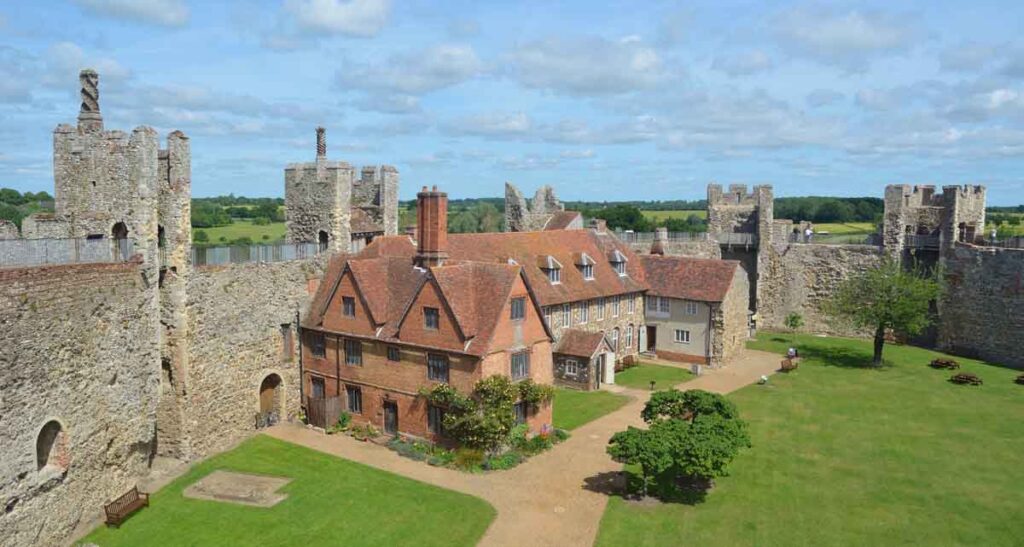
Matching means more than choosing cast iron. Profile, nominal size, joint type, bracket pattern and downpipe positions all contribute to the character of a listed building. A beaded half-round replaced with a plain half-round, or a moulded ogee with a shallower modern section, changes the eaves line and is noticed. Getting it wrong can mean a condition on consent, goods returned or recast, and scaffolding that stays up for weeks longer than planned.
What preserving Suffolk’s historic buildings requires
East Anglia is the driest part of the United Kingdom, with many areas receiving less than 600 millimetres of rain a year. Low average rainfall often means gutters are cleaned less often, and on timber-framed and limewashed buildings a single blocked outlet in a summer storm does damage out of proportion to its cause. The routine is simple:
- Clean gutters, outlets and hopper heads at least twice a year, and more often under trees in parkland, churchyards and the wooded valleys of the Stour and Waveney.
- Check that every downpipe discharges into a working gully or shoe, and that water is carried away from sole plates, flint footings and lime-plastered plinths.
- Inspect joints and brackets from a safe platform, looking for weeping sockets, rust at fixings and cracked sections, and repair before the wall below is stained.
- Keep the paint system intact; bare cast iron corrodes from the inside of the gutter and at the back of pipes where it cannot be seen.
- Record what is there, including profile, size and hopper patterns, so that any future replacement is like-for-like.
Coastal exposure: Southwold, Aldeburgh and Felixstowe
The Suffolk coast, from Lowestoft through Southwold and Aldeburgh to Felixstowe, is exposed to salt-laden onshore wind, which shortens paint life and attacks unprotected edges, bolts and brackets. Weatherboarded net stores, boathouses and outbuildings, and painted brick and render seafronts, all carry rainwater goods that need a shorter inspection and repainting cycle than inland. Fixings should be compatible with cast iron, and paint should be maintained before it fails rather than after. Our guide to linseed oil paint for cast iron in salt air environments covers preparation and maintenance cycles for coastal work.
Common rainwater failures on Suffolk buildings
The same defects recur across the county. Georgian parapet fronts in Bury St Edmunds, Woodbridge and Beccles hide lead-lined box gutters that overflow into the wall when outlets block. Church aisles behind parapets drain through small outlets into hoppers that are undersized or choked with leaves. Timber-framed houses have had gutters replaced piecemeal with mismatched sections, or have downpipes discharging straight onto the plinth. On maltings and workshops, long pantiled roofs feed gutters too small for the catchment. Each is preventable with the right section, the right outlet and regular clearance.
Planning, Consent and Conservation Guidance in Suffolk
Listed Building Consent in Suffolk is decided by the local planning authority for the area, not by Historic England, and a change of material or profile almost always needs it. Historic England’s East of England office advises on the most significant cases, and Suffolk County Council’s Archaeological Service maintains the Suffolk Historic Environment Record.
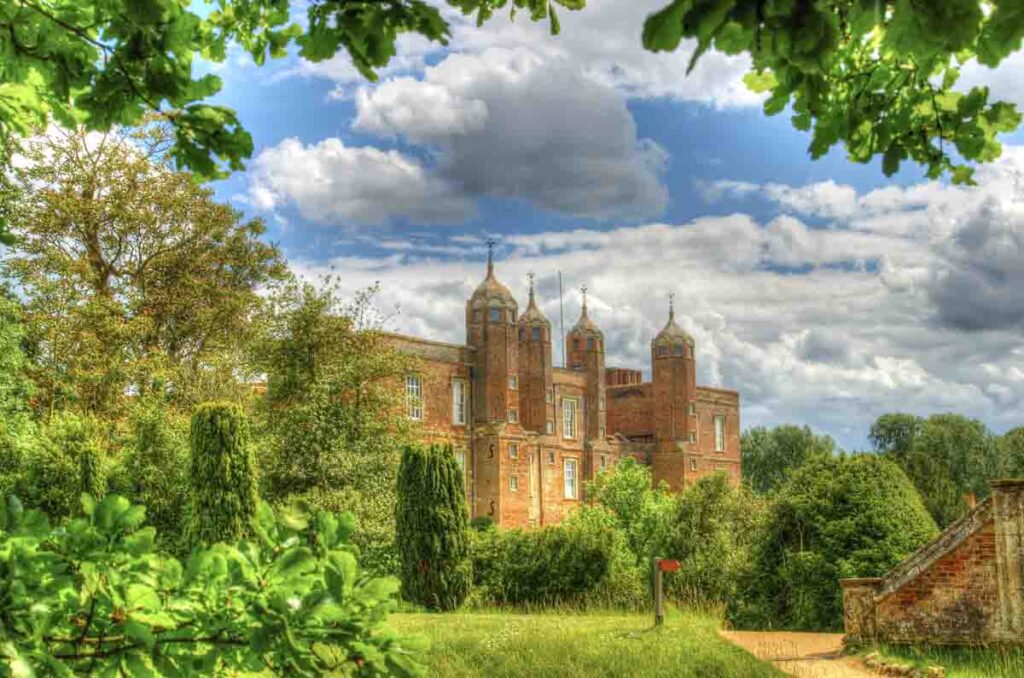
Suffolk has a two-tier structure. Planning and listed building decisions are made by East Suffolk Council, West Suffolk Council, Ipswich Borough Council, and Babergh and Mid Suffolk District Councils, which are separate councils sharing a single officer team, including the BMSDC Heritage Team. Within the Broads executive area in the Waveney valley, the Broads Authority is the local planning authority.
Local government reorganisation is unsettled. In March 2026 the government announced that Suffolk’s six councils would be replaced by three unitary authorities, with shadow elections in May 2027 and vesting in May 2028. On 7 September 2026 it withdrew that decision, alongside those for Essex, Hampshire and Norfolk, pending a review. Until a new decision is made, the existing councils remain the planning authorities, and applications should be made to them as now.
| Local planning authority | Historic centres (examples) | Notes for rainwater work |
|---|---|---|
| Babergh District Council | Lavenham, Long Melford, Sudbury, Hadleigh, Kersey, Nayland, East Bergholt | Shared BMSDC Heritage Team; much of the Dedham Vale National Landscape falls in the district |
| Mid Suffolk District Council | Eye, Needham Market, Debenham, Stowmarket, Woolpit | Shared BMSDC Heritage Team; published guidance on renders, plasters and brickwork |
| East Suffolk Council | Southwold, Aldeburgh, Framlingham, Woodbridge, Beccles, Bungay, Lowestoft | Around 3,600 listed buildings; coastal exposure; conservation area appraisals published |
| West Suffolk Council | Bury St Edmunds, Clare, Newmarket, Mildenhall | Conservation guidance on limewash and traditional colours |
| Ipswich Borough Council | Ipswich town centre and waterfront | Georgian, Victorian and white brick commercial and civic stock |
| Broads Authority | Land within the Broads executive area in the Waveney valley | Planning authority for all land and property within its executive area |
Do I need Listed Building Consent to replace gutters in Suffolk?
You need Listed Building Consent in Suffolk for works that affect the character of a listed building, and a change of gutter material or profile almost always does. East Suffolk Council’s guidance notes that replacing a section of guttering to match the existing exactly may not need consent, but wholesale replacement of features usually does. Confirm the position in writing with the council before work starts; our guide to planning requirements for gutter repair and replacement on listed buildings sets out the general principles.
What do conservation officers in Suffolk expect for rainwater systems?
Conservation officers in Suffolk expect cast iron to be retained and repaired where possible, and replaced like-for-like where it cannot. They look for photographs of the existing goods, the profile and size, the bracket and joint detail, and a clear statement of what is being changed and why. Proposals that protect lime plaster, limewash and timber frames from discharge are viewed favourably.
Can I change the gutter profile on a listed building in Suffolk?
Changing the gutter profile on a listed building in Suffolk requires Listed Building Consent and a clear justification. It is most likely to be supported where it reinstates a documented historic profile that has been lost, for example replacing a later plain half-round with the ogee shown in old photographs of a Georgian front. Evidence from the Suffolk Historic Environment Record, old photographs or surviving fragments strengthens the case.
In every case, consent requirements are determined by the local planning authority. This is practical guidance, not legal advice.
Cast Iron Profiles and Products Commonly Used in Suffolk
Half-round, beaded half-round and ogee gutters account for most of Suffolk’s historic rainwater goods: the half-round family on timber-framed, vernacular and Victorian buildings, and ogee on Georgian and Regency frontages. Churches, country houses and industrial buildings need larger sections, box gutters behind parapets, and often bespoke hoppers and pipes.
| Building type in Suffolk | Typical profile | Specification notes |
|---|---|---|
| Timber-framed hall house or cottage, plaintile roof (Lavenham, Kersey, Debenham) | Beaded or plain half-round, small section | Individual brackets; route downpipes clear of jetties, bressumers and sole plates |
| Thatched cottage | No gutter on the thatch | Thatch overhang throws water clear; gutter only on adjoining tiled roofs; ground drainage below |
| Georgian town house, red or white brick (Bury St Edmunds, Woodbridge, Beccles) | Ogee or moulded ogee; box gutter behind parapet | Hopper heads at parapet outlets; check box gutter linings and outlet sizes |
| Victorian white brick terrace (Ipswich, Lowestoft, Felixstowe) | Half-round or ogee on fascia | Round downpipes on party lines; watch for staining on pale brick |
| Flint and flushwork church | Larger half-round or ogee; parapet outlets to hoppers | Size hoppers for storm flows; copy cast lost hoppers and shoes |
| Country house (Ickworth, Melford Hall, Heveningham Hall) | Box gutters, moulded ogee, rectangular pipes | Often bespoke; curved plans may need radius work |
| Maltings, barns and workshops, pantile roofs | Deep half-round or large sand cast sections | Size for long catchments; robust brackets |
Our standard ranges include cast iron ogee gutters and cast iron beaded half-round gutters in the sizes most often found in Suffolk, with matching brackets, outlets, stopends and angles. Standard stock is available for prompt despatch; please confirm current availability on enquiry.
Downpipes and rainwater heads deserve the same attention as the gutter. Round downpipes with eared sockets are standard on most houses, while churches and larger houses often carry rectangular pipes and decorative cast iron hopper heads. For church work, our guide to specifying cast iron rainwater systems for historic churches covers parapet outlets, hopper sizing and access.
Where a surviving profile is no longer made, where hopper heads carry dates or initials, or where a run follows a curved wall, we make it. Our bespoke castings service copies existing components from samples, drawings or photographs, and bespoke and copy cast items typically require 12 to 14 weeks from pattern confirmation to delivery. Radius cast iron guttering for bows, segmental wings and curved bays requires site measurement and template creation before pattern-making, and typically requires 12 to 14 weeks.
Landmark Buildings in Suffolk: Rainwater Considerations
Suffolk’s landmark buildings show the range of rainwater problems the county presents, from jettied guildhalls and a timber-framed hall on the shingle to a stuccoed rotunda, a flushwork church and an engineering works on the Heritage at Risk Register. None of the buildings below is presented as one of our projects; each illustrates the considerations its type brings.
The Guildhall of Corpus Christi, Lavenham (Grade I)
Built around 1529 for the Guild of Corpus Christi and listed Grade I, the Guildhall on Lavenham’s Market Place later served as a bridewell and a workhouse before restoration by Sir Cuthbert Quilter from 1887; the National Trust has cared for it since 1951. Its heavy close-studded frame with plaster infill, jettied fronts on carved bressumers and tiled roofs show why water management matters on Suffolk’s timber buildings: any discharge that runs down the face or lands on a jetty goes straight into oak.
Moot Hall, Aldeburgh (Grade I)
Built around 1520 as a market hall, altered in 1654 and restored in 1854–55 by R. M. Phipson, Aldeburgh’s Moot Hall is listed Grade I and remains the town hall. Its timber frame is infilled with brick nogging and flint and ashlar, under a plain tile roof, with a jettied upper floor over the former open market arcade. Standing close to the shingle beach, it combines every coastal challenge: salt wind, mixed porous infills, a jetty to protect, and a paint cycle that must be kept short.
Ickworth House, near Bury St Edmunds (Grade I)
Begun in 1795 by Francis Sandys to designs by Mario Asprucci for the 4th Earl of Bristol, and completed in 1821–29, Ickworth is listed Grade I and has belonged to the National Trust since 1956. Its 105-foot rotunda, segmental corridors and wings are of stuccoed brick under slated and leaded roofs. On houses of this kind, water from roofs behind balustrades must be carried through stucco without staining, and any rainwater goods that follow a curved wall must be made to the radius.
Church of the Holy Trinity, Long Melford (Grade I)
Built around 1460–95, with a clerestory dated 1481, a Lady Chapel of 1496 and a west tower by G. F. Bodley of 1898–1903, Holy Trinity is listed Grade I and is one of Suffolk’s great wool churches. Its south side carries rich flushwork beneath a castellated parapet, with flat-roofed aisles. Flat roofs behind parapets drain through few outlets, so hopper capacity and regular clearance decide whether water stays in the pipes or runs down the flint and freestone below.
The Long Shop, Leiston (Grade II*)
Built in 1853 for Richard Garrett and Sons as a workshop for portable steam engines, and among the earliest purpose-built flow-line assembly buildings, the Long Shop is listed Grade II*. It is of red brick with yellow brick dressings under a pantile roof. Historic England’s Heritage at Risk Register records its condition as very bad, noting roof coverings needing renewal and rainwater disposal needing redesign, with Arts Council England MEND funding secured towards repairs. It shows how industrial buildings depend on correctly sized goods.
Beyond landmarks of this kind, we regularly supply half-round and ogee gutters, downpipes and hopper heads for Grade II listed farmhouses, timber-framed cottages, Georgian town houses and churches, and for converted barns and maltings in conservation areas.
Working With Us on Suffolk Projects
Most Suffolk projects start with photographs and a short description of the building, and move through specification advice, quotation, manufacture and delivery. We supply across the county, including Ipswich, Bury St Edmunds, Lavenham, Sudbury, Woodbridge, Southwold, Aldeburgh and Lowestoft.
- Enquiry: send photographs of the existing goods, the listing status and, where available, drawings or a measured survey.
- Specification: we confirm profile, size, joint and fixing, and advise on outlets, hoppers and downpipe positions.
- Quotation: itemised, with stock items and bespoke items separated and lead times stated.
- Manufacture: standard stock for prompt despatch; bespoke and copy cast items typically 12 to 14 weeks; radius gutters typically 12 to 14 weeks.
- Delivery: to site anywhere in Suffolk, coordinated with scaffold and contractor programmes.
For copy casting, the most useful reference is a physical length of the original gutter or a surviving hopper head, but clear photographs with a tape measure in shot, and a measured profile, often suffice. Tell us the quantities you need and whether the pattern must match an adjoining run.
What getting it wrong costs
On a listed building, the specifier carries the risk. An incorrect profile or undersized outlet can mean a conditioned or refused consent, goods returned or recast, scaffolding hired for weeks longer than planned, and a client asking why. On a timber-framed or flushwork building, a mistake that lets water back onto the wall can cost far more in repair to oak, plaster or flint than the rainwater system itself.
Our chargeable site survey and site visit service exists to remove that risk. We measure and record what is there, identify profiles and patterns, assess catchments and outlets, and produce the information needed to specify correctly first time. On complex restorations, sites with difficult access, and copy casting from damaged or missing components, we recommend engaging it before the specification is finalised.
Finishes: linseed oil paint
We recommend linseed oil paint for cast iron guttering and pipes as the heritage finish. It is breathable, flexible and easy to maintain, and it can be overpainted without stripping back. It dries more slowly than modern coatings and needs a planned maintenance cycle, shorter on the coast, but on a Suffolk listed building those are reasonable terms for a finish that sits comfortably with limewash, lime plaster and historic joinery.
Contact us to discuss cast iron rainwater systems for your Suffolk project by calling 0333 987 4452 or through our contact page.
Frequently Asked Questions
Do I need Listed Building Consent to replace cast iron gutters on a Grade II listed building in Suffolk?
You usually need Listed Building Consent in Suffolk if replacement changes the material, profile or appearance of the gutters. Repairing a section to match the existing exactly may not need consent, but the local planning authority decides. Always confirm in writing before work starts.
What type of cast iron guttering is best for listed buildings in Suffolk?
The best cast iron guttering for a listed building in Suffolk is the profile and size already on the building, or the original where it has been lost. Half-round and beaded half-round are typical on timber-framed and Victorian buildings, and ogee on Georgian frontages.
Should a thatched cottage in Suffolk have gutters?
No, a thatched roof should not be guttered. The thatch overhang is designed to throw water clear of the walls, and a gutter would trap debris and hold water at the eaves. Cast iron gutters belong only on adjoining tiled or slated roofs, with good ground drainage below the thatch.
Can cast iron gutters be used in conservation areas in Suffolk?
Yes, cast iron gutters are appropriate in all of Suffolk’s conservation areas and are often what conservation officers expect to see. Most conservation areas contain unlisted period buildings where cast iron was the original material, and like-for-like replacement preserves their character.
Who do I speak to about conservation consent in Suffolk?
Speak to the planning or heritage team at your local planning authority: East Suffolk, West Suffolk, Ipswich Borough, or the Babergh and Mid Suffolk shared heritage team. Within the Broads executive area, the Broads Authority is the planning authority. The 2026 reorganisation decision was withdrawn in September 2026, so the existing councils remain responsible for now. The government has since completed the first phase of its review, and a fresh decision on Suffolk is expected by March 2027.
How long do cast iron gutters and downpipes last on historic buildings in Suffolk?
Properly painted and maintained cast iron gutters and downpipes can last well over a century. On the Suffolk coast, salt air shortens paint life, so an inspection and repainting cycle is essential. Individual sections can be replaced without renewing the whole system.
Do you supply cast iron rainwater systems to Ipswich, Bury St Edmunds and the rest of Suffolk?
Yes, we supply cast iron gutters, downpipes and hopper heads throughout Suffolk, including Ipswich, Bury St Edmunds, Lavenham, Sudbury, Woodbridge, Southwold, Aldeburgh and Lowestoft. Delivery is coordinated with the contractor’s programme.
Can you copy cast a gutter profile or hopper head from a listed building in Suffolk?
Yes, we copy cast gutters, hopper heads and fittings from physical samples, measured drawings or clear photographs. Bespoke and copy cast items typically require 12 to 14 weeks from pattern confirmation to delivery. Where components are damaged or missing, our chargeable site survey helps establish the correct pattern.
How long does it take to get cast iron gutters delivered?
Standard stock items are available for prompt despatch, subject to current availability. Bespoke and copy cast items typically take 12 to 14 weeks, and radius gutters typically 12 to 14 weeks because they require site measurement and templates.
What paint should I use on cast iron gutters on a listed building?
We recommend linseed oil paint for cast iron on listed buildings. It is breathable, flexible and can be overpainted without stripping. It dries more slowly than modern coatings and needs a planned maintenance cycle, with shorter intervals in exposed or coastal locations.
Why are my gutters staining the white brick or limewash on my Suffolk house?
Staining on Suffolk white brick or limewash is almost always caused by a leaking joint, a blocked outlet or a downpipe discharging against the wall. Clear and inspect the system, repair failed joints, and check that each downpipe discharges into a working gully. Persistent wetting also damages the lime plaster and timber behind.
When should I book a site survey for a cast iron rainwater project?
Book a site survey before the specification is finalised on complex restorations, difficult-access buildings and copy casting from damaged or missing parts. Our surveys are a chargeable service that records existing profiles, patterns and catchments so the specification is right first time.
Conclusion
Specifying cast iron gutters in Suffolk comes down to a few principles: match the profile, size and fixing already on the building; keep water off timber frames, lime plaster, limewash and flint; leave thatch unguttered; agree the approach with the local planning authority before ordering; and finish in linseed oil paint on a maintained cycle, with shorter intervals on the coast. Where profiles are lost or runs are curved, copy casting and radius work solve the problem, with lead times planned from the start.
Tuscan Foundry Products has supplied traditional cast iron rainwater goods since 1893. We supply projects across Suffolk, from timber-framed wool town houses and flint churches to Georgian town houses and coastal buildings, and we bring the same care to a single hopper head as to a full estate specification. To discuss your Suffolk project, call us on 0333 987 4452 or visit tuscanfoundry.com.