Prices are shown on each product page for both sizes and all three finishes. For project quantities, specification support, or conservation enquiries, call us on 0333 987 4452 or use the contact form on our website.
Established 1893 | BS 460:2002 Certified | UK & International Supply | Expert Technical Support | 0333 987 4452
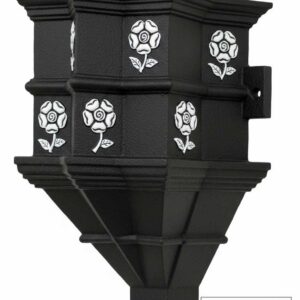
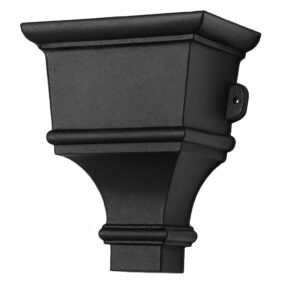
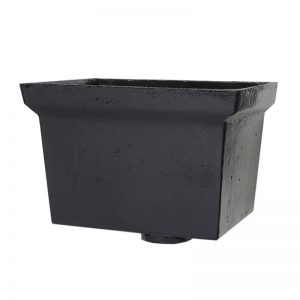
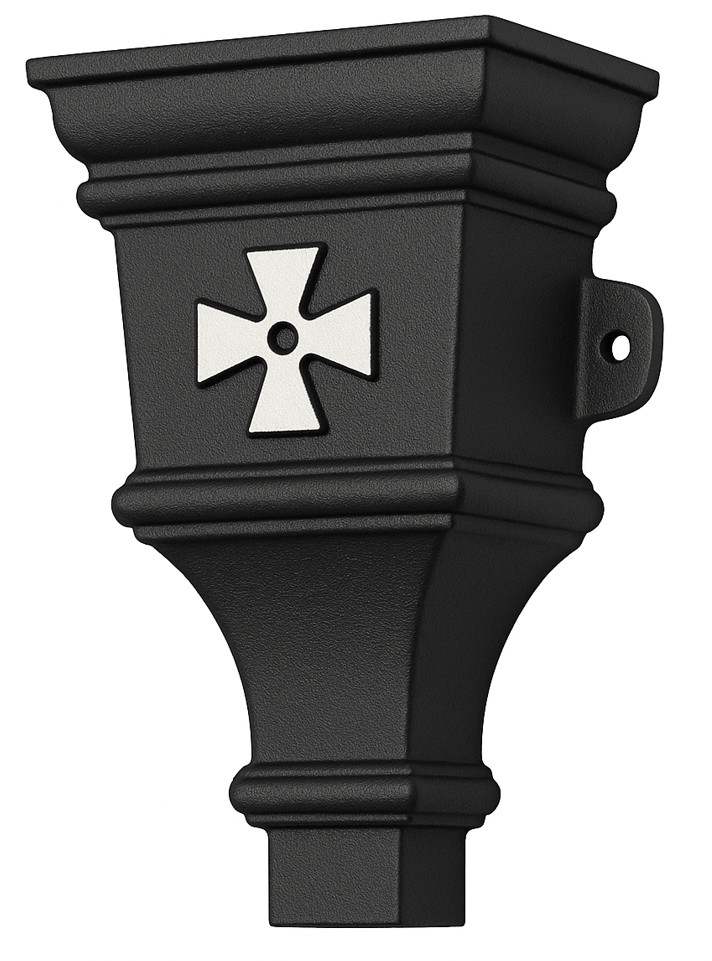
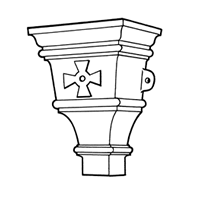
Marksham Cast Iron Ornamental Hopper Head No.108
Sizing
Size: 430mm (wide) x 220mm (deep) x 335mm (high)
Pipe Connections
Round: 65mm/75mm/100mm
Square: 75mmx75mm/100mmx100mm/125mmx125mm
Rectangular: 100mmx75mm/125mmx100mm/125mmx100mm/150mmx100mm
| Weight | 12 kg |
|---|---|
| Finish | Primer, Black |
| Size | 440w x 215d x 335h to 65mm, 440w x 215d x 335h to 75mm, 440w x 215d x 335h to 100mm, 440w x 215d x 335h to 100mmx75mm, 440w x 215d x 335h to 125mmx100mm, 440w x 215d x 335h to 150mmx125mm, 440w x 215d x 335h to 75mmx75mm, 440w x 215d x 335h to 100mmx100mm, 440w x 215d x 335h to 125mmx125mm |
Prices are shown on each product page for both sizes and all three finishes. For project quantities, specification support, or conservation enquiries, call us on 0333 987 4452 or use the contact form on our website.
The School Board Airbrick (F020801AFC) is available in three standard sizes: 225mm × 75mm, 225mm × 150mm, and 225mm × 225mm. These correspond to one-, two-, and three-brick-course heights and allow ventilation requirements to be met across a range of subfloor and wall opening sizes.
BTU stand’s for British Thermal Units. This was the old (Imperial) measurement for heat in connection with plumbing. Although BTU’s is a term still commonly used within the heating and plumbing, the industry is now going over to KW’s Kilowatts.
Yes. The ornamental foliate pattern was widely used in Victorian construction and is appropriate for Grade II listed buildings and conservation area properties. Its decorative character is often preferable to a plain pattern on prominent or formal elevations. We recommend confirming the pattern with your conservation officer as part of any listed building consent application.
The School Board Airbrick is suited to Victorian and Edwardian terraced housing, mid-century school buildings, civic halls, public baths, and converted institutional buildings. Its plain square-grid face matches the utilitarian aesthetic of late-Victorian construction and is also appropriate for new heritage-style builds in conservation areas.
Our cast iron airbricks are available in three standard sizes: 225mm × 75mm (single course), 225mm × 150mm (double course), and 225mm × 225mm (square format). These correspond to the standard airbrick positions used in Victorian and Edwardian brickwork. Each size is available across the School Board, Louvre, and Ornamental pattern ranges.
Prices for rooflight openers are shown on the product pages at tuscanfoundry.com. For volume orders, project pricing, or compatibility queries, please call 0333 987 4452 or use the contact form on our website.
We manufacture a wide variety of brackets for many different cast iron gutter and pipe profiles. More common types are the rise and fall, top fix and side fix rafter and the holderbat or pipe clip.
We can also offer traditional drive brackets, repair brackets and fascia brackets in both steel and cast iron.
It is always advisable to replace like with like because quite often the brackets form and important part of the buildings architecture. Occasionally buildings have special decorative brackets and our UK manufacturing allows us to produce small quantities of bespoke brackets when required.
The Paxton H82 is a large-format hopper with decorative collar mouldings, making it particularly well suited to late Victorian and Edwardian buildings where the rainwater system forms part of the architectural composition. Typical applications include commercial heritage buildings, civic buildings, large detached houses, institutional premises, and warehouse conversions where a more substantial fitting is appropriate.
The Iron Works Patterned Hit & Miss Vent suits Victorian and Edwardian buildings where decorative cast iron or brass ventilation grilles were part of the original specification — including terrace houses, civic buildings, churches, entrance halls, and estate properties. It is appropriate on listed buildings and conservation area properties as a like-for-like decorative vent replacement, and on new heritage-quality construction where period detailing is required.