Yes. Polished brass is a historically appropriate finish for period and listed buildings and is generally acceptable to conservation officers. If your project requires specific confirmation, we are happy to advise — call 0333 987 4452.
Established 1893 | BS 460:2002 Certified | UK & International Supply | Expert Technical Support | 0333 987 4452
Call for Price
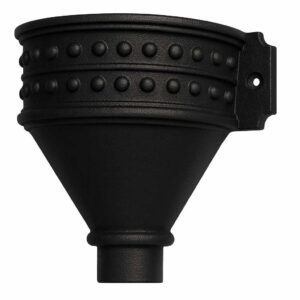
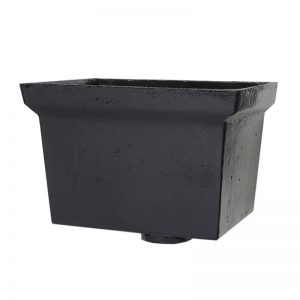
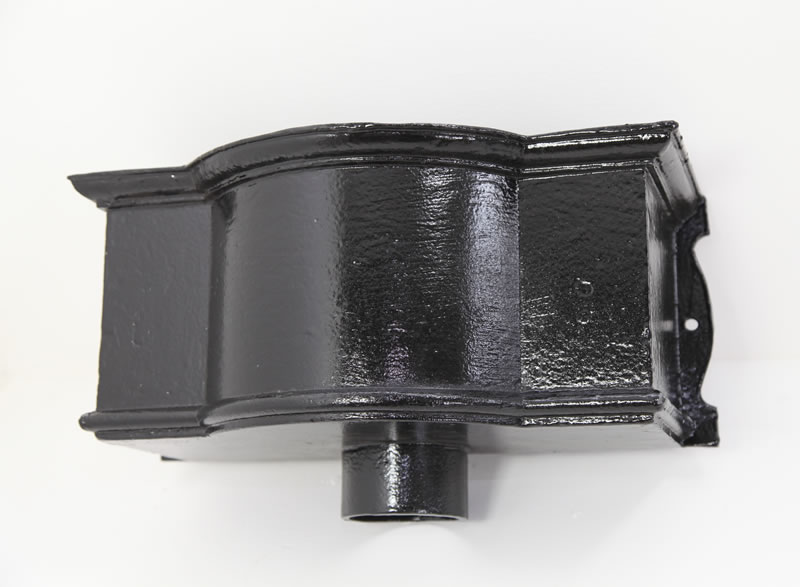
Royston Cast Iron Ornamental Hopper Head No.100
Sizing
Size: 490mm (wide) x 240mm (deep) x 210mm (high)
Pipe Connections
Round: 65mm/75mm/100mm
Square: 75mmx75mm/100mmx100mm/125mmx125mm
Rectangular: 100mmx75mm/125mmx100mm/125mmx100mm/150mmx100mm
Royston Cast Iron Ornamental Hopper Head No.100
Sizing
Size: 490mm (wide) x 240mm (deep) x 210mm (high)
Pipe Connections
Round: 65mm/75mm/100mm
Square: 75mmx75mm/100mmx100mm/125mmx125mm
Rectangular: 100mmx75mm/125mmx100mm/125mmx100mm/150mmx100mm
| Weight | 11 kg |
|---|---|
| Finish | Primer, Black |
| Size | 490w x 240d x 210h to 65mm, 490w x 240d x 210h to 75mm, 490w x 240d x 210h to 100mm, 490w x 240d x 210h to 100mmx75mm, 490w x 240d x 210h to 125mmx100mm, 490w x 240d x 210h to 125mmx150mm, 490w x 240d x 210h to 75mmx75mm, 490w x 240d x 210h to 100mmx100mm, 490w x 240d x 210h to 125mmx125mm |
Yes. Polished brass is a historically appropriate finish for period and listed buildings and is generally acceptable to conservation officers. If your project requires specific confirmation, we are happy to advise — call 0333 987 4452.
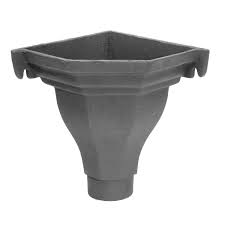
The Regent H1 is well suited to Victorian and Edwardian terraces, listed commercial buildings, civic and institutional properties, and ecclesiastical buildings where a traditional funnel-form hopper is architecturally appropriate. Its multi-faceted tapering body reads as period-accurate on Gothic and classical building types alike, and it is a commonly specified choice for conservation and listed building projects across the UK.
Yes. Cast iron airbricks are frequently specified for listed buildings and conservation area properties precisely because they replicate the material and pattern of the original Victorian and Edwardian ventilation grilles. Local conservation officers and building control typically accept like-for-like cast iron replacements without objection. We can provide product specifications and material datasheets to support applications.
The Cast Iron Louvre Airbrick suits Victorian, Edwardian, and inter-war residential and commercial properties where the louvre-pattern vent was the standard specification. It is the correct like-for-like replacement on listed buildings and conservation area properties, and suits new heritage-style construction requiring an authentic period ventilation grille.
Satin chrome has a brushed, low-sheen finish suited to contemporary interiors, while polished chrome has a bright mirror finish. Both are available in the telescopic hand winder range at Tuscan Foundry. The choice typically depends on the existing ironmongery specification.
We do offer a range of Ogee patterned gutters in both straight and radius profiles. The straight profiles are much more common and as such cost less.
Our cast iron hopper heads are available in a standard primed and black-painted finish, ready for on-site topcoats. Heritage colour finishes and factory-applied linseed oil paint are available on request. Linseed oil paint is a vapour-permeable, period-appropriate finish particularly well suited to listed buildings and conservation area properties.
The Brass Rooflight Hand Winder Opener – Telescopic is available in 150mm, 250mm, and 300mm sizes. The telescopic mechanism provides flexibility to accommodate varying rooflight positions and throw requirements. Throw: 165mm.
Tuscan Foundry supplies screw-jack rooflight openers in polished brass, satin chrome, and polished chrome finishes. Options include telescopic hand-winder openers in 150mm, 250mm, and 300mm sizes, fixed screw-jack stays, and pole-operated handles for high-level rooflights. All are designed for timber-framed rooflights and skylights.
Yes. All our mild steel brackets are supplied in either silver or black zinc plate. This coating protects the metal however, both will need painting prior to installation.
We have chosen to use zinc plating for two reasons; firstly that it is a more environmentally friendly than galvanising and secondly that it does not block up the threaded part of the rise and fall cups in the way that galvanising does.