We do offer a range of Ogee patterned gutters in both straight and radius profiles. The straight profiles are much more common and as such cost less.
Established 1893 | BS 460:2002 Certified | UK & International Supply | Expert Technical Support | 0333 987 4452
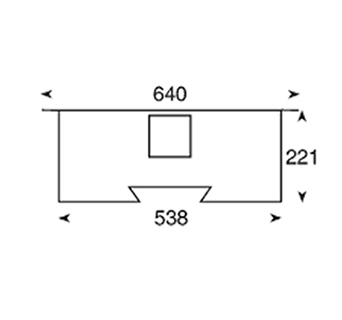
The Beauford No.510 is the widest and lowest pattern in our ornamental range, and the one specifiers reach for when a hopper needs to sit quietly beneath a deep eaves course rather than announce itself.
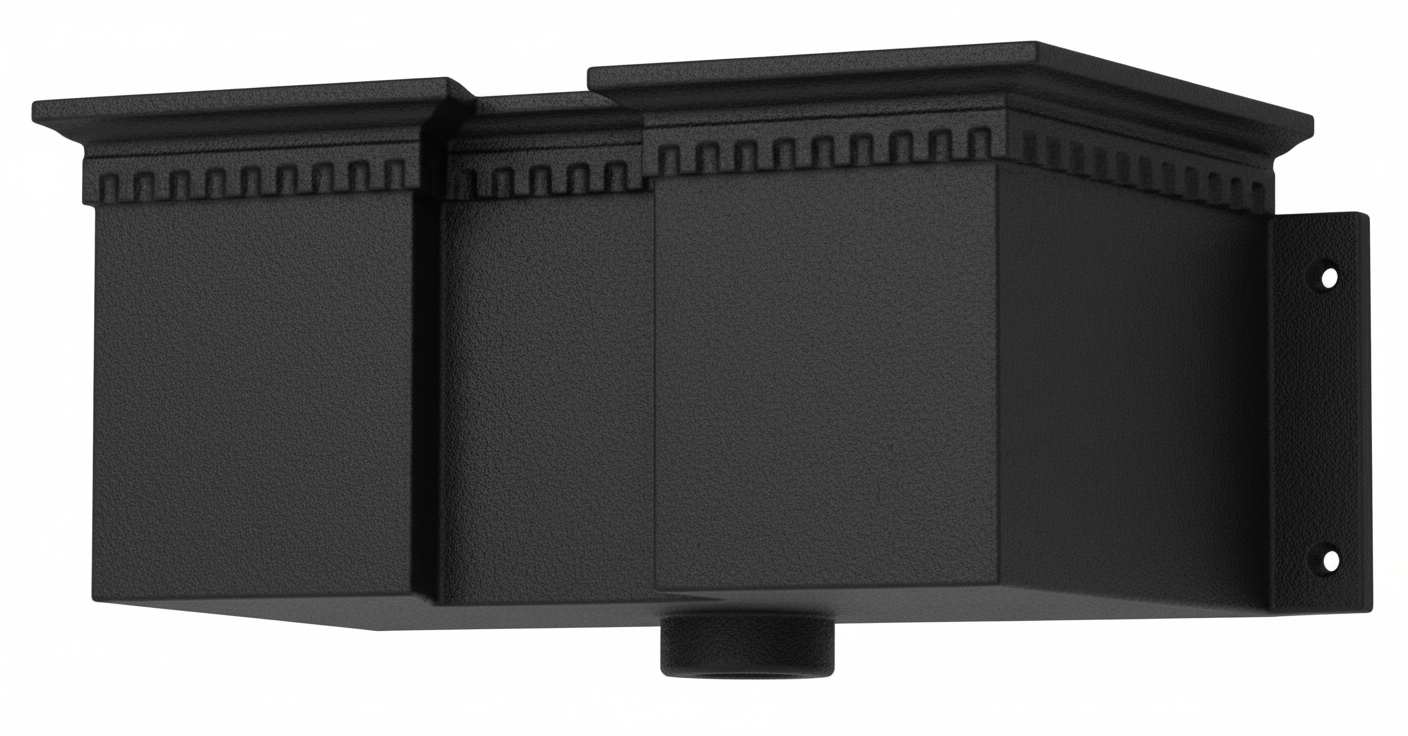
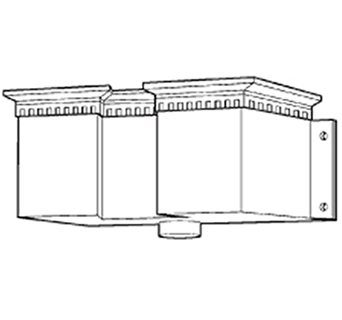
The casting takes the form of a long rectangular box. A run of finely spaced dentils is cast along the full length of the top cornice — the detail that gives the pattern its classical character and ties it visually to the mouldings of a Georgian or Regency elevation. The front face is divided by a central vertical rib into two flat panels, keeping the surface calm beneath the enriched cornice. Substantial eared fixing lugs project at both ends, drilled and ready to receive the wall fixings, and the outlet drops centrally from the underside.
The proportions are what make it useful. Where a tall hopper would crowd a shallow reveal or interrupt a string course, the Beauford spreads the same collection capacity horizontally and stays below the sightline. It suits terraced Georgian townhouses, Regency villas, estate buildings and any elevation where the architect wants the rainwater system to read as part of the cornice rather than as an applied fitting.
Cast in solid iron to BS 460:2002 and supplied in primer or black as standard. Heritage colours and traditional linseed oil finishes are available on request — linseed being the preferred option on listed fabric for its breathability and long maintenance life.
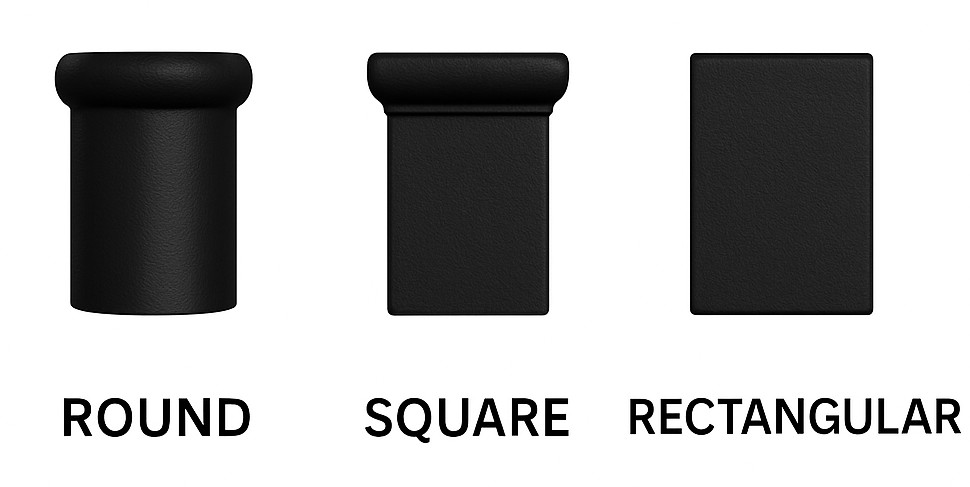
Pipe connections: 65mm, 75mm and 100mm round; 75×75mm, 100×100mm and 125×125mm square; 100×75mm, 125×100mm and 150×125mm rectangular.
Suitable for listed buildings and conservation areas. Like-for-like replacement in the same material does not usually require Listed Building Consent, though we always recommend confirming with your conservation officer before works begin. For pricing, availability or a bespoke variation, call 0333 987 4452.
| Finish | Primer, Black |
|---|---|
| Connection | 65mm Round, 75mm Round, 100mm Round, 75mm x 75mm Square, 100mm x 100mm Square, 125mm x 125mm Square, 100mm x 75mm Rectangular, 125mm x 100mm Rectangular, 150mm x 125mm Rectangular |
We do offer a range of Ogee patterned gutters in both straight and radius profiles. The straight profiles are much more common and as such cost less.
Yes. Churches and ecclesiastical buildings are one of our most common project types. We regularly supply large sand cast gutters, rectangular and square downpipes, and bespoke hopper heads for church restorations. Many churches have non-standard profiles that require copy casting. We work directly with architects, church fabric advisors, and quinquennial inspection surveyors. Historic England and many Diocesan Advisory Committees specify cast iron as the appropriate material for listed ecclesiastical buildings.
The Calnethorpe is designed for formal classical and Georgian elevations where scale and material authenticity matter — large townhouses, country houses, manor houses, and institutional buildings. It is also widely specified for new-build heritage projects where cast iron rainwater goods are required to conservation standard.
Our cast iron hopper heads are available with 65mm, 75mm and 100mm round outlets, 75mm, 100mm and 125mm square outlets, and 100x75mm, 125x100mm and 150x125mm rectangular outlets, to match the downpipe already on site or specified for the project.
Our cast iron airbricks are supplied in primed finish, ready for on-site painting. This allows them to be finished to match the existing ironwork or masonry colour of the building. Standard black gloss is the most common finish for conservation and heritage projects.
The Pultney Tapered Hopper Head is available in three pipe connection sizes: 65mm (2.5"), 75mm (3"), and 100mm (4"). Each size connects directly to matching cast iron downpipes via spigot and socket. Compatible downpipe codes are: 65mm — RH025, XRH025; 75mm — RH03, XRH03; 100mm — RH04, XRH04.
Prices are shown on each product page for both sizes and all three finishes. For project quantities, specification support, or conservation enquiries, call us on 0333 987 4452 or use the contact form on our website.
Yes. Cast iron hopper heads are the historically correct choice for listed and period buildings, and a like-for-like cast iron replacement is generally accepted without objection by conservation officers. We manufacture to BS 460 for genuine heritage character and durability.
Yes. The ornamental foliate pattern was widely used in Victorian construction and is appropriate for Grade II listed buildings and conservation area properties. Its decorative character is often preferable to a plain pattern on prominent or formal elevations. We recommend confirming the pattern with your conservation officer as part of any listed building consent application.
The Brass Rooflight Pole Winder Opener 300mm is a screw-jack operated rooflight opener designed for manual control of timber-framed skylights and Lumen Rooflights. The 300mm fixed arm is suited to standard rooflight positions and is finished in polished brass.