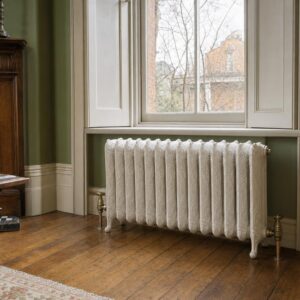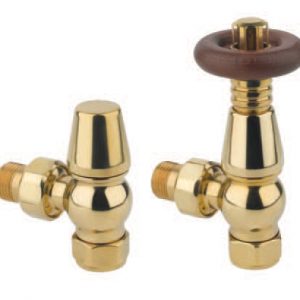
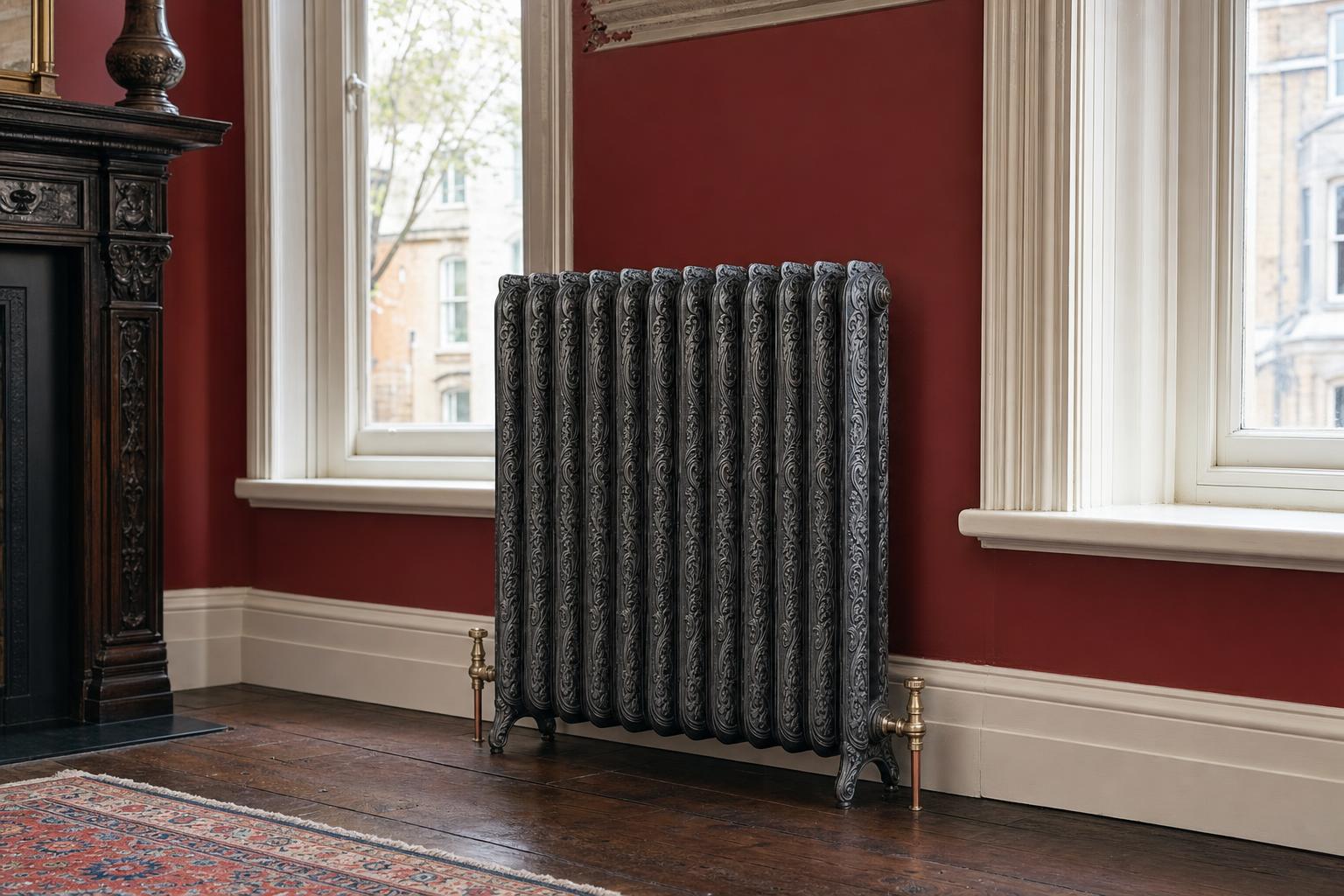
We do offer a range of Ogee patterned gutters in both straight and radius profiles. The straight profiles are much more common and as such cost less.
£420.00 – £4,060.00Price range: £420.00 through £4,060.00 +VAT
Supplied in primer. Maximum Deliverable Length 10 Sections (Larger radiators can be built on site by joining)
| Sections | 3 Sections, 4 Sections, 5 Sections, 6 Sections, 7 Sections, 8 Sections, 9 Sections, 10 Sections, 11 Sections, 12 Sections, 13 Sections, 14 Sections, 15 Sections, 17 Sections, 19 Sections, 21 Sections, 23 Sections, 25 Sections, 27 Sections, 29 Sections, 31 Sections |
|---|
We do offer a range of Ogee patterned gutters in both straight and radius profiles. The straight profiles are much more common and as such cost less.
Select your required size and finish options from the product page and add to cart for an instant price. For project quantities, bespoke requirements, or any specification queries, please call 0333 987 4452 or use the contact form at tuscanfoundry.com.
Most old buildings have cast iron rainwater systems that should be maintained and preserved however; these inherent benefits make cast iron an ideal choice for both traditional and modern installations. It is not uncommon to see modern alternative products marketed with terms like low maintenance or easy to install and cost effective. It has even been said that ‘plastic guttering systems provide a way of achieving a traditional look with modern convenience
As well as being easier to produce, the material enabled eaves gutters to be installed more simply, since lead could only be used in this location as a lining for timber gutters. Many modern materials focus on replicating the appearance of cast iron but those materials can vary rarely offer any of the benefits. Cast iron gutters and pipes offer great strength and durability, a proven history of long life, low noise operation and fire resistance.
Most old buildings have cast iron rainwater systems that should be maintained and preserved however; these inherent benefits make cast iron an ideal choice for both traditional and modern installations. It is not uncommon to see modern alternative products marketed with terms like low maintenance or easy to install and cost effective. It has even been said that ‘plastic guttering systems provide a way of achieving a traditional look with modern convenience’.
These terms tend to refer to possible cost savings rather than any real product benefits. It is also difficult to quantify the benefits of modern convenience over traditional build quality. It is worth remembering that all rainwater goods will require some element of maintaining to ensure they are unblocked by debris and remain functional. No rainwater system cleans itself.
Today most suppliers of cast iron rainwater systems offer products in both primer or pre-painted with a 10 year protective coating. When describing modern materials, the term ‘cost effective’ is used rather than simply saying cheap. There is no doubt that the initial cost of many modern materials is less than cast iron but you might be surprised to know that over its lifespan, cast iron will cost around a third of plastic.
The Regent H1 is well suited to Victorian and Edwardian terraces, listed commercial buildings, civic and institutional properties, and ecclesiastical buildings where a traditional funnel-form hopper is architecturally appropriate. Its multi-faceted tapering body reads as period-accurate on Gothic and classical building types alike, and it is a commonly specified choice for conservation and listed building projects across the UK.
The Calnethorpe is designed for formal classical and Georgian elevations where scale and material authenticity matter — large townhouses, country houses, manor houses, and institutional buildings. It is also widely specified for new-build heritage projects where cast iron rainwater goods are required to conservation standard.
Yes. Cast iron rainwater goods are widely accepted by conservation officers and historic environment bodies as the appropriate material for listed buildings. Tuscan Foundry's hopper heads are manufactured in solid cast iron to BS 460 specification and are suitable for all listed building classes. A linseed oil paint finish is also available, which is particularly appropriate for conservation projects.
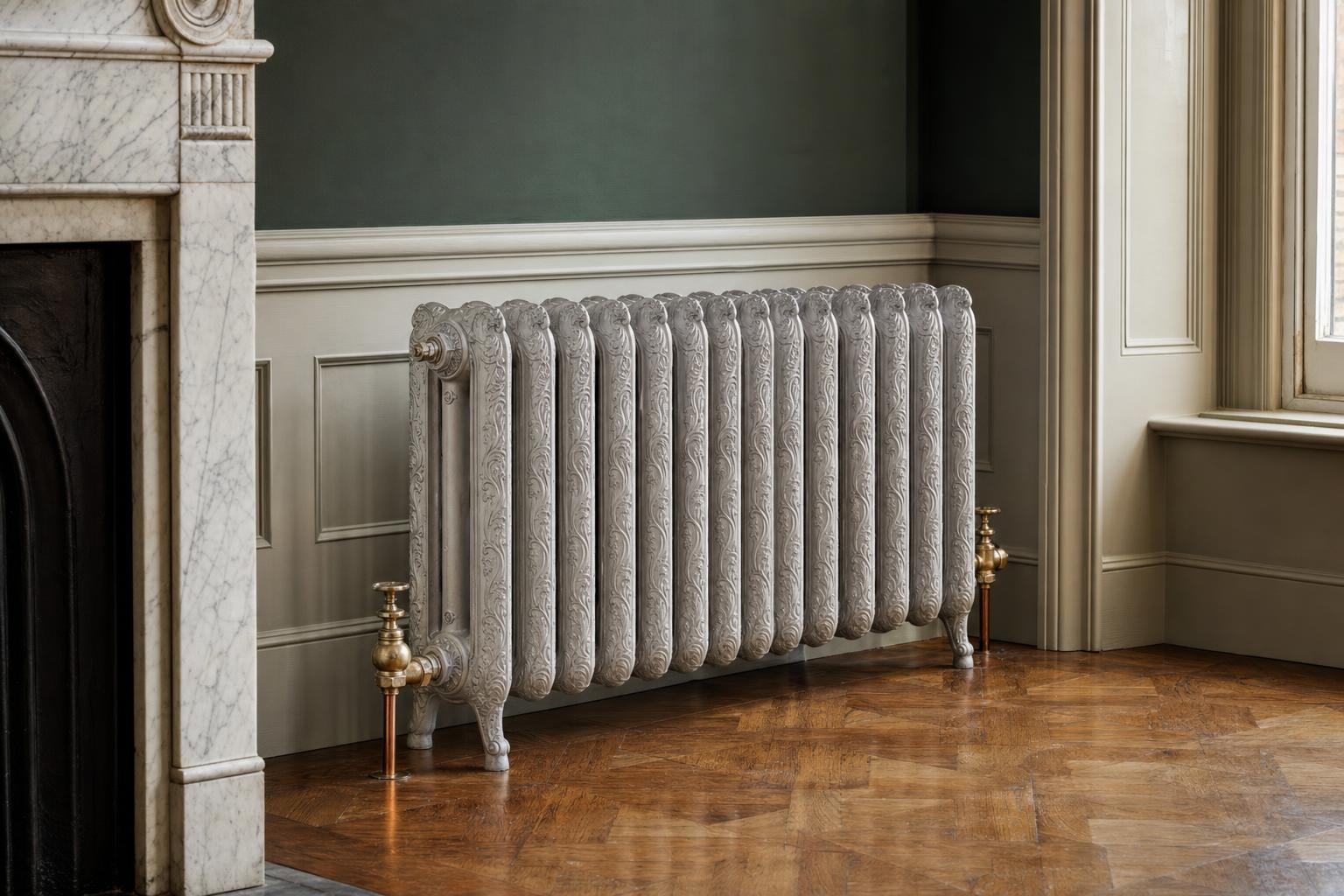
Casting of iron is an imperfect processs. It is possible with some cast iron radiators that you will get minor imperfections in the surface finish. When radiators are painted this will reduce and over the years every additional coat of paint applied will provide a smoother more equal finish.
The Paxton H82 is a large-format hopper with decorative collar mouldings, making it particularly well suited to late Victorian and Edwardian buildings where the rainwater system forms part of the architectural composition. Typical applications include commercial heritage buildings, civic buildings, large detached houses, institutional premises, and warehouse conversions where a more substantial fitting is appropriate.
It is possible for us to supply towel warmers with an electric heating element in them. The Electrad system is a unique system available to us, that enables independent heating of towel rails and radiators via the properties electrical system.
The H1A is available with round pipe connections in 65mm, 75mm, 100mm, and 150mm diameters. Please specify your required connection size when ordering, as this determines the SKU. If you are unsure of the correct pipe size for your project, our team can advise — call 0333 987 4452.