The handle is compatible with Lumen Rooflights and most pole-operated rooflight and skylight systems. If you are unsure whether it suits your specific rooflight, call us on 0333 987 4452 and we can advise.
Established 1893 | BS 460:2002 Certified | UK & International Supply | Expert Technical Support | 0333 987 4452
£118.62 +VAT
Premiere LCC Soil Range provides a comprehensive offering of traditional socket and spigot pipes and fittings for soil and waste installations on the external facade of buildings.
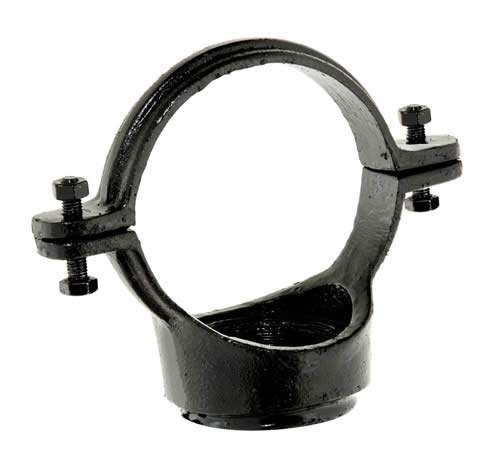
The LCC Soil Strap-On Boss is a cast iron saddle fitting that clamps to the outside of an existing soil pipe and provides a threaded BSPT connection for a branch connection without cutting the pipe or using a conventional branch fitting. The BSPT (British Standard Pipe Taper) thread allows a waste pipe, overflow, or small branch to connect into the main stack at any accessible point where a full pipe replacement is impractical.
Supplied at 100mm (4″) with BSPT thread boss. Used on existing LCC cast iron soil installations for maintenance and additional connections on listed and heritage buildings. For specification support, call 0333 987 4452.
The handle is compatible with Lumen Rooflights and most pole-operated rooflight and skylight systems. If you are unsure whether it suits your specific rooflight, call us on 0333 987 4452 and we can advise.
Casting of iron is an imperfect processs. It is possible with some cast iron radiators that you will get minor imperfections in the surface finish. When radiators are painted this will reduce and over the years every additional coat of paint applied will provide a smoother more equal finish.
Tuscan Foundry supplies screw-jack rooflight openers in polished brass, satin chrome, and polished chrome finishes. Options include telescopic hand-winder openers in 150mm, 250mm, and 300mm sizes, fixed screw-jack stays, and pole-operated handles for high-level rooflights. All are designed for timber-framed rooflights and skylights.
The Calnethorpe is designed for formal classical and Georgian elevations where scale and material authenticity matter — large townhouses, country houses, manor houses, and institutional buildings. It is also widely specified for new-build heritage projects where cast iron rainwater goods are required to conservation standard.
Select your required size and finish options from the product page and add to cart for an instant price. For project quantities, bespoke requirements, or any specification queries, please call 0333 987 4452 or use the contact form at tuscanfoundry.com.
Yes. The Brass Rooflight Pole Winder Opener 300mm is compatible with Lumen Rooflights and most timber-framed skylights. If you have a specific rooflight model, call 0333 987 4452 to confirm compatibility before ordering.
Yes. Cast iron hopper heads are the historically appropriate choice for listed buildings, and are generally preferred by conservation officers and local planning authorities over modern plastic alternatives. Tuscan Foundry cast iron hopper heads are manufactured in solid grey iron and are suitable for use on listed buildings and within conservation areas. A linseed oil finish is also available, which is particularly appropriate for sensitive heritage projects.
Yes. Cast iron is the material required by most conservation officers and listed building consents for the replacement or replication of traditional rainwater goods. Our hopper heads are produced in solid cast iron and we can assist with specification notes or material statements for planning purposes if required.
Our cast iron hopper heads are available in a standard primed and black-painted finish, ready for on-site topcoats. Heritage colour finishes and factory-applied linseed oil paint are available on request. Linseed oil paint is a vapour-permeable, period-appropriate finish particularly well suited to listed buildings and conservation area properties.
Our cast iron airbricks are supplied in primed finish, ready for on-site painting. This allows them to be finished to match the existing ironwork or masonry colour of the building. Standard black gloss is the most common finish for conservation and heritage projects.