
Established 1893 | BS 460:2002 Certified | UK & International Supply | Expert Technical Support | 0333 987 4452
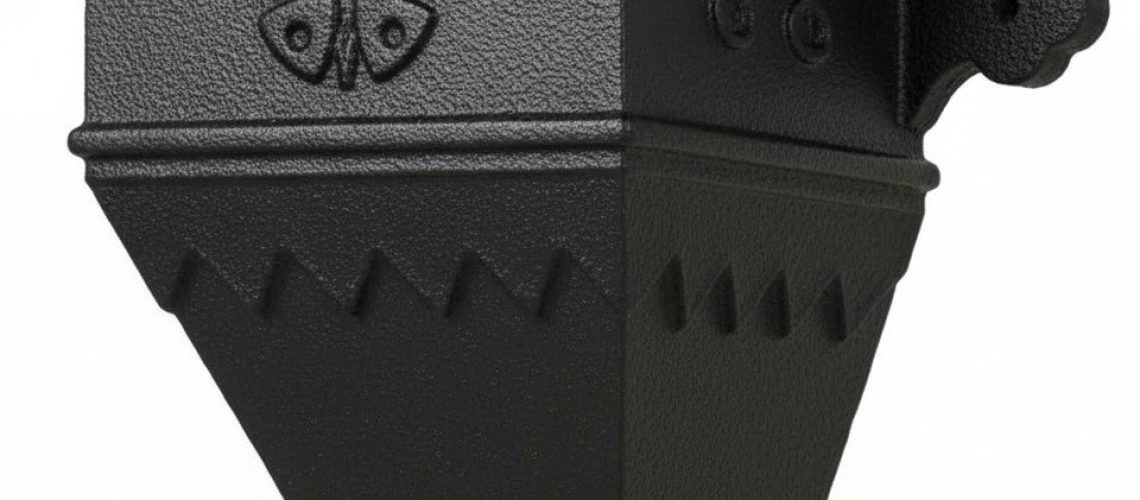
A guide for conservation architects, contractors and owners working on historic buildings in the Republic of Ireland and Northern Ireland. We set out the terms used on Irish sites, how consent works on protected structures and listed buildings, and how cast iron orders reach Irish projects.
Irish and British rainwater terminology is largely shared. Gutter, downpipe, hopper head and stop end mean the same on both islands. Two everyday Irish words need care. A chute (or shoot) usually means a gutter in ordinary speech, but in conservation guidance it can mean a channel through a parapet. A shore is a drain or gully. The biggest differences are regulatory. The Republic of Ireland protects buildings through each planning authority’s Record of Protected Structures, with Architectural Conservation Areas and Section 57 declarations. Northern Ireland uses listed buildings and listed building consent, handled by councils with the Historic Environment Division. Orders travel by pallet road freight via the ferry, and deliveries to the Republic go through customs.
On Irish sites the components are the same as in Britain, but a few everyday words — chute and shore in particular — can be read two ways, and the consent regime is different. A schedule that says “replace chutes” could mean gutters, downpipes or a parapet outlet. Clearing that up before quotation avoids ordering the wrong item.
We have written this guide for conservation architects, contractors, parish and estate managers, and owners of historic buildings in the Republic of Ireland and Northern Ireland who are specifying cast iron rainwater goods. It follows our guides to UK and US terminology, UK and Australian terminology and UK and New Zealand terminology. For freight, customs and how orders from outside Great Britain work, see our international supply and shipping page.
Cast iron replaced lead as the usual material for rainwater goods in Ireland during the nineteenth century, much as it did in Britain, and many Irish buildings carry components cast to British patterns. That shared history usually makes matching straightforward.
The Department of Housing, Local Government and Heritage’s Advice Series guide Roofs: A Guide to the Repair of Historic Roofs describes how seventeenth- and eighteenth-century buildings used lead: box hopper heads, square lead downpipes, and lead-lined gutters built behind parapets. In Georgian terraces these parapet gutters often drained through the roof or parapet to a shared hopper head and downpipe. During the nineteenth century cast iron became the normal material, and Victorian systems became more decorative, with large hopper heads carrying dates and insignia.
Georgian Dublin and Limerick, Victorian churches and schools across the country, country houses and their farm buildings, and the market houses and courthouses of Irish towns all carry cast iron rainwater goods. Many have since been replaced in other materials. Where original cast iron survives it can usually be matched, and where it has been lost it can be copy cast from photographs, drawings or a surviving component.
Most rainwater terms are identical in Ireland and Britain; the words that differ are everyday or trade usage rather than technical names. The table sets out the pairs we meet most often on Irish schedules and in conversation.
| British term | Irish usage | Notes |
|---|---|---|
| Gutter, guttering | Gutter; chute or shoot (everyday speech) | Check whether “chute” means the gutter, the downpipe or a parapet outlet. |
| Downpipe | Downpipe; sometimes chute (everyday speech) | Downpipe is standard in specifications. |
| Hopper head, rainwater head | Hopper head, hopper | Same terms. |
| Parapet gutter | Parapet gutter, valley gutter | Lead-lined gutters behind parapets are common on Georgian terraces. |
| Parapet outlet | Chute | In conservation guidance, a channel through a parapet or roof to a hopper head. |
| Gully, drain connection | Shore | Hiberno-English for a drain or gully. |
| Half-round and ogee gutter | Half-round and ogee gutter | Same profiles. |
| Stop end, running outlet, angle | Stop end, outlet, angle | Same terms. |
| Bracket | Bracket | Fascia, rafter and rise-and-fall brackets as in Britain. |
| Socket and spigot | Socket and spigot | Same term. |
Because chute can mean different things, we ask for a photograph of anything described as a chute. On a Georgian terrace it may be the lead-lined channel through the parapet, which is repaired in lead by a roofer, while the hopper head and downpipe it feeds are cast iron. On a farmhouse it may simply mean the gutter.
Irish building and contract vocabulary is close to British usage, with a few terms of its own. The table sets out the differences we meet most.
| British term | Irish term |
|---|---|
| Builders’ merchant | Builders’ provider |
| Listed building (England, Wales, NI) | Protected structure (Republic of Ireland) |
| Conservation area | Architectural Conservation Area (ACA) |
| Conservation officer | Architectural Conservation Officer (local authority) |
| Listed Building Consent | Planning permission for works to a protected structure; Section 57 declaration for works not needing permission |
| Historic England / Cadw | Department of Housing, Local Government and Heritage; National Inventory of Architectural Heritage (NIAH) |
| Conservation-accredited architect | RIAI-accredited conservation architect (Grades I–III) |
| Main contractor, quantity surveyor, clerk of works | Same terms |
| Client (JCT contracts) | Client or employer (RIAI and public works contracts) |
In the Republic of Ireland, buildings are protected by inclusion in the planning authority’s Record of Protected Structures, and works that affect a protected structure’s character need planning permission even where they would otherwise be exempt. Like-for-like repair is usually the simplest case, but the local authority decides.
Northern Ireland uses listed buildings and listed building consent, as in Great Britain, with applications made to the local council and the Historic Environment Division of the Department for Communities consulted. Conservation areas are designated by councils.
Replacing failed cast iron gutters, downpipes or hopper heads with cast iron to the same design is generally the most straightforward case. Changing the material or profile of documented rainwater goods on a listed building normally needs consent. Our listed buildings FAQ covers the British position, which Northern Ireland broadly follows.
Orders to Ireland travel by pallet road freight via the ferry, with courier for small items; deliveries to the Republic go through customs, while deliveries to Northern Ireland stay within the UK. Freight is quoted with each order, and the online checkout is set up for Great Britain only.
| Republic of Ireland | Northern Ireland | |
|---|---|---|
| Freight | Pallet road freight via ferry; courier for small items | Pallet road freight via ferry; courier for small items |
| Ordering | By quotation | By quotation (not available at online checkout) |
| UK VAT | Zero-rated as an export, with proof of export | Charged as a UK sale |
| Customs | Customs declaration required; Irish import VAT and clearance charges usually apply | No customs clearance for a UK delivery; the carrier will advise on any movement paperwork |
| Duty | Goods meeting the UK–EU rules of origin enter free of customs duty | Not applicable |
Ireland’s wet Atlantic climate and long coastline make the finish specification important. Our coastal specification uses enhanced preparation and a more robust paint build for exposed and marine sites. Linseed oil paint remains the heritage-appropriate topcoat for protected structures, weathering gradually and simple to maintain. Gutters should be cleared at least twice a year, particularly after leaf fall.
The most reliable schedule for an Irish order names each component, clarifies any “chute”, gives measured dimensions at every connection, and states the protection status. This checklist is what we ask for.
For complex or fragmentary evidence, a measured survey is worth commissioning before specification. Our site surveys are carried out in Great Britain; in Ireland a conservation architect or surveyor can gather the same information using this checklist, and we can review it remotely.
Most problems come from ambiguous terms and from underestimating consent and customs. Each is avoidable at schedule stage.
The following are representative examples of the situations we are asked about by Irish clients. They show how the terminology, consent and delivery points above play out in practice.
Georgian terrace, Dublin (representative example)
A late eighteenth-century terraced house, a protected structure, had a parapet gutter discharging through a lead-lined chute to a cast iron hopper head and downpipe on the rear elevation. The hopper head was cracked and the downpipe had lost two sections. The owner’s conservation architect spoke to the Architectural Conservation Officer before work began. The head was copy cast from the surviving original, the downpipe was matched to the existing sockets, and a linseed oil finish was specified.
Victorian church, County Cork (representative example)
A nineteenth-century church near the coast had half-round cast iron gutters and ogee-fronted hopper heads, several badly corroded. The parish schedule called them chutes and shores; the British terms were added alongside before quotation. Replacement gutters were matched to the surviving profile, and a coastal paint specification was chosen for the Atlantic exposure. Delivery was by pallet to site, with tail-lift access agreed in advance.
Country house, County Down (representative example)
A listed eighteenth-century house in Northern Ireland had ornamental hopper heads bearing a date panel, one of them missing. The owner’s architect prepared the listed building consent application to the council, with the Historic Environment Division consulted. The missing head was copy cast from its surviving pair. Because the delivery stayed within the UK, no customs clearance was needed.
Market house, Irish midlands (representative example)
A town-centre market house in an Architectural Conservation Area had later replacement gutters on its main façade. Historic photographs showed an ogee cast iron gutter with round downpipes. The local authority confirmed the approach before work began, the profile was reinstated in cast iron, and the downpipe connections were measured against the existing shores at ground level.
Yes. We supply cast iron gutters, downpipes, hopper heads and fittings to projects across the Republic of Ireland and Northern Ireland. Full lengths travel by pallet road freight via the ferry, and small items can go by courier. Freight is quoted with each order.
In everyday Irish speech a chute, sometimes spelled shoot, usually means a gutter, and it is sometimes used loosely for the downpipe too. In conservation guidance a chute can also mean a channel carrying water through a parapet or roof. If a schedule says chute, check which is meant.
In Hiberno-English a shore is a drain, usually a surface water drain or gully at the foot of a downpipe. It corresponds to the British gully or drain connection.
Possibly. Works that would normally be exempt can need planning permission on a protected structure if they affect its character. Like-for-like repair is often acceptable, but check with the local authority’s Architectural Conservation Officer, or ask for a Section 57 declaration.
A Section 57 declaration is issued by the planning authority, at the request of the owner or occupier of a protected structure, stating which types of works would not materially affect its character and so would not need planning permission.
In practice they play a similar role. The Republic of Ireland protects buildings by including them in each planning authority’s Record of Protected Structures. Northern Ireland, like Great Britain, uses listed buildings and listed building consent.
Listed building consent is applied for through the local council, with the Historic Environment Division of the Department for Communities as a statutory consultee on listed buildings.
Goods sent from Great Britain to the Republic of Ireland go through customs. Goods that meet the UK–EU rules of origin can enter free of customs duty, but Irish import VAT and clearance charges usually apply. We zero-rate UK VAT on exports with proof of export.
Production lead times are the same as for a UK order: stock items are typically ready in 5–7 working days, and bespoke or copy-cast items typically take 12–14 weeks from pattern approval. Road freight transit is added and confirmed with the freight quotation.
Yes. We copy cast hopper heads, gutters and fittings from photographs, measured drawings or a surviving sample. Bespoke and copy-cast items typically take 12–14 weeks from pattern approval.
Builders’ provider is the Irish term for what Britain calls a builders’ merchant: a trade supplier of building materials.
For exposed Atlantic and coastal sites we recommend our coastal specification, with enhanced preparation and a robust paint build. Linseed oil paint remains the heritage-appropriate topcoat and is easy to maintain.
Largely, yes. Historic Irish rainwater goods were often made to the same British patterns and imperial sizes, so matching is usually straightforward. Always measure connections to existing drains and surviving sections before ordering.
Irish and British cast iron rainwater goods share a common tradition, so the components match closely; what differs is some everyday vocabulary, the consent regime and the route to site. A chute may be a gutter, a downpipe or a parapet outlet. A shore is a drain. A protected structure in the Republic and a listed building in Northern Ireland each follow their own consent process.
Our recommendations are straightforward. Photograph anything called a chute. Choose the profile from historic evidence. Measure every connection. Talk to the conservation officer early. Allow for customs on deliveries to the Republic, and allow typically 12–14 weeks for bespoke work, plus road freight.
We supply cast iron gutters, downpipes, hopper heads and fittings, made to BS 460, to historic buildings across Ireland, and we copy cast components that are no longer made. Send your schedule, drawings or photographs through our contact page or call 0333 987 4452 (+44 333 987 4452 from the Republic of Ireland). For freight, customs and how orders work, see international supply and shipping.