
Rear-Inlet Cast Iron Hopper Heads — Made to Order
When a roof drains through a parapet and the outlet leaves the wall too close to the coping for a hopper to sit beneath it, we can take the outlet pipe straight into the back of a cast iron hopper head. Rear-inlet hoppers are made to order in our workshop from our moulded rectangular patterns.
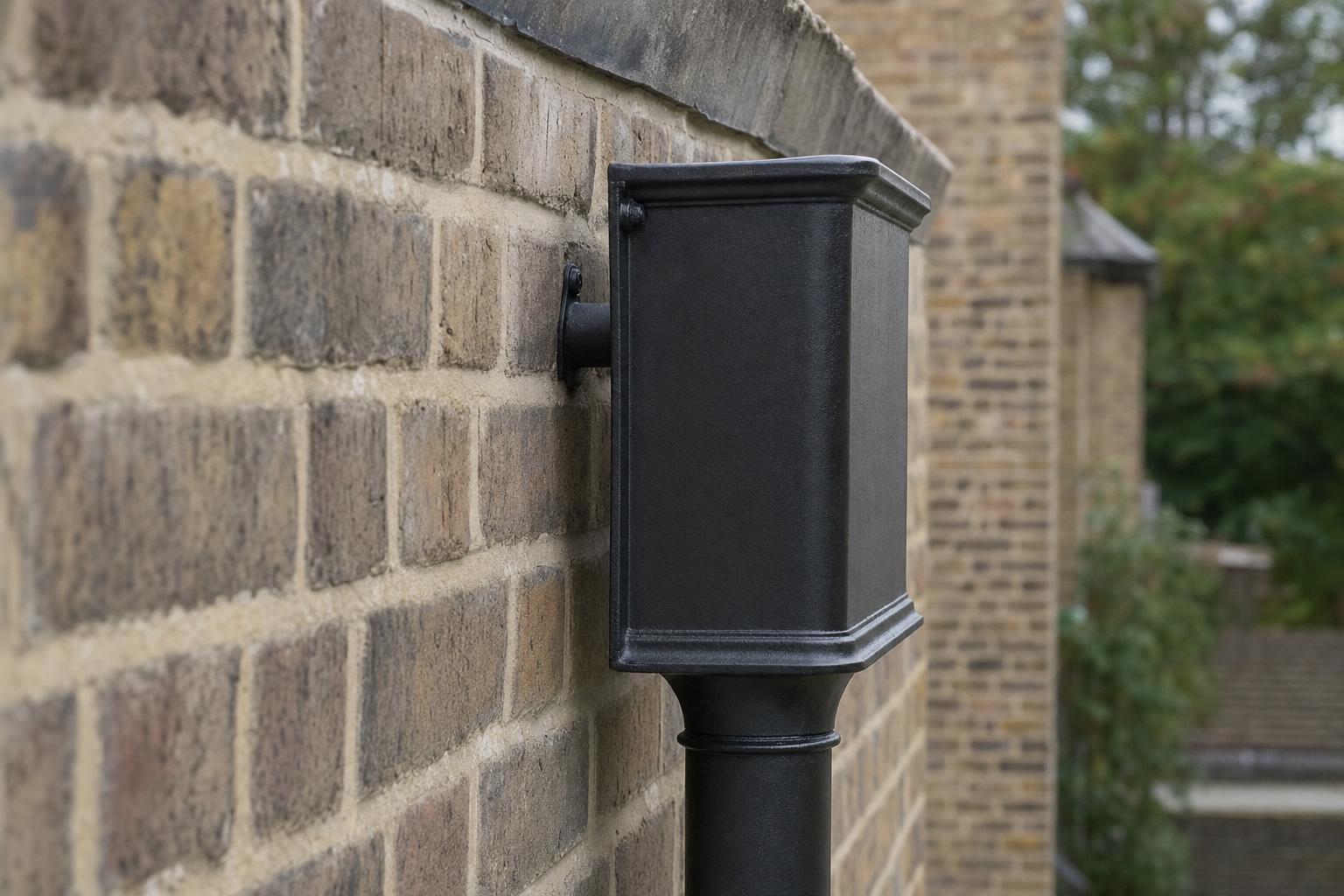
What is a rear-inlet hopper head?
A rear-inlet hopper is a cast iron rainwater head with a socket formed in its back face, so the outlet pipe from a parapet or flat roof enters directly from the wall instead of discharging into the open top. It lets the head sit level with the outlet rather than below it, and it conceals the outlet pipe behind the hopper.
The traditional detail — a lead chute discharging into an open-top hopper — remains our first recommendation wherever there is enough height below the outlet. A rear inlet is the answer when that height is not there. Our guide to parapet outlets and rear-inlet hopper heads explains how to choose between the options.
Where rear-inlet hoppers are used
- Flat-roofed rear extensions drained by a through-wall outlet that leaves the parapet as a short horizontal spigot.
- Re-roofed parapets where insulation has raised the gutter and the outlet now sits within a course or two of the coping.
- Infill blocks and later additions to period buildings, where a neat, concealed connection is wanted.
- Any position where an exposed spigot would otherwise discharge down the face of the wall.
How we make them
Each head is a standard moulded rectangular hopper, modified in our workshop and finished as one piece. Three rules apply to every one:
- The top rim is left intact. The moulded band around the mouth gives the casting its stiffness, so the socket is always set below it.
- At least 25 mm of solid metal surrounds the opening, so the casting can support the pipe and resist knocks and thermal movement.
- The socket is positioned from your site measurements, so the head and downpipe set out square and plumb.
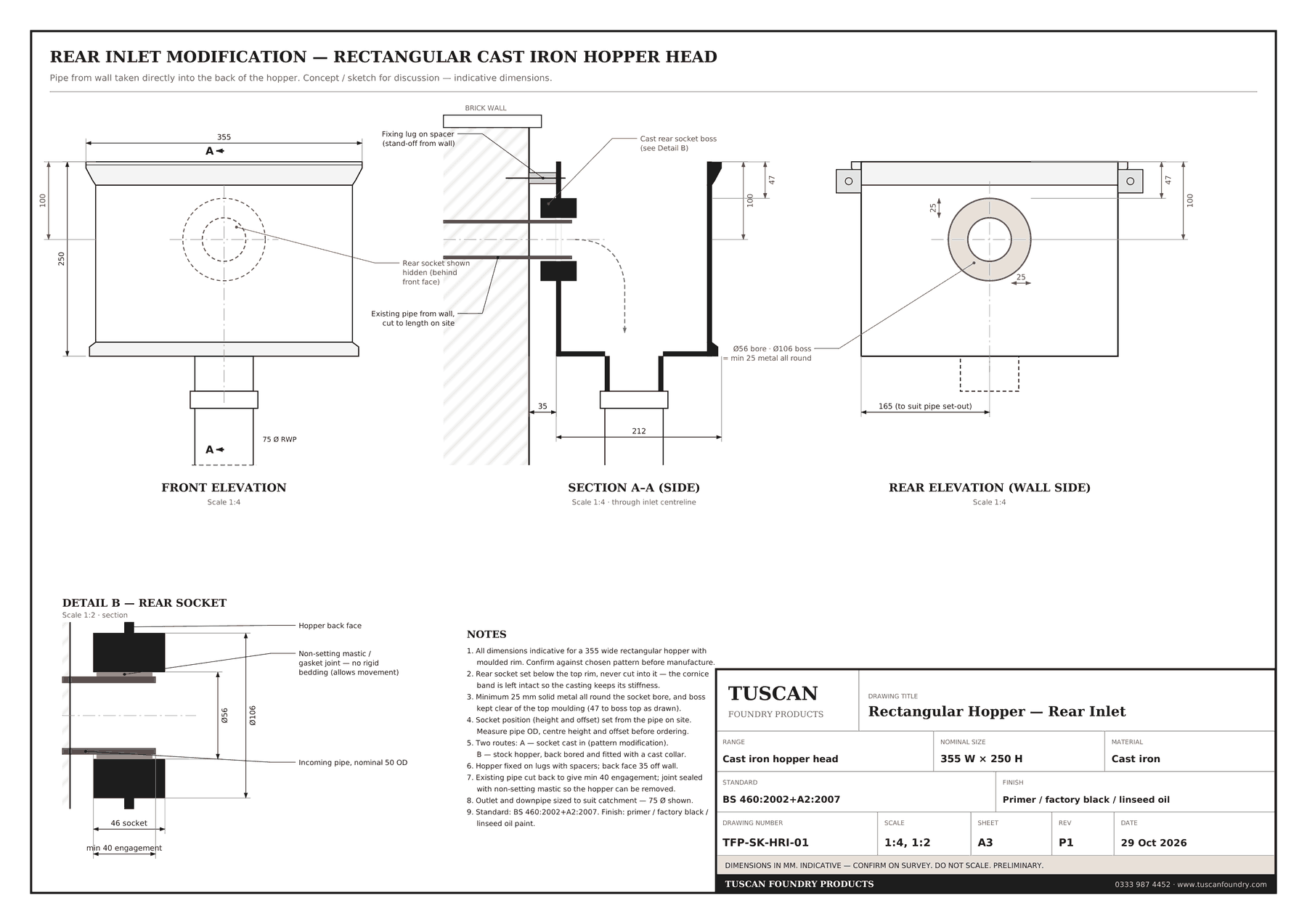
Heads are cast iron to BS 460:2002+A2:2007 and are available in primer, factory black or linseed oil paint. The outlet joint should be sealed with a non-setting mastic or gasket, not bedded rigidly, and dissimilar metals should be isolated.
Always pair a rear inlet with an emergency overflow.
Because the inlet sits below the hopper rim, a blocked downpipe backs water up into the roof before the hopper overflows. Every rear-inlet detail needs a separate emergency overflow through the parapet, and the hopper top must stay open for inspection and rodding.
Pricing and lead time
A rear-inlet hopper is priced as the standard hopper plus a fabrication cost for the modification. We quote the modification with each enquiry because it depends on the type and size of the outlet pipe. The programme is confirmed with your quotation; a linseed oil paint finish adds further time. If no standard pattern suits, a bespoke or copy-cast head typically takes 12–14 weeks from pattern approval.
What we need to quote
- Outlet pipe outside diameter and material (cast iron, lead, copper, stainless steel or other)
- Height from the top of the coping to the centre of the outlet
- Offset of the outlet from the nearest corner, reveal or feature
- Roof area draining to the outlet
- Whether there is an existing emergency overflow
- Listed status, and the hopper style you would like or photographs of other heads on the building
Photographs with a tape measure in shot are usually enough to start. Where the outlet position is uncertain or access is difficult, we recommend a site survey, which is a chargeable service.
Call 0333 987 4452 or send us your details through our contact page. You can also browse our full range of cast iron rainwater heads.
Frequently asked questions
Can any cast iron hopper take a rear inlet?
We make rear inlets on our moulded rectangular hoppers, which have a flat back face and enough depth below the rim for a socket with at least 25 mm of metal around it. Ornamental and tapered patterns are generally not suitable.
Can I drill the back of an existing hopper on site instead?
We do not recommend it. Cast iron is brittle under impact and point load, site drilling risks hairline cracks, and it leaves bare metal inside the head where water sits. A workshop modification keeps the metal thickness correct and the head finished as one piece.
Do I need an overflow with a rear-inlet hopper?
Yes. Because the inlet is below the rim, a blocked downpipe backs water up into the gutter or roof before the hopper overflows. A separate emergency overflow through the parapet is essential.
How much does a rear-inlet hopper cost?
It is priced as the standard hopper plus a fabrication cost for the modification, quoted with each enquiry according to the type and size of the outlet pipe.
Do I need Listed Building Consent for a rear-inlet hopper?
You may. Like-for-like repair rarely needs consent, but changing the detail at a parapet outlet on a listed building can. Check with the local planning authority’s conservation officer before ordering.