Hopper heads are supplied in red oxide primer ready for on-site painting, or pre-finished in black. A full range of Heritage Colours in traditional linseed oil paint is also available on request — please contact us for the swatch chart.
Established 1893 | BS 460:2002 Certified | UK & International Supply | Expert Technical Support | 0333 987 4452
£118.80 – £140.80Price range: £118.80 through £140.80 +VAT
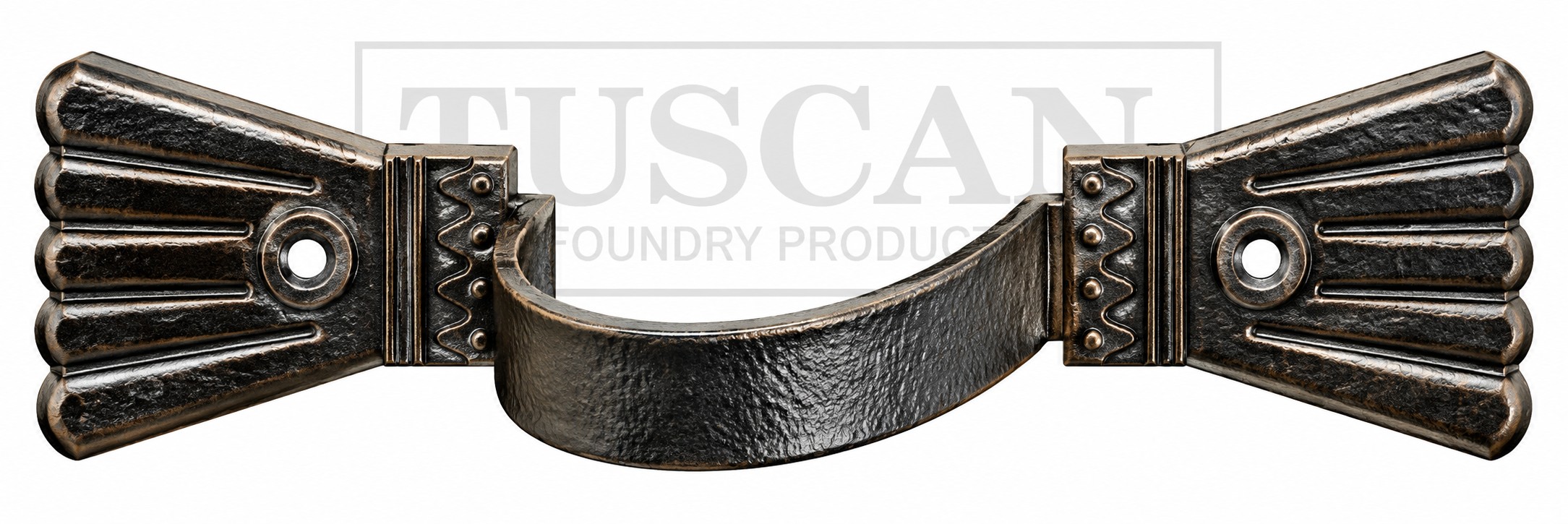
Cast iron round ornamental pipe earband type E for cast iron pipe. Our round ornamental cast iron downpipe earbands are used instead of eared pipes or fittings.
Sizes Available:
65mm (2.5″) cast iron pipe
75mm (3″) cast iron pipe
100mm (4″) cast iron pipe
Cast iron ornamental downpipe earbands for round rainwater downpipes: pattern type (E)
Tuscan Foundry Products offers one of the UK’s most comprehensive ranges of brackets and can manufacture bespoke products to match your existing brackets if required.
Technical
Ornamental cast iron rainwater pipe earbands are available for 65mm (2.5″), 75mm (3″) and 100mm (4″) cast iron downpipes.
| Size | 65mm, 75mm, 100mm |
|---|
Hopper heads are supplied in red oxide primer ready for on-site painting, or pre-finished in black. A full range of Heritage Colours in traditional linseed oil paint is also available on request — please contact us for the swatch chart.
Our cast iron hopper heads are available in a choice of finishes including primer, painted, and specialist heritage finishes. Please call us on 0333 987 4452 or submit an enquiry to discuss the right finish for your project.
Yes. Cast iron hopper heads are the historically correct choice for listed and period buildings, and a like-for-like cast iron replacement is generally accepted without objection by conservation officers. We manufacture to BS 460 for genuine heritage character and durability.
The Cast Iron Louvre Airbrick suits Victorian, Edwardian, and inter-war residential and commercial properties where the louvre-pattern vent was the standard specification. It is the correct like-for-like replacement on listed buildings and conservation area properties, and suits new heritage-style construction requiring an authentic period ventilation grille.
The Polished Lacquered finish suits buildings where period ironwork was finished bright rather than painted — formal entrance elevations, listed properties, and settings where the grille contributes to the decorative programme of the facade. It is appropriate for conservation specifications and high-specification heritage new build.
BS 460:2002 is the British Standard governing cast iron rainwater goods — gutters, pipes, and fittings. It sets the dimensional tolerances, materials, and performance requirements a component must meet, so that joints seal, sections align, and the system performs as a whole rather than as isolated parts. All Tuscan Foundry Products components are manufactured to comply with BS 460:2002, which is worth citing directly in specification documents and listed building consent applications. The same manufacturing standard applies to bespoke and copy-cast work, even where the profile itself isn't from our standard range.
Our cast iron hopper heads are available in a standard primed and black-painted finish, ready for on-site topcoats. Heritage colour finishes and factory-applied linseed oil paint are available on request. Linseed oil paint is a vapour-permeable, period-appropriate finish particularly well suited to listed buildings and conservation area properties.
Hopper heads are supplied in red oxide primer ready for on-site painting, or pre-finished in black. A full range of Heritage Colours in traditional linseed oil paint is also available on request — please contact us for the swatch chart.
Yes. Both the satin and polished chrome telescopic rooflight hand winder openers are compatible with Lumen Rooflights and most timber-framed skylights. Call 0333 987 4452 if you need to confirm compatibility with a specific model.
BTU stand’s for British Thermal Units. This was the old (Imperial) measurement for heat in connection with plumbing. Although BTU’s is a term still commonly used within the heating and plumbing, the industry is now going over to KW’s Kilowatts.