Established 1893 | BS 460:2002 Certified | UK & International Supply | Expert Technical Support | 0333 987 4452
£117.20 – £224.80Price range: £117.20 through £224.80 ex VAT (£140.64 – £269.76 inc VAT)
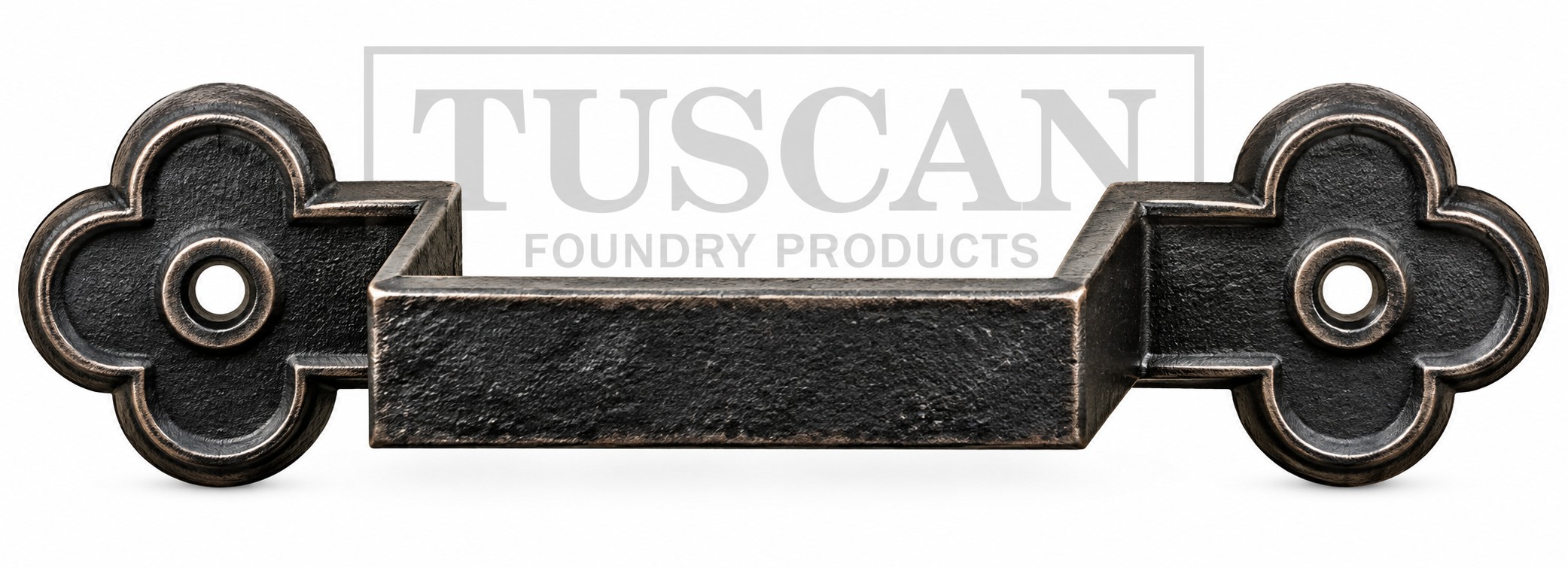
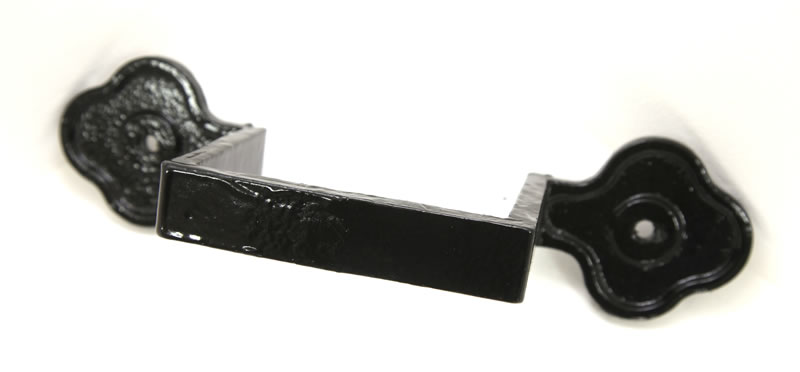
Cast iron ornamental earband, Pattern D, for rectangular downpipes, 100x75mm to 150x100mm, in primer or black painted finish.
UK delivery from £30. Fittings are despatched boxed. See delivery rates.
The Rectangular Pipe Ornamental Earband Pattern D is a decorative cast iron collar for rectangular downpipes, with rounded quatrefoil fixing ears. It fixes plain, un-eared pipe to the wall and adds a period detail at each joint.
It is specified on conservation and listed building projects where Pattern D matches the surviving ornamental earbands on the original installation, so the restored elevation keeps the correct decorative detail. Ornamental earbands were a standard feature on formal Victorian and Edwardian facades, including civic buildings, churches, banks and institutional architecture.
The same nine patterns, A to K, are made for round, square and rectangular pipe, so a building with mixed pipe shapes can carry one consistent pattern.
All fittings in our rectangular range are cast iron to BS 460:2002, made to the same moulded profile so pipes and fittings line up neatly on the elevation. Every fitting is supplied either in primer, ready for painting on site, or in factory black. For listed buildings and conservation areas we also offer hand-applied linseed oil paint in heritage colours, which stays breathable and flexible and is straightforward to maintain. Stocked items are usually dispatched within 5 to 7 working days; allow around 6 to 7 weeks where a linseed oil finish is specified.
Rectangular pipe sizes: 100mm x 75mm (4″ x 3″), 125mm x 70mm, 125mm x 100mm (5″ x 4″) and 150mm x 100mm (6″ x 4″).
Suitable for listed buildings, conservation areas and heritage restoration. For specification support or a project quotation, call 0333 987 4452.
| Size/Finish | Primer 100mm x 75mm, Primer 125mm x 70mm, Primer 125mm x 100mm, Primer 150mm x 100mm, Black Painted 100mm x 75mm, Black Painted 125mm x 70mm, Black Painted 125mm x 100mm, Black Painted 150mm x 100mm |
|---|
Prices for rooflight openers are shown on the product pages at tuscanfoundry.com. For volume orders, project pricing, or compatibility queries, please call 0333 987 4452 or use the contact form on our website.
Please call 0333 987 4452 or use the contact form with the size, quantity and connection details, and we'll provide a quotation.
Yes. Polished brass ironmongery is historically appropriate for period buildings and is generally acceptable to conservation officers for listed building projects. If you require confirmation for your specific scheme, we are happy to advise — call 0333 987 4452.
Hopper heads are supplied in red oxide primer ready for on-site painting, or pre-finished in black. A full range of Heritage Colours in traditional linseed oil paint is also available on request — please contact us for the swatch chart.
Yes. Cast iron is the original material for external soil stacks on most period buildings, and like-for-like replacement in cast iron is usually what conservation officers expect. Check with your local planning authority whether listed building consent is needed for the works.
The H540 measures 600mm wide x 340mm deep x 475mm high, making it well suited to substantial country houses, civic and ecclesiastical buildings.
Prices vary depending on size and finish. To get a quotation, please call 0333 987 4452 or use the contact form on the Tuscan Foundry website. The team can advise on the right specification for your project and provide a written quote.
The H526 measures 440mm wide x 240mm deep x 460mm high, making it well suited to Victorian and Edwardian townhouses.
Tuscan Foundry supplies screw-jack rooflight openers in polished brass, satin chrome, and polished chrome finishes. Options include telescopic hand-winder openers in 150mm, 250mm, and 300mm sizes, fixed screw-jack stays, and pole-operated handles for high-level rooflights. All are designed for timber-framed rooflights and skylights.
Yes. Cast iron ornamental vents in period patterns are frequently specified on listed buildings and conservation area properties as like-for-like replacements for original Victorian ironwork. Conservation officers generally accept cast iron in period patterns without objection. We can supply specifications to support planning and listed building consent applications.