Established 1893 | BS 460:2002 Certified | UK & International Supply | Expert Technical Support | 0333 987 4452
£1.41 – £1.55Price range: £1.41 through £1.55 ex VAT (£1.69 – £1.86 inc VAT)
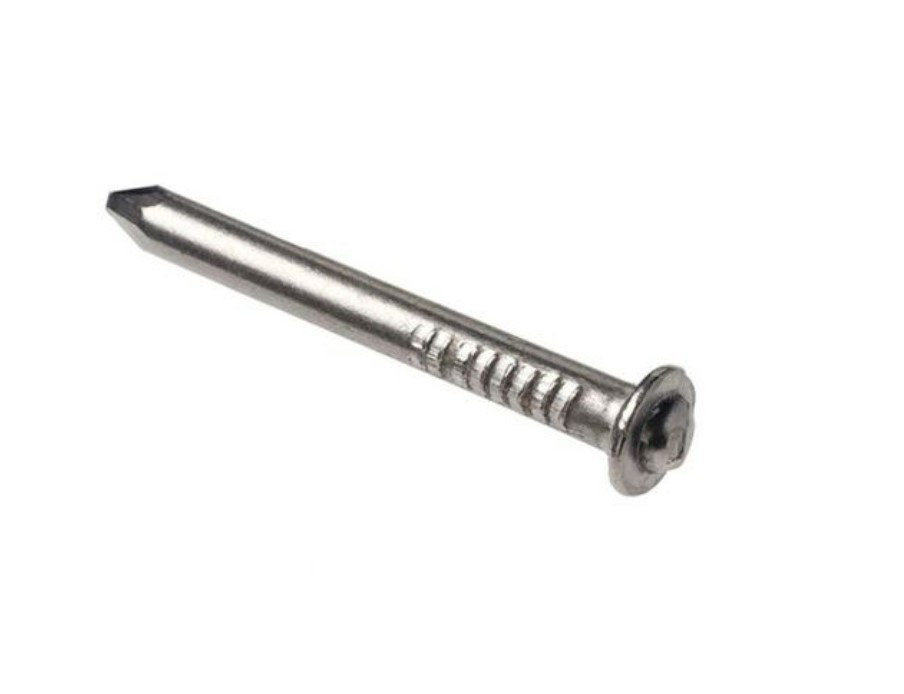
Pipe nails for the fixing of cast iron downpipes (75mm and 100mm)
UK delivery from £30. Fittings are despatched boxed. See delivery rates.
The cast iron downpipe fixing nail provides a simple and period-appropriate method for securing cast iron downpipes to a masonry wall. The nail passes through the ear of an eared pipe section and is driven directly into a mortar joint or wall plug, holding the pipe close to the wall face. This is the traditional fixing method for eared cast iron downpipes on Georgian, Victorian, and Edwardian masonry buildings.
Available in 75mm and 100mm lengths to suit the standard range of eared round and square cast iron downpipe sections. Supplied in a pack format. The pipe nail is the correct heritage fixing for conservation and listed building projects where the original method of pipe fixing is to be replicated. For specification support, call 0333 987 4452.
| Size | 75mm, 100mm |
|---|
Please call 0333 987 4452 or use the contact form with the size, quantity and connection details, and we'll provide a quotation.
The H527 measures 430mm wide x 195mm deep x 540mm high, making it well suited to Victorian villas and townhouses where a decorative leader head is wanted.
The polished chrome telescopic rooflight hand winder opener is available in multiple sizes. The telescopic mechanism adjusts to accommodate varying rooflight positions and throw requirements. For a full list of available sizes, visit tuscanfoundry.com or call 0333 987 4452.
The School Board Airbrick (F020801AFC) is available in three standard sizes: 225mm × 75mm, 225mm × 150mm, and 225mm × 225mm. These correspond to one-, two-, and three-brick-course heights and allow ventilation requirements to be met across a range of subfloor and wall opening sizes.
Our cast iron hopper heads are available with 65mm, 75mm and 100mm round outlets, 75mm, 100mm and 125mm square outlets, and 100x75mm, 125x100mm and 150x125mm rectangular outlets, to match the downpipe already on site or specified for the project.
Available in two sizes: 225mm x 82mm (single airbrick course height) and 225mm x 150mm (double course height). Both sizes fit standard brick coursing positions and install flush into the wall face.
Our cast iron hopper heads are available in a standard primed and black-painted finish, ready for on-site topcoats. Heritage colour finishes and factory-applied linseed oil paint are available on request. Linseed oil paint is a vapour-permeable, period-appropriate finish particularly well suited to listed buildings and conservation area properties.
Yes. Cast iron rainwater goods are widely accepted by conservation officers and historic environment bodies as the appropriate material for listed buildings. Tuscan Foundry's hopper heads are manufactured in solid cast iron to BS 460 specification and are suitable for all listed building grades. A linseed oil paint finish is also available, which is particularly appropriate for conservation projects.
The Calnethorpe is designed for formal classical and Georgian elevations where scale and material authenticity matter — large townhouses, country houses, manor houses, and institutional buildings. It is also widely specified for new-build heritage projects where cast iron rainwater goods are required to conservation standard.
The Paxton H82 is a large-format hopper with decorative collar mouldings, making it particularly well suited to late Victorian and Edwardian buildings where the rainwater system forms part of the architectural composition. Typical applications include commercial heritage buildings, civic buildings, large detached houses, institutional premises, and warehouse conversions where a more substantial fitting is appropriate.