Established 1893 | BS 460:2002 Certified | UK & International Supply | Expert Technical Support | 0333 987 4452
£84.30 ex VAT (£101.16 inc VAT)
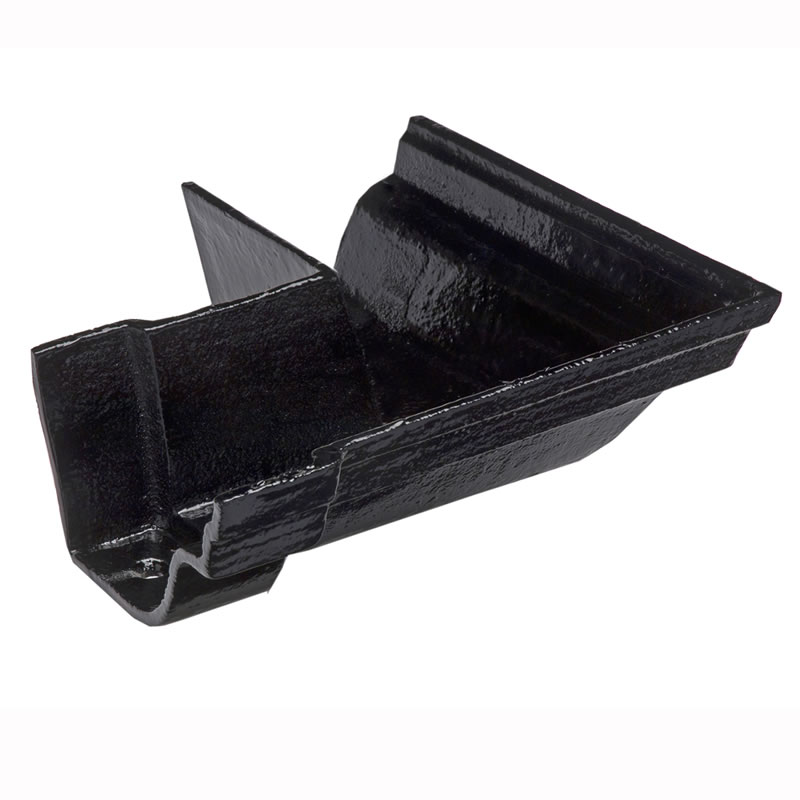
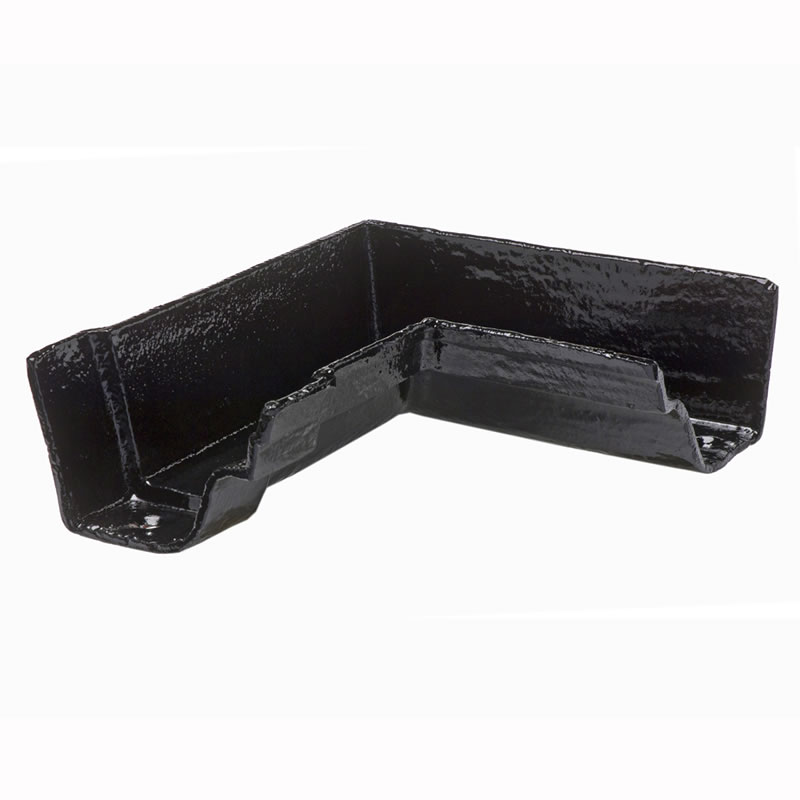
A genuine cast iron rainwater pattern orignally used in and around Nottingham, hence Notts Ogee. The profile is only available in the one size (4.5″) and has a flat base unlike the more traditional ogee (OG) curved pattern.
UK delivery from £30. Fittings are despatched boxed. See delivery rates.
The cast iron Notts OG 90 degree angle provides a square corner fitting for the Notts Ogee profile — the distinctive regional gutter pattern originally used in Nottingham and the East Midlands. The asymmetric ogee front face is maintained through the angle fitting, preserving the visual character of the profile at every change of direction on the building.
Because the Notts OG is an asymmetric profile, angles are manufactured as either internal or external, and left-hand or right-hand, depending on the direction of the gutter run. It is important to identify the correct configuration for your installation before ordering — the profile cannot be reversed or flipped to compensate for an incorrect angle type.
Manufactured in solid cast iron to BS 460:2002. Single size 115mm (4.5″). Supplied in primed or factory black finish. Specified on listed buildings, conservation area properties, and heritage restoration projects in Nottingham, Derby, Leicester, and the wider East Midlands where the Notts OG is the historically correct profile. Accepted by conservation officers in the region as the appropriate fitting for period rainwater work.
Compatibility: Notts OG cast iron gutter 115mm (4.5″) only. For specification support, call 0333 987 4452.
| Socket | Internal, External |
|---|
Please call 0333 987 4452 or use the contact form with the size, quantity and connection details, and we'll provide a quotation.
Hopper heads are supplied in red oxide primer ready for on-site painting, or pre-finished in black. A full range of Heritage Colours in traditional linseed oil paint is also available on request — please contact us for the swatch chart.
Please call 0333 987 4452 or use the contact form with the size, quantity and connection details, and we'll provide a quotation.
Yes, provided they are sized for the lower water temperature. Outputs are published at ΔT50; at ΔT30 a section gives about half that, so heat pump systems usually need more sections or a deeper pattern. We can prepare a radiator schedule at your heat pump design temperature.
Select your required size and finish options from the product page and add to cart for an instant price. For project quantities, bespoke requirements, or any specification queries, please call 0333 987 4452 or use the contact form at tuscanfoundry.com.
Yes. Cast iron hopper heads are the historically correct choice for listed and period buildings, and a like-for-like cast iron replacement is generally accepted without objection by conservation officers. We manufacture to BS 460 for genuine heritage character and durability.
Yes. Polished brass ironmongery is historically appropriate for period buildings and is generally acceptable to conservation officers for listed building projects. If you require confirmation for your specific scheme, we are happy to advise — call 0333 987 4452.
Hopper heads are supplied in red oxide primer ready for on-site painting, or pre-finished in black. A full range of Heritage Colours in traditional linseed oil paint is also available on request — please contact us for the swatch chart.
Our cast iron hopper heads are available in a choice of finishes including primer, painted, and specialist heritage finishes. Please call us on 0333 987 4452 or submit an enquiry to discuss the right finish for your project.
Yes. Cast iron airbricks are frequently specified for listed buildings and conservation area properties precisely because they replicate the material and pattern of the original Victorian and Edwardian ventilation grilles. Local conservation officers and building control typically accept like-for-like cast iron replacements without objection. We can provide product specifications and material datasheets to support applications.