Hopper heads collect rainwater at the top of a downpipe and are usually the most decorative element of a cast iron rainwater system — the point where a building’s date, initials or a chosen motif are traditionally cast into the piece itself. This gallery shows the range in practice: ornamental patterns from the standard catalogue, personalised and dated commissions, and plain vernacular designs for buildings where restraint suits the architecture better than ornament. Every pattern shown is available in cast iron to BS 460:2002+A2:2007, and can be reproduced, adapted or dated to order — see the Bespoke page for copy-casting an existing or damaged hopper head.
Ornamental range
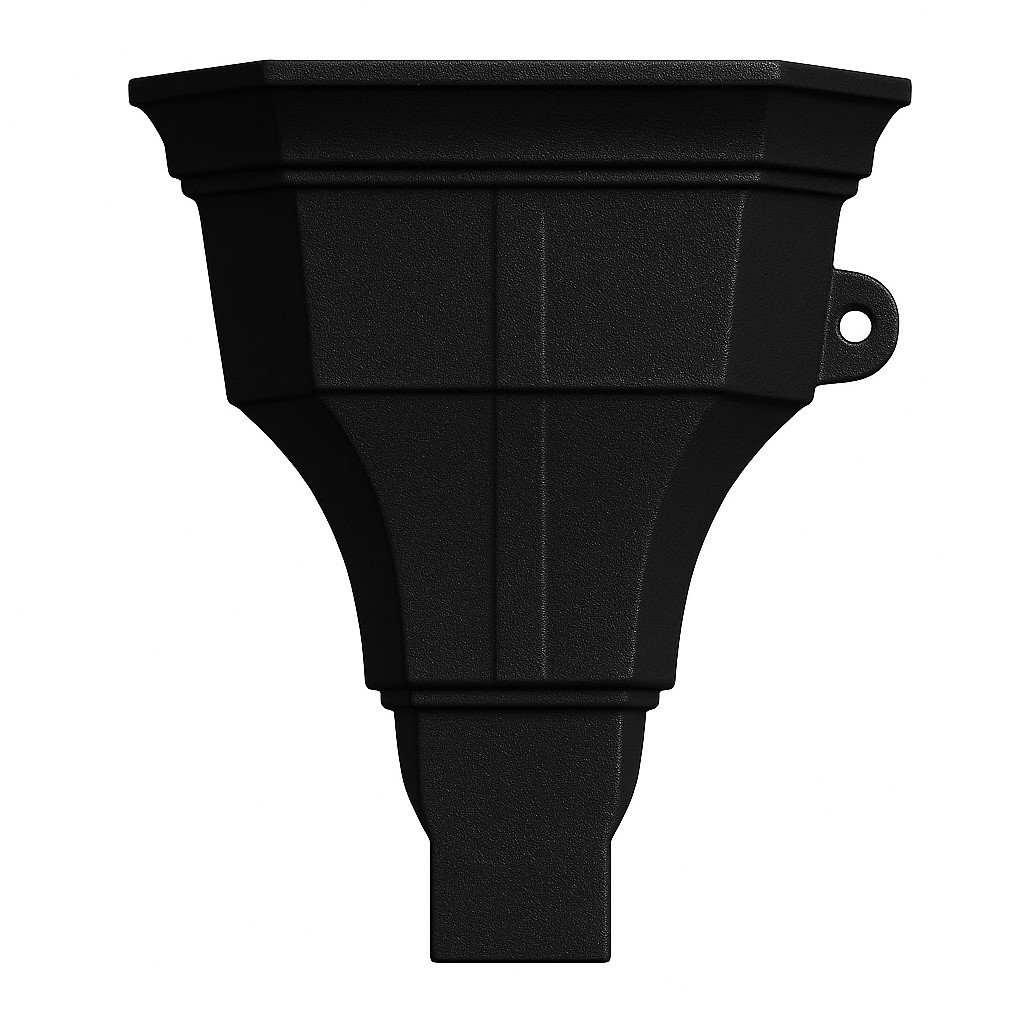
The Brunswick pattern, No.40 — a moulded panel front with a plain outlet.
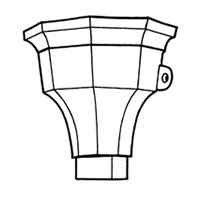
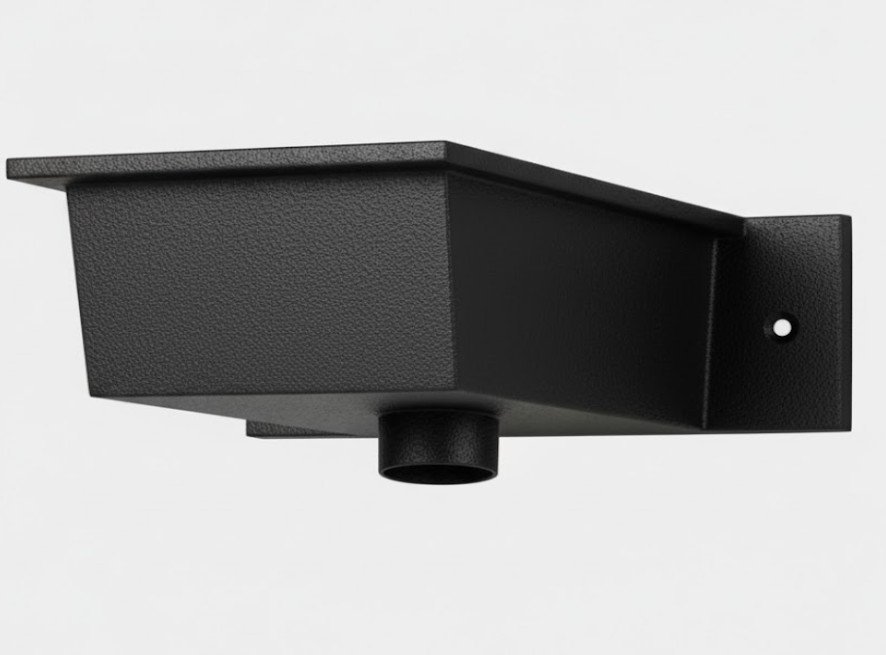
Reference outline for the Brunswick No.40 pattern.
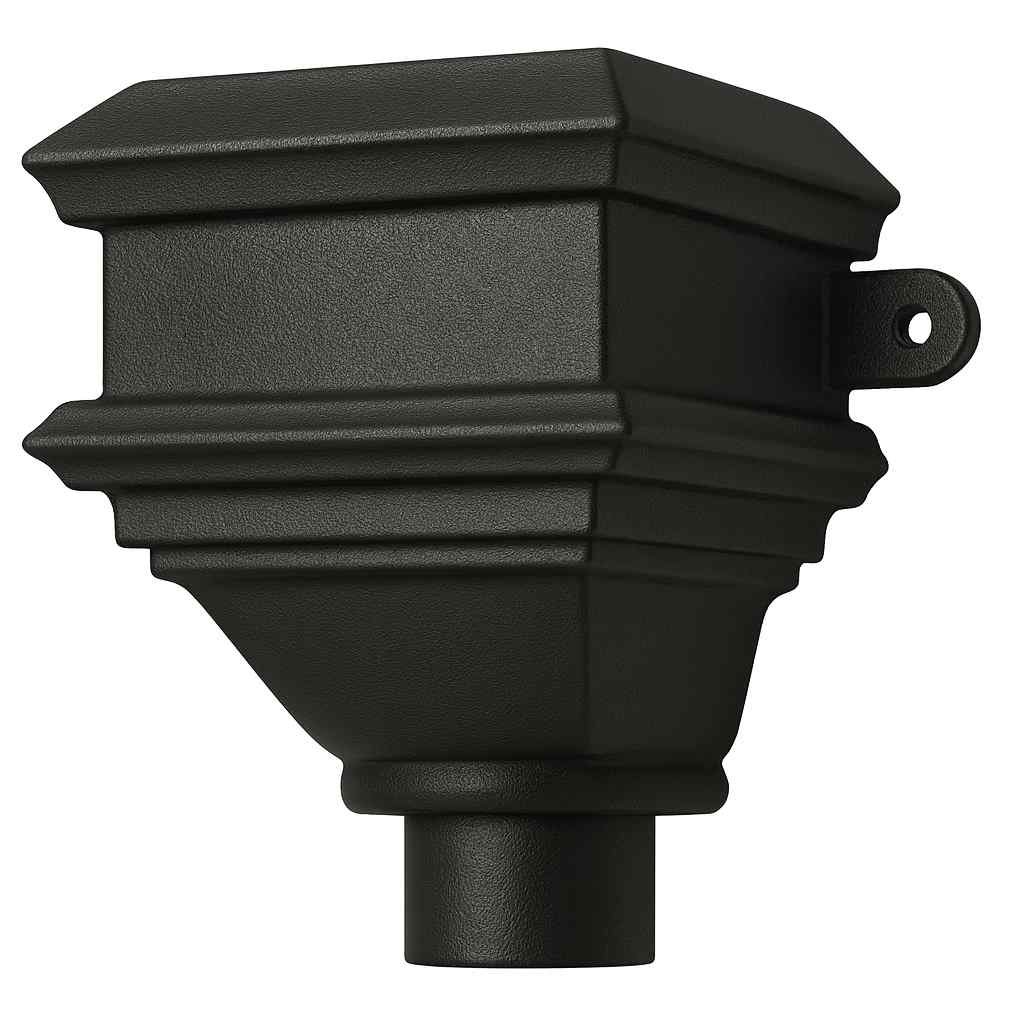
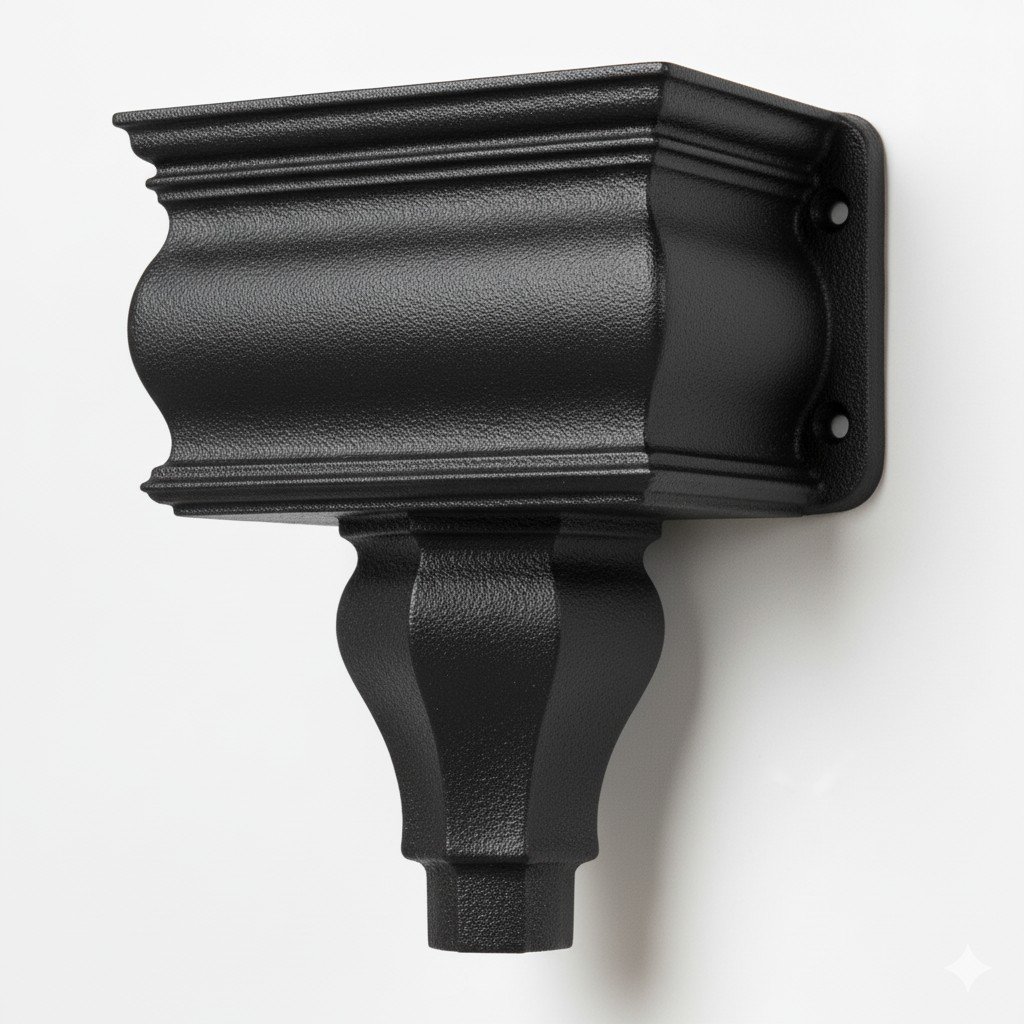
The Handley pattern, No.37 — a stepped, moulded top with fixing ear.
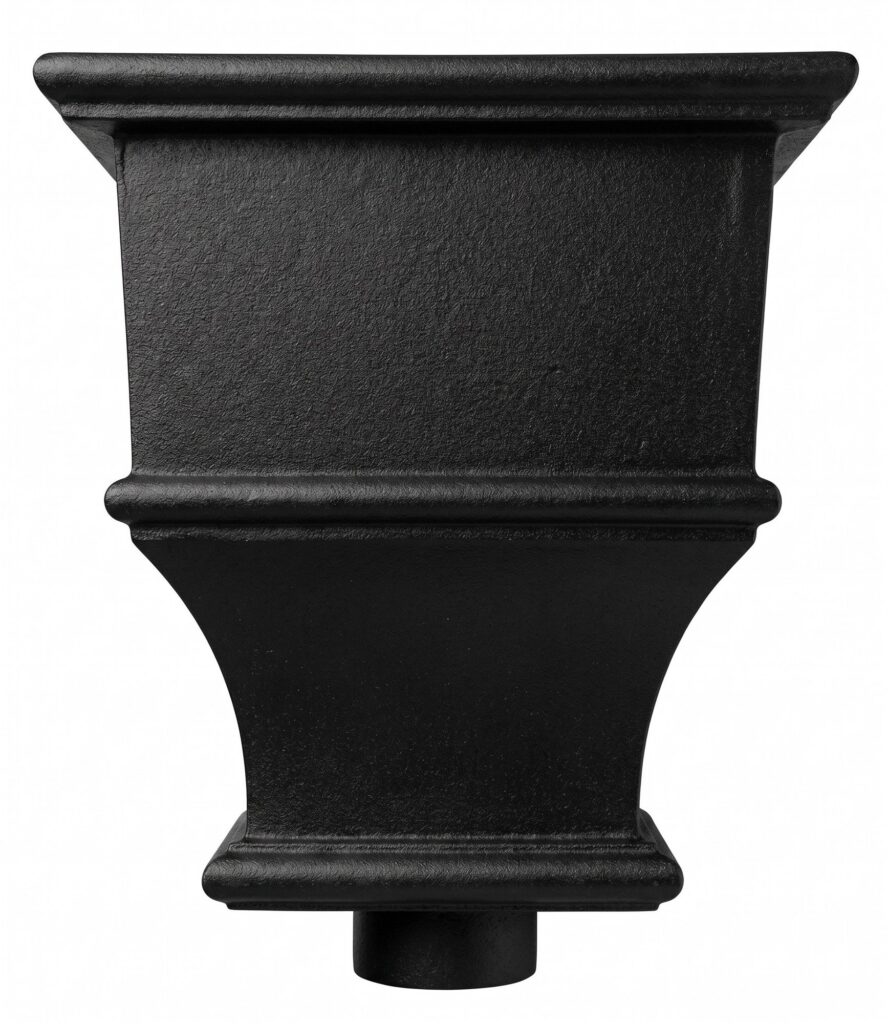
The Bagley pattern, No.107, standard wall-mounted form.
The Bagley No.107 pattern in its corner-mounted form.
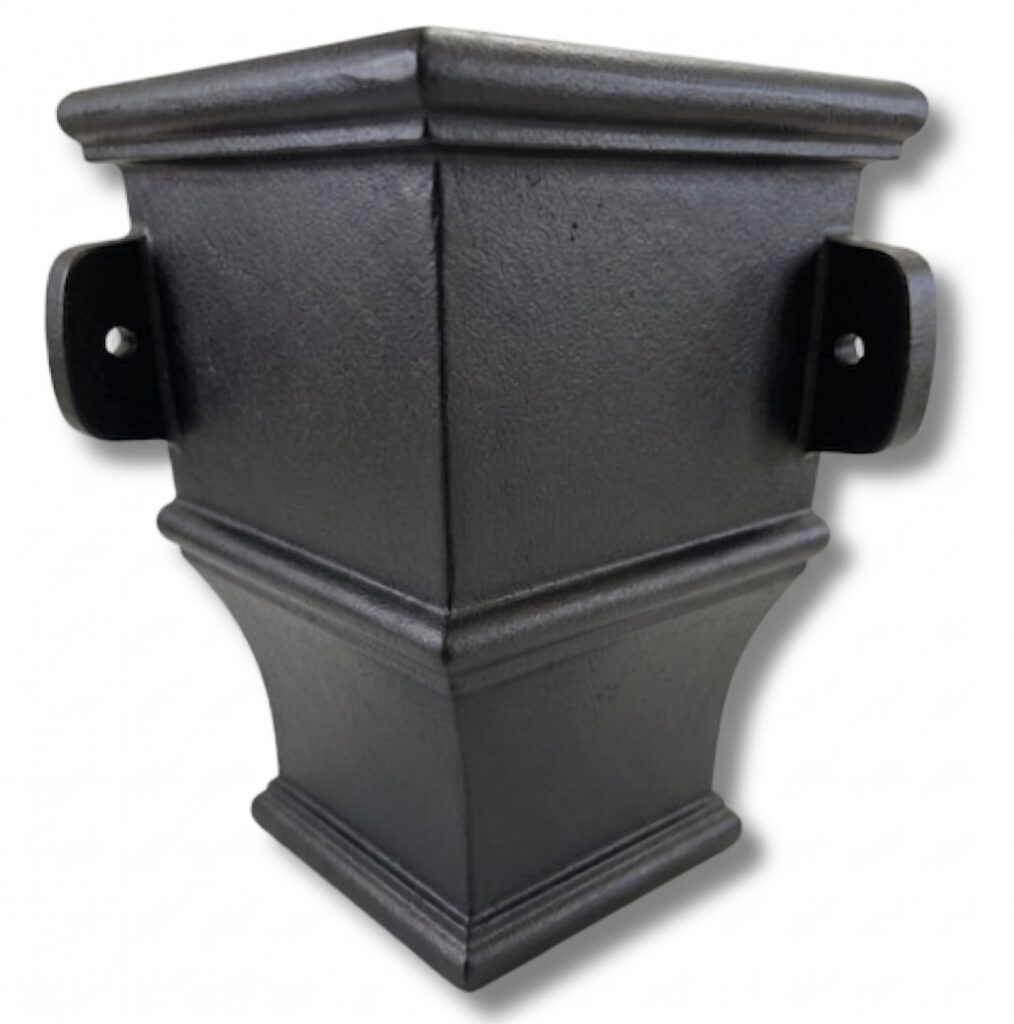
The Saxby pattern, No.2 — a corner-mounted design with cast fixing ears.
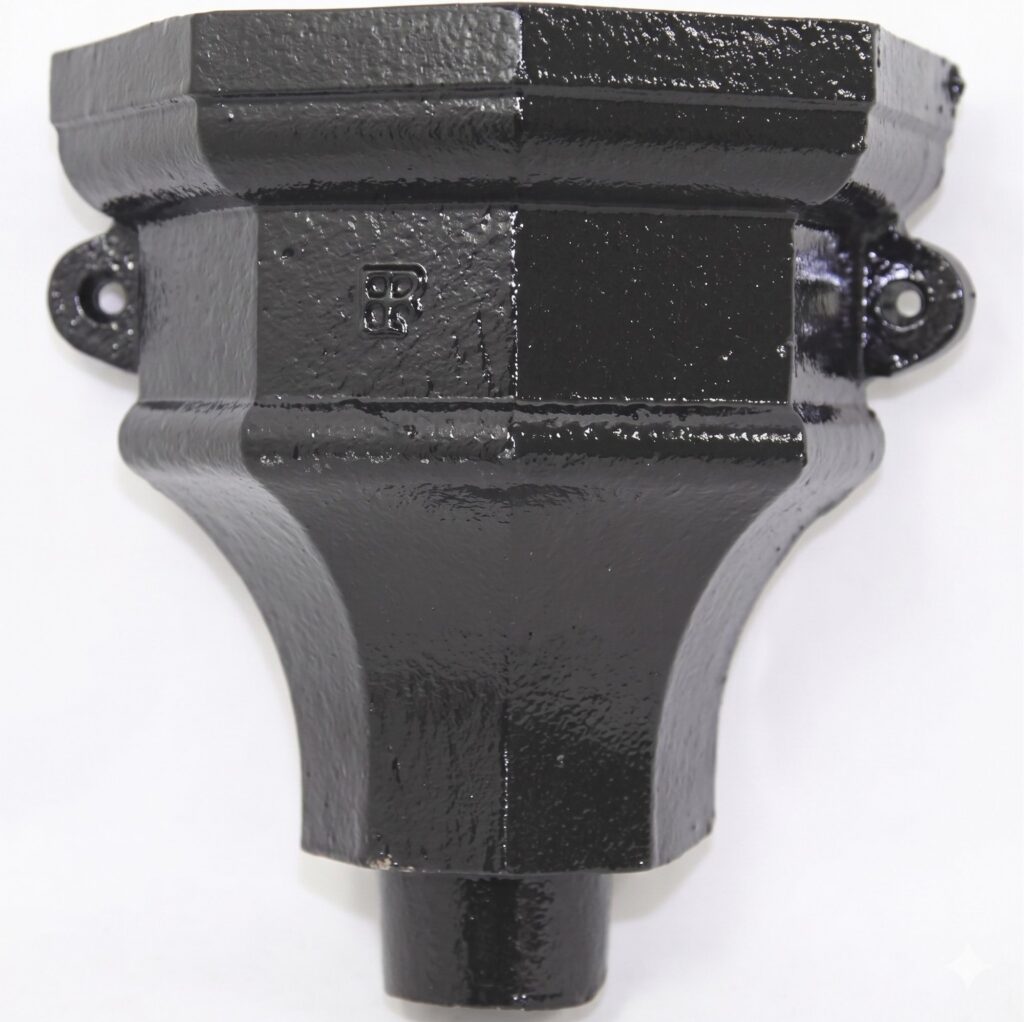
The Hepworth pattern, No.522, shown here as-cast with its foundry mark.
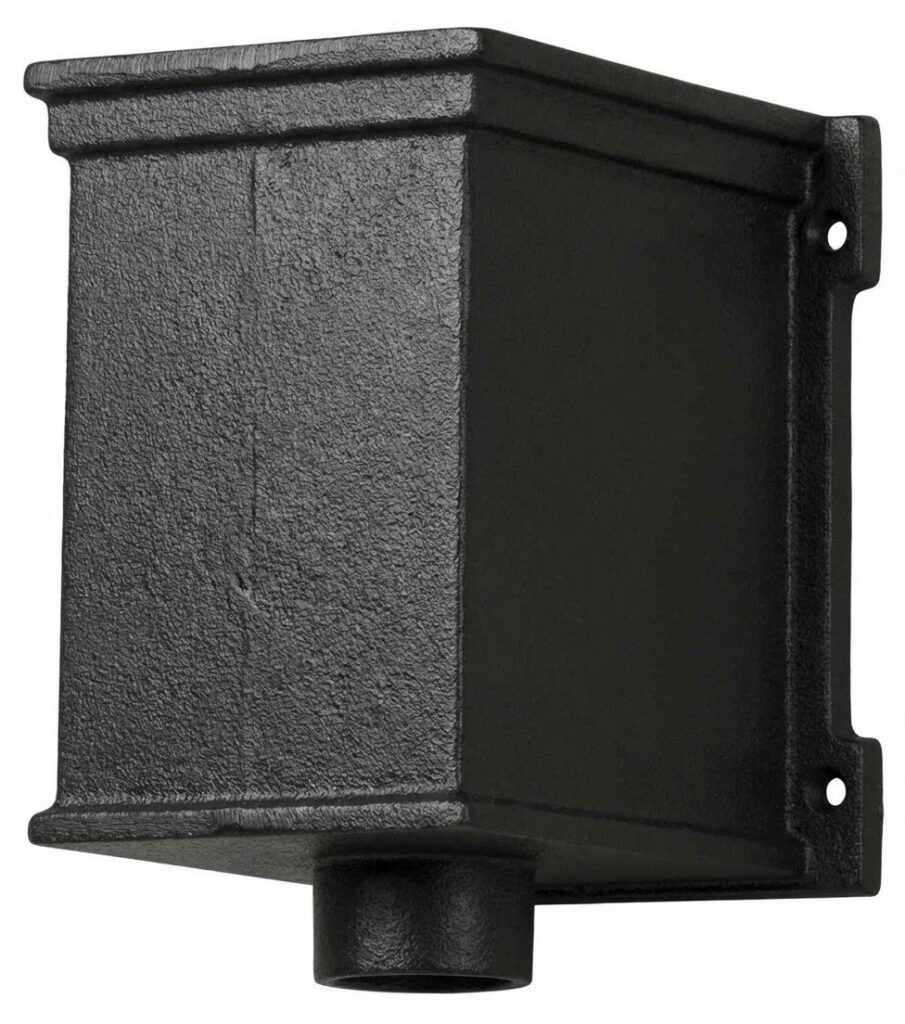
The Higham pattern, No.525 — a plain box hopper with wall-fixing ears.
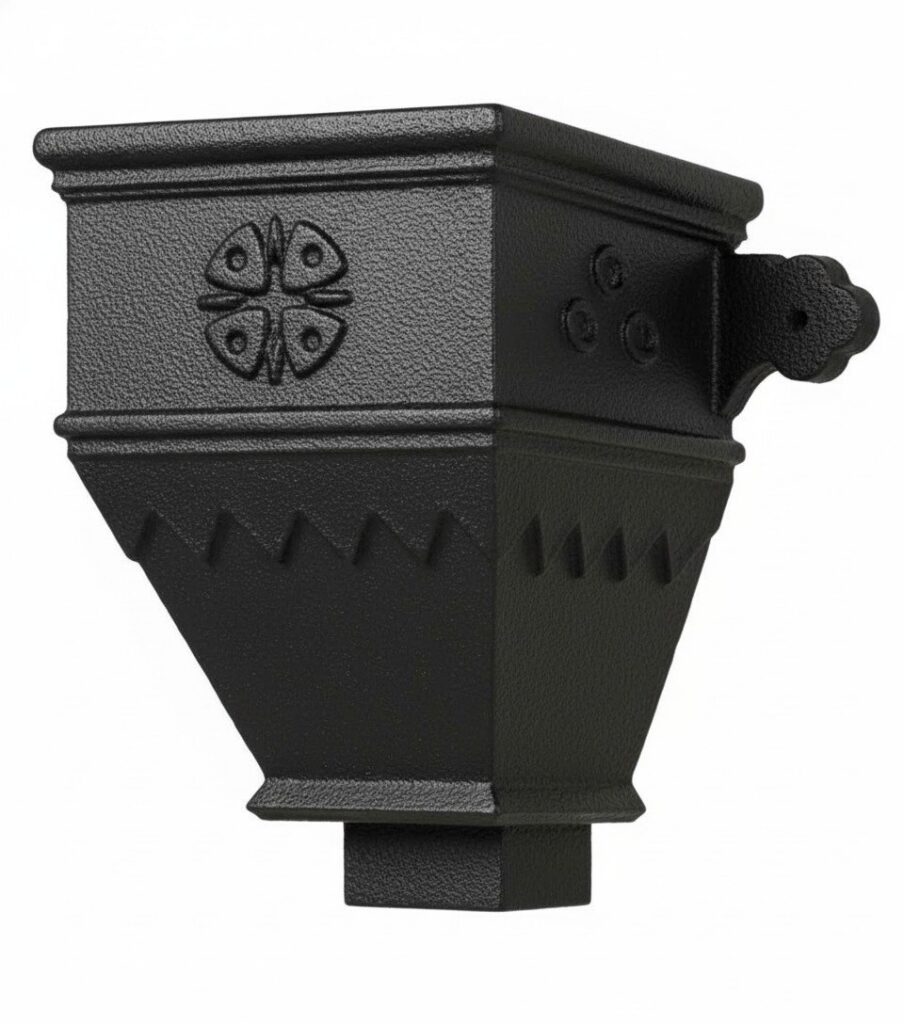
The Westminster pattern, No.521 — quatrefoil panels above a dogtooth-moulded base.
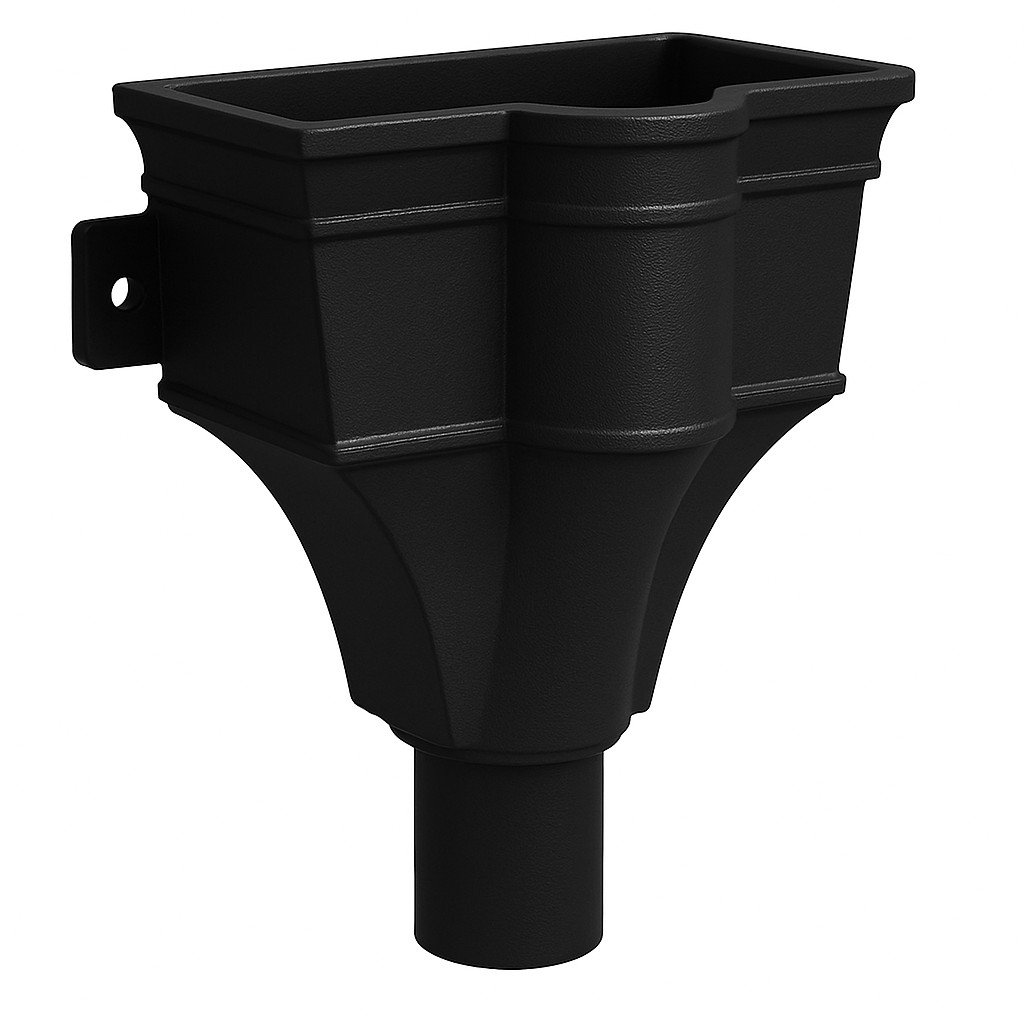
The Woodchester pattern — a wide box hopper serving two outlets from one head.
Pattern No.213 — a box hopper carried on a decorative corbel bracket.
Personalised and dated commissions
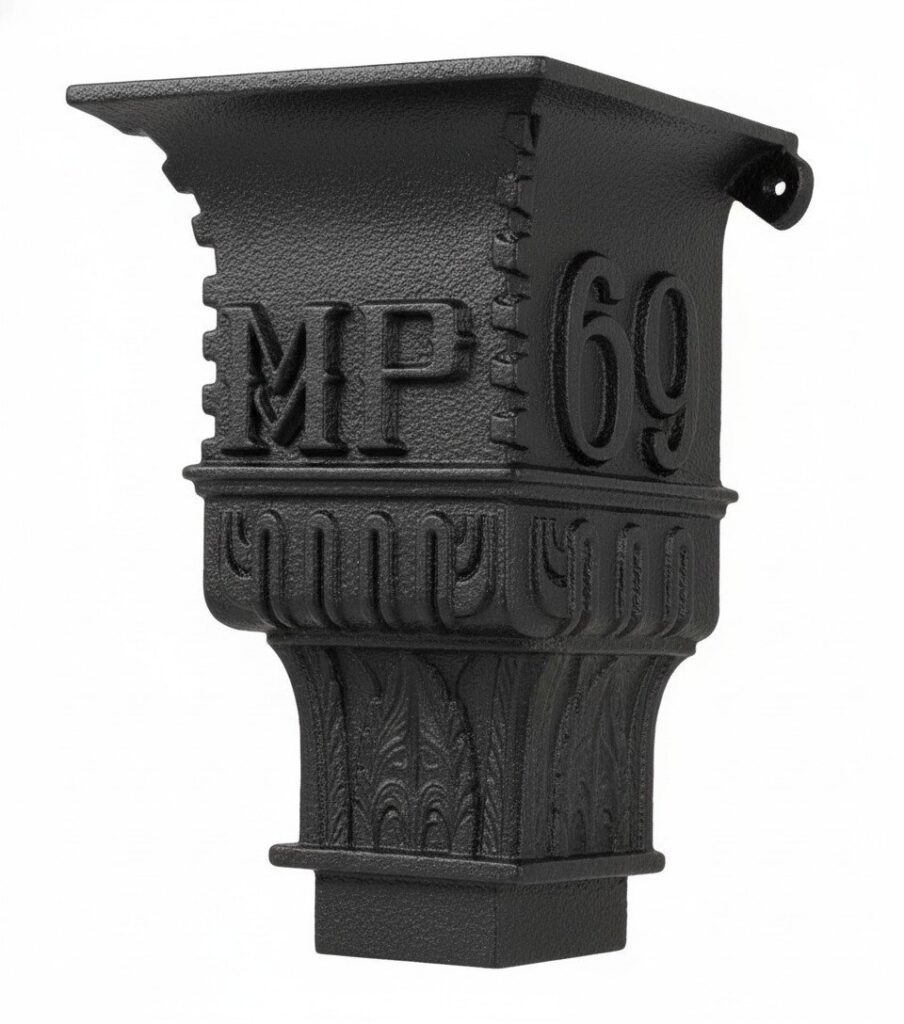
The Manston pattern, No.524, personalised with cast initials and a house number.
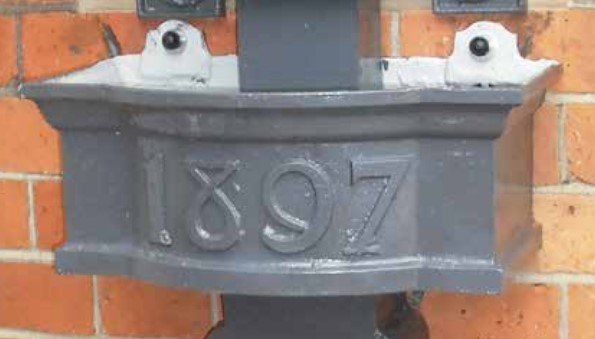
A hopper head cast with its installation date — 1897 in this example.
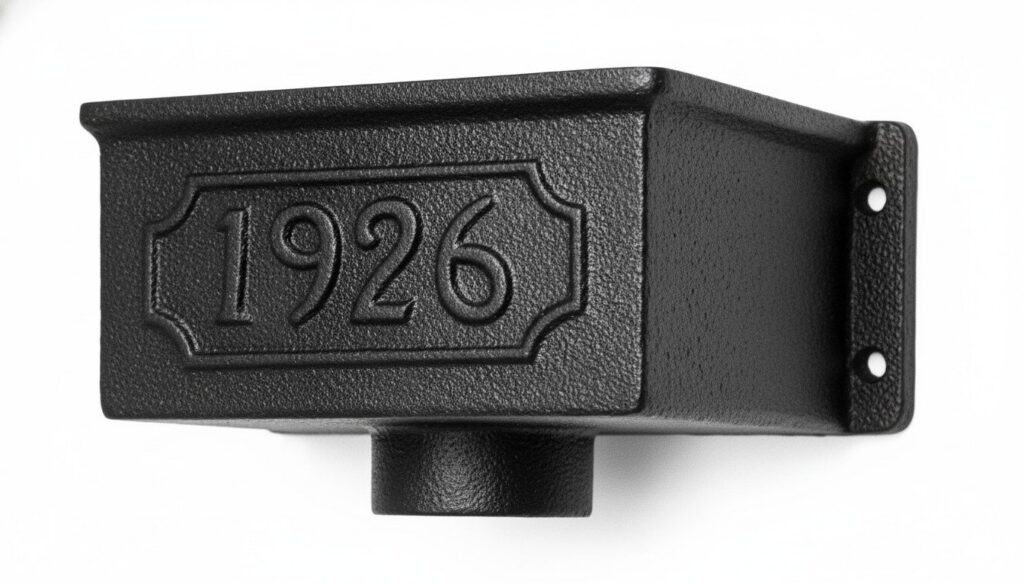
Pattern No.254, cast with the date 1926 in place of a decorative motif.
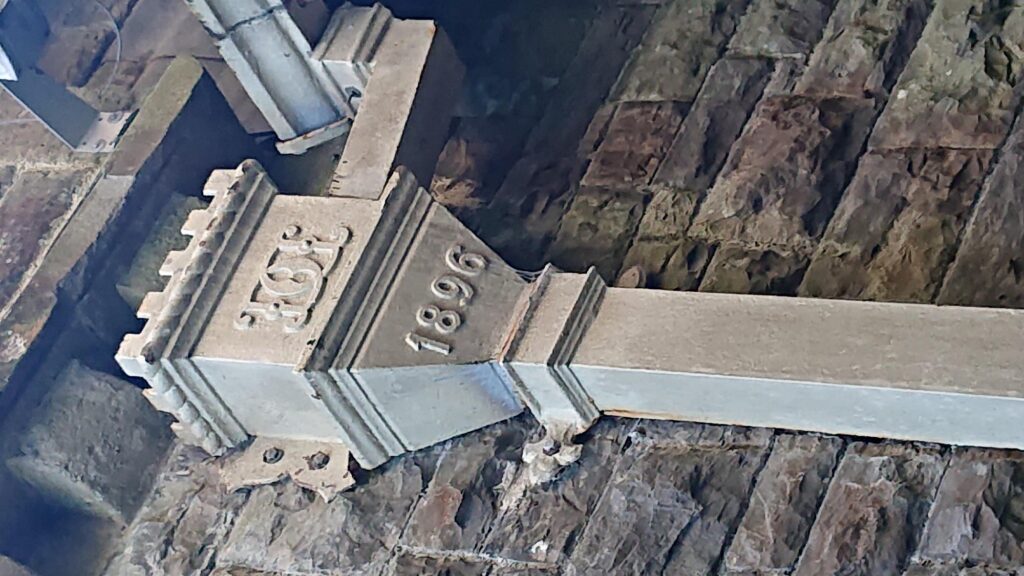
A dated hopper head (1896) set into a castellated stone parapet at Dinefwr Park, Wales.
Decorative motifs, shown in situ
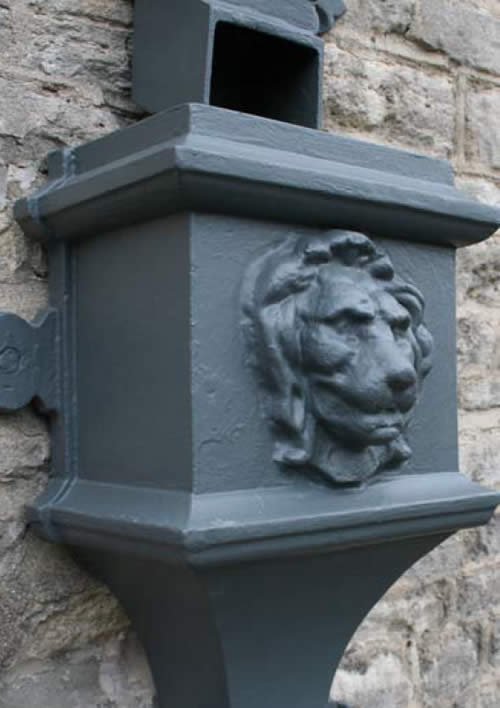
A hopper head with a cast lion’s head motif, shown as installed.
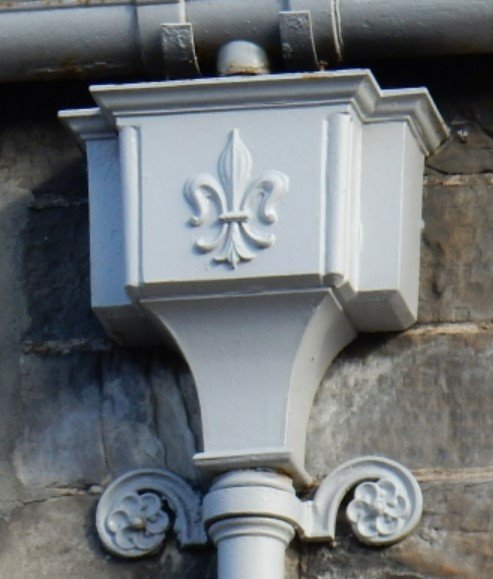
A fleur-de-lys motif hopper head in a painted finish, as installed.
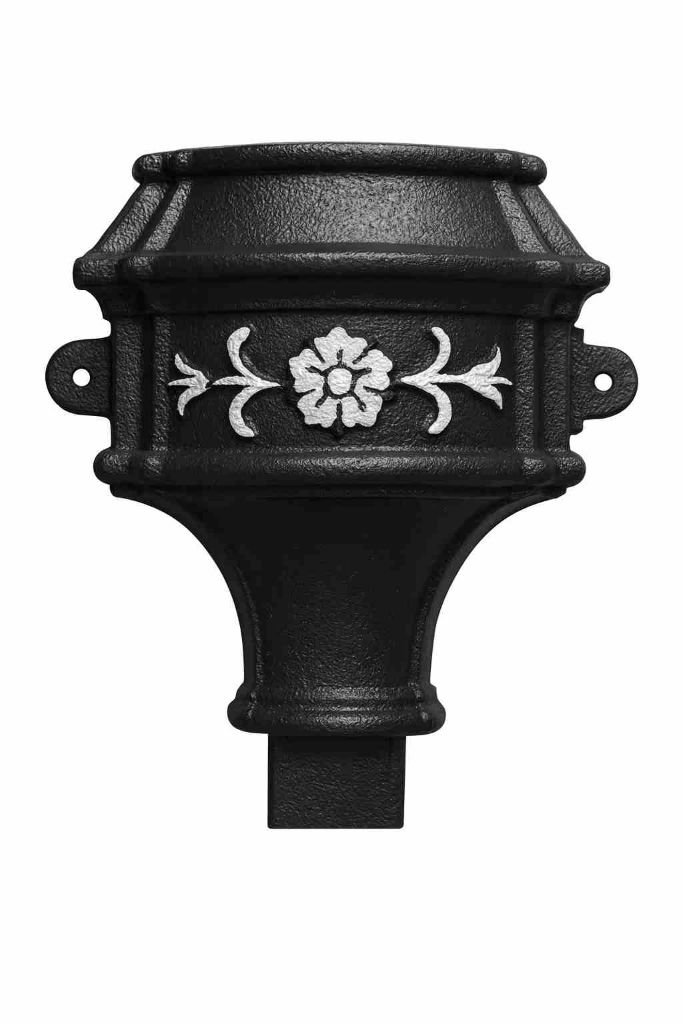
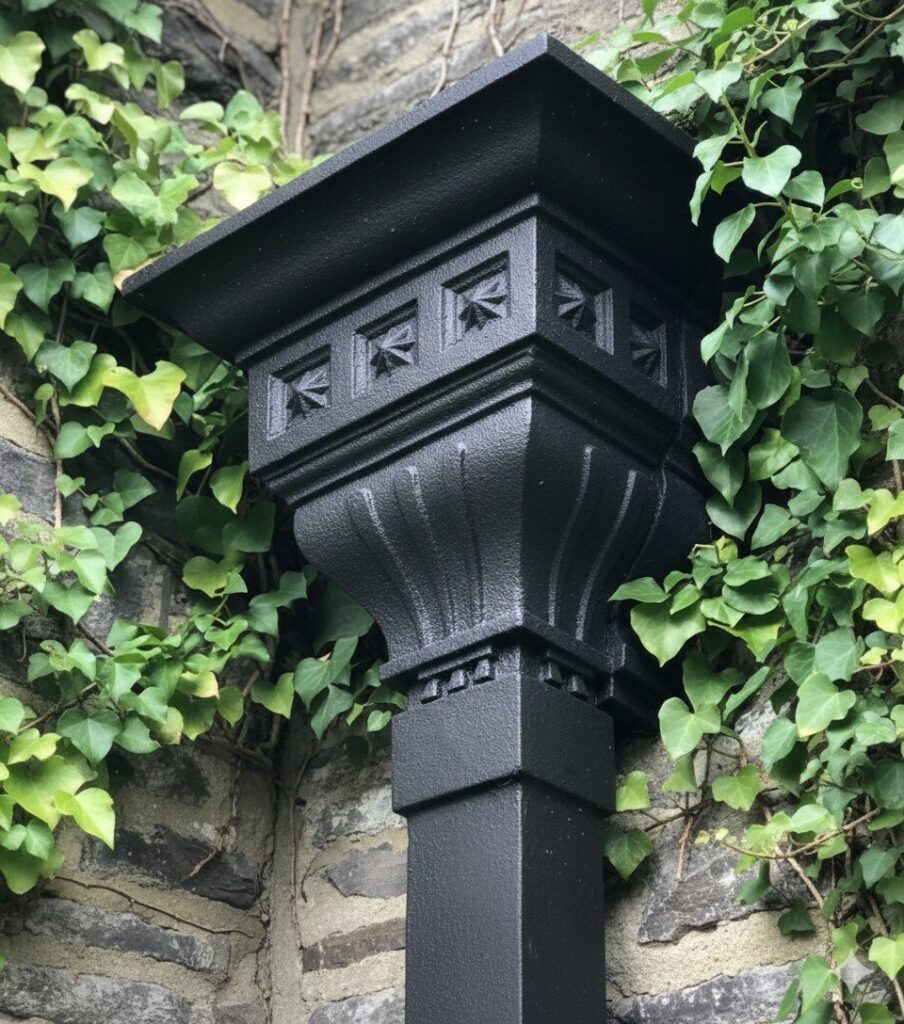
The Selmerstone pattern, No.91 — a cast rose motif set within a moulded band.
Plain and vernacular
A plain, unornamented hopper head — the right choice on Arts and Crafts and other buildings where restraint suits the architecture.
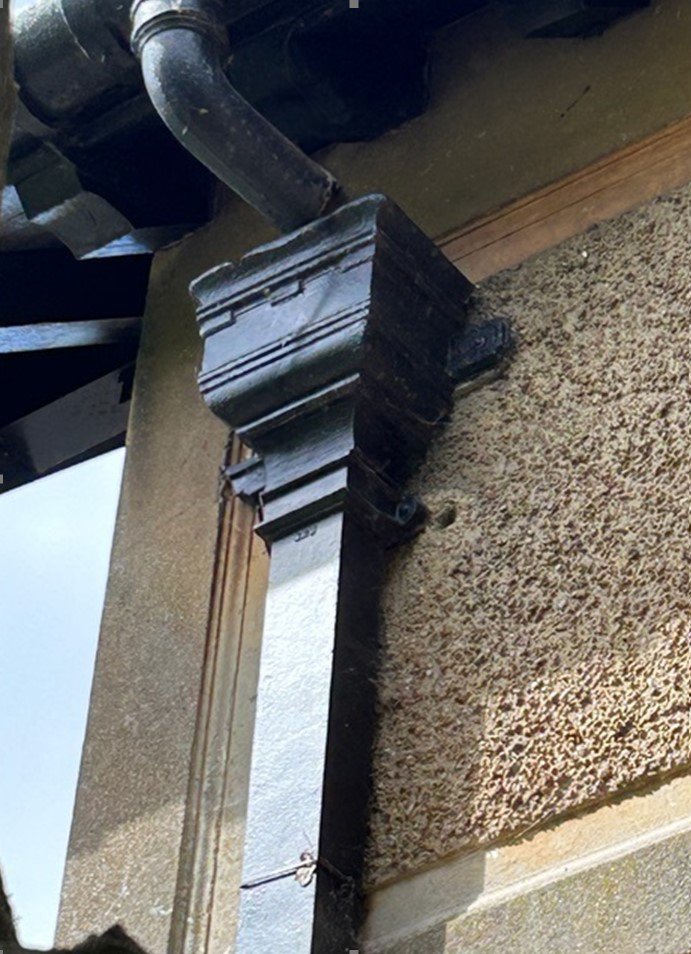
A rectangular hopper head with a castellated top edge, shown as installed.
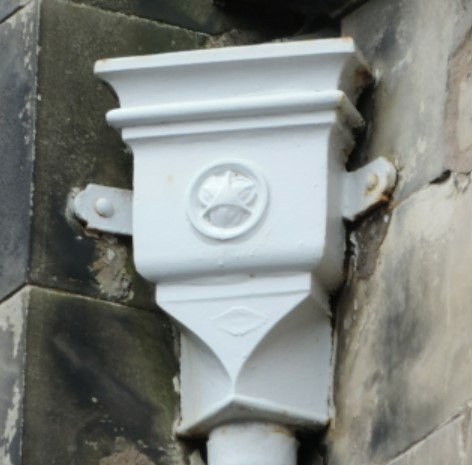
A corner hopper head with a cast rosette motif, in a painted finish.
Bespoke
A bespoke hopper head commissioned for a project in Edinburgh, with quatrefoil and floral banding to match the building.
Reference photography
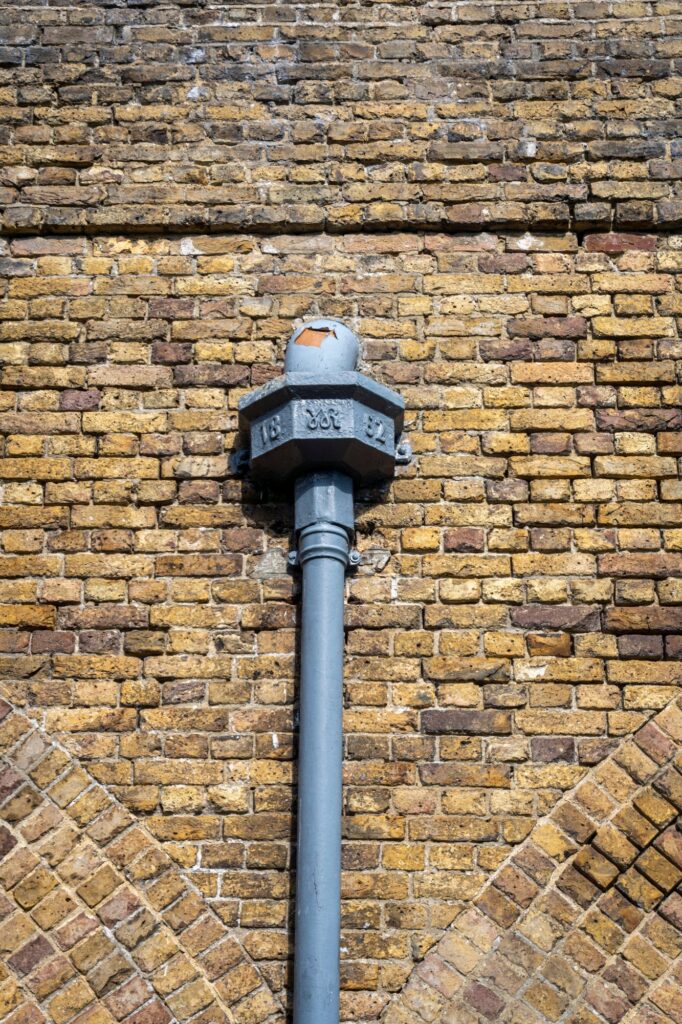
A dated cast iron hopper head shown in close detail against a yellow brick facade.
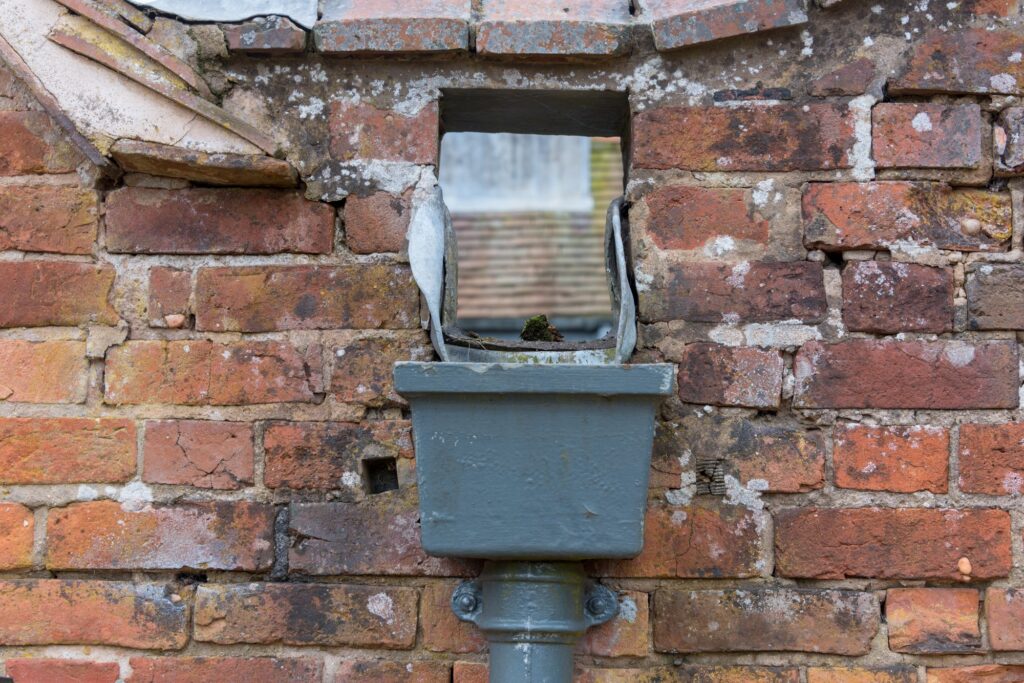
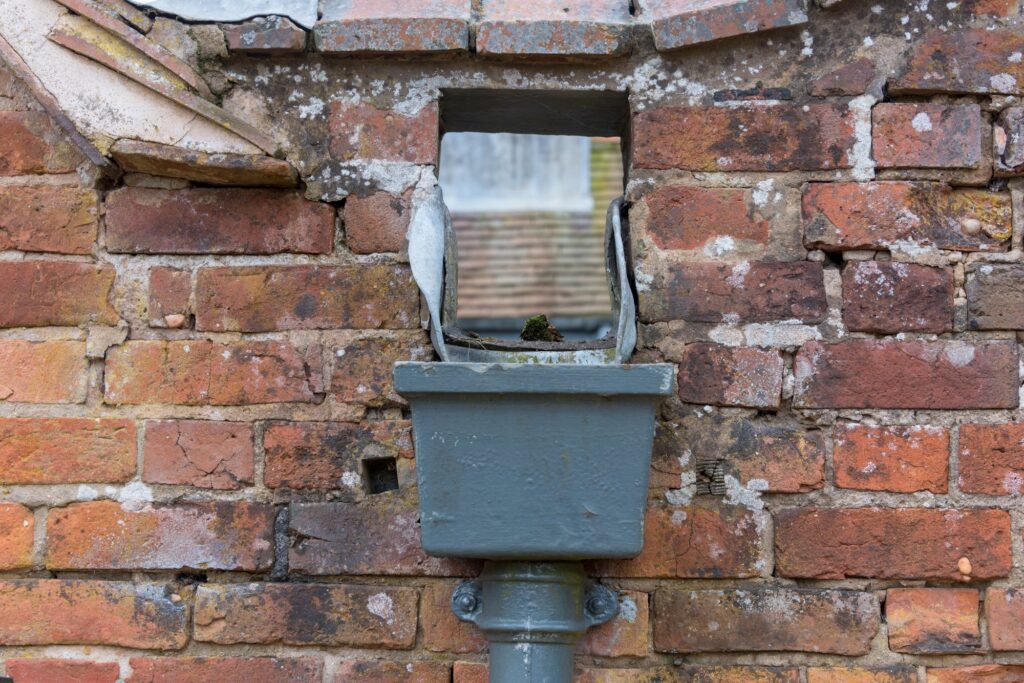
A weathered square hopper head — an example of how cast iron ages on an older building.
Common Questions
Can a hopper head be cast with a date or initials?
Yes — casting a date, initials or a monogram into a hopper head is a long-standing tradition and something we do regularly, both on new commissions and when reproducing an existing dated piece. Get in touch with the wording or reference material and we’ll advise on what’s practical for the pattern.
What's the difference between a standard and a corner hopper head?
A standard hopper head sits flat against the wall with a single downpipe outlet. A corner unit is shaped to sit into an external or internal angle of a building, with fixing ears set to suit. Let us know the wall junction and we can confirm which pattern fits.
Can you match an existing or damaged hopper head?
Yes — this is copy casting, one of our core services. We work from a surviving fragment, a measured drawing, or clear photographs with a scale reference, typically an 8–10 week lead time. See the Bespoke Projects section of this gallery for examples.
Looking for measured drawings instead of photographs? See the Technical Drawings section of this gallery. For bespoke and copy-cast commissions, see Bespoke Projects, or return to the main Gallery.
Have a hopper head to match or replace?Get in touch with a photograph and, ideally, a scale reference, and we’ll advise on the closest standard pattern or a bespoke copy cast.
This website uses cookies to improve your experience. We'll assume you're ok with this, but you can opt-out if you wish.AcceptRejectRead More
Privacy & Cookies Policy
Privacy Overview
This website uses cookies to improve your experience while you navigate through the website. Out of these, the cookies that are categorized as necessary are stored on your browser as they are essential for the working of basic functionalities of the website. We also use third-party cookies that help us analyze and understand how you use this website. These cookies will be stored in your browser only with your consent. You also have the option to opt-out of these cookies. But opting out of some of these cookies may affect your browsing experience.
Necessary cookies are absolutely essential for the website to function properly. This category only includes cookies that ensures basic functionalities and security features of the website. These cookies do not store any personal information.
Any cookies that may not be particularly necessary for the website to function and is used specifically to collect user personal data via analytics, ads, other embedded contents are termed as non-necessary cookies. It is mandatory to procure user consent prior to running these cookies on your website.