
Established 1893 | BS 460:2002 Certified | UK & International Supply | Expert Technical Support | 0333 987 4452
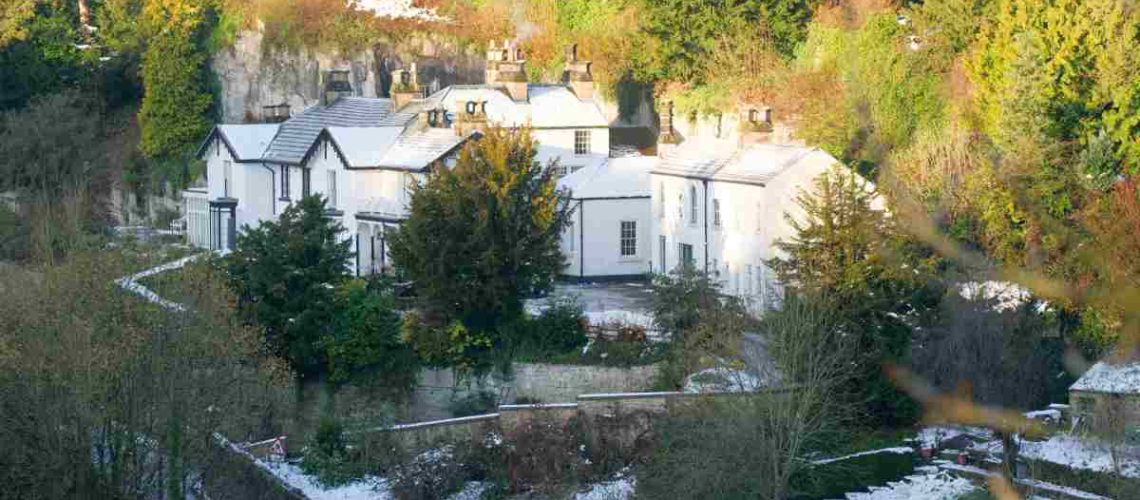
British country estates represent some of the most architecturally complex maintenance challenges in the heritage sector. A typical estate may encompass a Grade I or Grade II* listed principal house, secondary service ranges, stabling, model farm buildings, glasshouses, walled kitchen gardens, gate lodges, and miles of boundary wall — all of which require sensitive, material-accurate upkeep. Across every one of those building types, the drainage envelope plays a critical role in preserving the structural fabric. And across the great majority of them, the appropriate material for gutters, downpipes, and cast iron rainwater heads is cast iron.
The reasons for this are well established. Cast iron is the original material — it was specified during construction, and its profiles, textures, and proportions are integral to the character of the building as assessed for listing. Replacing cast iron with any other material on a listed building is rarely, if ever, acceptable to conservation officers, and almost always requires Listed Building Consent where the change is visible. The principle is straightforward: like-for-like repair and replacement with the same material. Cast iron, therefore, is not a matter of preference — it is a conservation requirement.
We have been supplying cast iron rainwater goods to the estate and country house sector since 1893, and our experience across stately homes, model farms, gate lodges, and walled gardens is considerable. What follows is a practical guide for those responsible for specifying, procuring, and maintaining these systems.
The principal house on any significant estate was typically designed by an architect of note, and the cast iron rainwater system was part of that design — not an afterthought. Gutter profiles were selected to complement the cornice and parapet details; downpipe diameters were calculated to handle the roof’s catchment area; and hopper heads were cast with crests, monograms, and dates that announced the family’s identity to every visitor who approached the house.
The Ogee profile — with its elegant S-curve replicating the classical cyma recta moulding — was the dominant choice for Georgian and Regency houses. Victorian properties often used moulded and deep-section profiles capable of handling larger roof areas. Where curved bays, turrets, or bow windows are present, radius gutters must be bespoke-cast to the precise arc of the building. Standard straight-run sections are not an acceptable substitute; they would visually compromise the elevation and may also fail to drain efficiently.
For restoration projects where original sections are damaged or missing, bespoke copy casting is the correct route. We work from surviving fragments, architectural drawings, measured surveys, or photographs to replicate existing components with the accuracy demanded by Historic England, Cadw, and Historic Environment Scotland. Our typical lead time for bespoke and copy cast work is 8–10 weeks, and we recommend confirming requirements at the earliest possible stage to ensure the programme is not delayed.
The functional buildings of a historic estate — stables, granaries, cart sheds, home farms, and estate workshops — present a different set of specification challenges. Here, the drainage system must contend with large unbroken roof areas, exposure to agricultural machinery, and the physical stresses of an active working environment. Cast iron’s mechanical robustness is particularly valuable in these settings.
Unlike lighter-gauge materials, cast iron guttering will not deflect, sag, or distort under the weight of heavy snowfall, nor will it buckle if a ladder is placed against it during maintenance. For the large roof spans typical of agricultural ranges — often running to twenty metres or more without interruption — high-capacity profiles such as the moulded G46 section provide the necessary hydraulic performance while maintaining the architectural language of the estate.
Many farm buildings on historic estates are themselves listed, often at Grade II, and conservation officers are increasingly firm in requiring cast iron specification for any drainage works. Where original systems have been lost to previous replacement with inappropriate materials, we are frequently asked to assist in restoring the character of the building by returning to cast iron. This is precisely the kind of project where a preliminary on-site survey is invaluable: it allows us to assess the surviving evidence, establish the original profile and fixings, and prepare a specification that will satisfy the consent authority and endure for generations.
The walled kitchen garden is one of the most distinctive building types in the British estate tradition, and its relationship with water management is intimate and complex. These enclosed microclimates — designed to maximise solar gain for the cultivation of exotic and early crops — relied on precisely engineered rainwater systems that served both drainage and horticultural functions.
Historically, the greenhouse roofs within and adjoining the walled garden served as substantial catchment areas, directing rainwater into underground cisterns and filtration systems for use in irrigation. The ‘soft water’ collected from roofs was chemically preferable to well or spring water for delicate glasshouse crops, and considerable ingenuity went into its collection, filtration, and distribution. Cast iron gutters and downpipes were the critical interface between roof and cistern, and their condition directly affected the quality and quantity of the water supply.
Today, walled kitchen gardens are experiencing a significant revival: many historic examples are being restored by the National Trust, English Heritage, private owners, and charitable trusts, while others are being sensitively adapted for new horticultural enterprises, visitor attractions, or residential use. In all of these contexts, the accurate restoration of the cast iron rainwater system is an essential component of the conservation scheme. Where bespoke components are required, our bespoke cast iron products service is well placed to assist.
We also carry an established range of standard stock profiles available for prompt despatch, which can often meet the drainage requirements of the ancillary structures within a walled garden without the need for bespoke casting.
No element of a historic estate’s rainwater system carries more information than the cast iron rainwater head. These collection boxes, positioned at the junction of gutters and downpipes, were treated by Victorian and Edwardian foundries as canvases for heraldic and architectural expression. Family crests, estate monograms, dates of construction or restoration, and decorative motifs — lion’s masks, floral scrollwork, barley-twist columns — were all cast into hoppers as statements of ownership and craftsmanship.
On a significant estate, every surviving hopper head is a primary historical document. Where replacement is necessary, we strongly advise against substitution with a generic catalogue pattern: the correct approach is copy casting from the surviving examples, producing matched replacements that maintain the heraldic continuity of the elevation. We hold an extensive library of traditional patterns, and where a required design falls outside our existing range, we will produce new patterns from drawings, photographs, or physical samples.
The long-term performance of any cast iron system depends fundamentally on the quality and integrity of its protective coating. For estate buildings — where the visual character of the ironwork is part of the significance of the place — we recommend linseed oil paint as the most sympathetic and sustainable finish. It provides an authentic, slightly lustrous result that conventional synthetic paints cannot replicate, penetrates the surface of the iron rather than forming a film that can peel and trap moisture, and is entirely appropriate for conservation work on both listed and unlisted buildings.
A well-maintained linseed oil finish, recoated on a regular cycle, will protect cast iron indefinitely. For estate buildings with large areas of exposed ironwork — particularly those in exposed upland or coastal locations — a rigorous maintenance programme is the most cost-effective long-term strategy, and one that aligns with the sustainability and longevity case for cast iron as a whole-life specification.
Works to the cast iron rainwater systems on listed estate buildings are subject to the same regulatory framework as any other alteration to a listed structure. The key principle, consistent across Historic England, Cadw, and Historic Environment Scotland, is that any replacement must be like-for-like in material, profile, and finish. Where the replacement differs from the original — even in apparently minor respects — Listed Building Consent is required.
The SPAB (Society for the Protection of Ancient Buildings) and the IHBC (Institute of Historic Building Conservation) both advise that routine maintenance — cleaning, clearing, and painting — does not normally require consent, provided the character of the building is not altered. However, any upgrade to the system — increasing pipe diameters, changing profiles, or introducing new downpipe positions — will almost certainly require approval. Estate managers and their advisers should also be aware that the increasing intensity of rainfall attributable to climate change means that many historic systems may benefit from hydraulic capacity assessment under BS EN 12056-3 to determine whether upgrades are warranted.
We are well placed to assist with the technical aspects of this process, including preparing specifications that meet the requirements of the consent authority and providing evidence of material provenance and manufacturing heritage. For complex or multi-building estate projects, we recommend engaging us at the earliest stage, and commissioning an on-site survey to establish the condition and specification of the existing systems before any works are designed.
The maintenance and restoration of cast iron rainwater systems on historic estates is not simply a maintenance task — it is a conservation commitment. From the principal house to the walled kitchen garden, from the model farm to the gate lodge, cast iron is the material through which the drainage envelope of the British estate has been managed for the past two centuries. Its longevity, its acoustic qualities, its capacity for bespoke replication, and its alignment with the guidance of every major UK heritage authority make it the only credible specification for this work.
At Tuscan Foundry Products, we have been supplying the estate and country house sector since 1893 — long enough to have participated in the maintenance cycles of buildings that were already old when we began. We understand the complexity of these projects, the importance of programme certainty, and the need for a specification that will satisfy both the conservation authority and the practical demands of an active estate. Whether you require standard profiles from stock, bespoke copy castings, radius gutters for a glasshouse range, or the expertise of a full site survey, we are well placed to assist. We welcome enquiries from estate managers, conservation architects, and building surveyors at any stage of the specification process.
To discuss your estate project, please contact us or call 0333 987 4452. We would be pleased to help.
In most cases, like-for-like replacement of cast iron with cast iron using the same profile and finish does not require Listed Building Consent, provided the character of the building is not altered. However, any change in material, profile, pipe diameter, or downpipe positions is likely to require consent. We recommend consulting your conservation officer early and commissioning a site survey to establish the existing specification before any works are designed.
Yes. We hold an extensive library of traditional foundry patterns and are experienced in matching profiles that are no longer commercially available. Where a match cannot be found within our existing range, we undertake bespoke copy casting from surviving components, architectural drawings, or measured surveys. Bespoke and copy cast work typically has an 8-10 week lead time, so early engagement is important.
A properly maintained cast iron system can last well in excess of 100 years. Longevity depends primarily on the quality and regularity of the protective paint finish. We recommend bi-annual inspection, prompt repair of any joint failures or paint breakdown, and a full repainting cycle every three to five years, or more frequently in exposed locations.
We recommend linseed oil paint as the most appropriate and sympathetic finish for cast iron on heritage buildings. It penetrates the surface of the iron rather than forming a brittle film, provides an authentic appearance, and is a sustainable, naturally derived product. It is well regarded by conservation officers and bodies such as the SPAB.
Yes. We specialise in bespoke radius and curved cast iron gutters for exactly this type of application. Using traditional sand-casting methods, we produce sections to the precise arc of the existing structure. Radius gutters typically have a lead time of 12-14 weeks. A site survey is strongly recommended for complex or multi-span glasshouse ranges.
Yes. We supply both standard stock profiles — available for prompt despatch — and bespoke cast items. Our catalogue covers Ogee, Half Round, moulded, and deep-section variants. Where bespoke profiles are needed for individual buildings, we can manage these alongside standard supply as part of an integrated estate programme.
Our site survey service is a chargeable professional service designed to provide the accurate, building-specific information needed to specify cast iron systems correctly. During a survey we record existing gutter and pipe profiles, fixing details, joint types, and condition. For complex or multi-building estate projects, a site survey is almost always the most cost-effective way to avoid specification errors.