Prices are shown on each product page for both sizes and all three finishes. For project quantities, specification support, or conservation enquiries, call us on 0333 987 4452 or use the contact form on our website.
Established 1893 | BS 460:2002 Certified | UK & International Supply | Expert Technical Support | 0333 987 4452
£11.17 +VAT
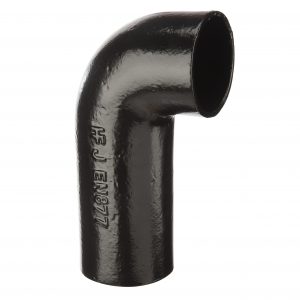
The Traditional Express cast iron soil product is an industry leading push fit soil system designed for a lifetime performance. The contemporary cast iron system provides the aesthetic appearance of traditional cast iron soil systems and is suitable for Listed properties and conservation projects.
The TX Cowl is a cast iron ventilating cowl that fits to the top of a Traditional Express soil vent pipe, allowing the stack to ventilate to atmosphere whilst preventing rain, debris, and birds from entering the open pipe top. The cowl is an essential component on any open-top soil vent stack — without it, rain ingress and debris can block the vent and compromise the anti-siphon ventilation performance of the stack, risking trap failures and the entry of drain gases into the building.
The cast iron cowl replicates the original appearance on period buildings and is the correct heritage detail for listed and conservation building soil vent terminations. 100mm diameter. Pre-painted black gloss finish. Part code: TX4080. For specification support, call 0333 987 4452.
Prices are shown on each product page for both sizes and all three finishes. For project quantities, specification support, or conservation enquiries, call us on 0333 987 4452 or use the contact form on our website.
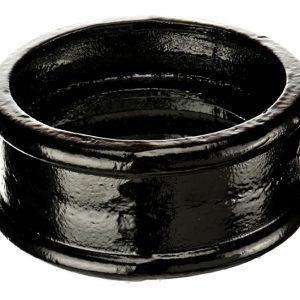
A hit and miss vent has a sliding plate on the reverse of the grille that can be moved to open or close the ventilation apertures. This allows airflow to be regulated without removing or replacing the grille. The vent can be fully open, partially open, or fully closed depending on ventilation requirements.
The handle is compatible with Lumen Rooflights and most pole-operated rooflight and skylight systems. If you are unsure whether it suits your specific rooflight, call us on 0333 987 4452 and we can advise.
The Regent H1 is well suited to Victorian and Edwardian terraces, listed commercial buildings, civic and institutional properties, and ecclesiastical buildings where a traditional funnel-form hopper is architecturally appropriate. Its multi-faceted tapering body reads as period-accurate on Gothic and classical building types alike, and it is a commonly specified choice for conservation and listed building projects across the UK.
The Pultney Tapered Hopper Head is well suited to Georgian and Regency townhouses, Victorian terraces, rural farmhouses, barns, and functional estate buildings where a plain, period-correct hopper is the appropriate specification. It also works well on new heritage-style construction. Its unfussy, chamfered form makes it a versatile choice across a wide range of traditional building types.
We are able to place dates and initials and insignia onto most of our flat faced rainwater hopper heads.
Our cast iron airbricks are supplied in primed finish, ready for on-site painting. This allows them to be finished to match the existing ironwork or masonry colour of the building. Standard black gloss is the most common finish for conservation and heritage projects.
The School Board Airbrick (F020801AFC) is available in three standard sizes: 225mm × 75mm, 225mm × 150mm, and 225mm × 225mm. These correspond to one-, two-, and three-brick-course heights and allow ventilation requirements to be met across a range of subfloor and wall opening sizes.
Yes. A polished brass finish is historically appropriate for period buildings and is generally acceptable to conservation officers for listed building projects. If you are unsure about the specification requirements for your project, we are happy to advise — call 0333 987 4452.
The Ornamental Airbrick is most appropriate on Victorian Gothic buildings — churches, chapels, vicarages, almshouses, collegiate buildings, and high-specification estate architecture — where decorative ironwork was part of the original design. It suits listed building replacements in kind and heritage new build where period accuracy in detailing is expected.