Prices are shown on the product page. For project quantities, specification support, or a formal quotation, call 0333 987 4452 or use the contact form.
Established 1893 | BS 460:2002 Certified | UK & International Supply | Expert Technical Support | 0333 987 4452
£105.07 +VAT
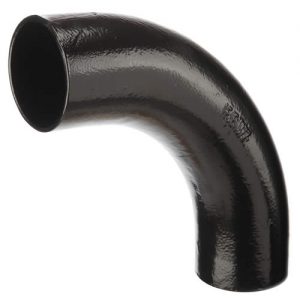
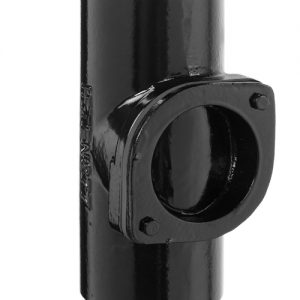
The Traditional Express cast iron soil product is an industry leading push fit soil system designed for a lifetime performance. The contemporary cast iron system provides the aesthetic appearance of traditional cast iron soil systems and is suitable for Listed properties and conservation projects.
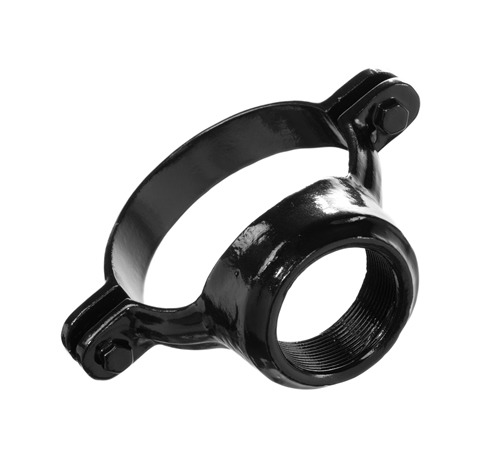
The TX Strap-On Boss is a cast iron saddle fitting that clamps to the outside of an existing TX soil pipe and provides a 2″ BSPT threaded boss for a branch connection — without cutting the pipe or using a conventional branch fitting. The boss is tightened around the pipe with a strap; the BSPT thread then accepts a waste pipe, overflow, or small branch connection at any accessible point along the run.
Suits 100mm TX pipe. 2″ BSPT thread. Pre-painted black gloss finish. Part code: TX4092. From £105.07 +VAT. For specification support, call 0333 987 4452.
Prices are shown on the product page. For project quantities, specification support, or a formal quotation, call 0333 987 4452 or use the contact form.
Yes. Cast iron rainwater goods are widely accepted by conservation officers and historic environment bodies as the appropriate material for listed buildings. Tuscan Foundry's hopper heads are manufactured in solid cast iron to BS 460 specification and are suitable for use on all listed building classes. A linseed oil paint finish is also available, which is particularly appropriate for conservation projects.
The Cast Iron Louvre Airbrick suits Victorian, Edwardian, and inter-war residential and commercial properties where the louvre-pattern vent was the standard specification. It is the correct like-for-like replacement on listed buildings and conservation area properties, and suits new heritage-style construction requiring an authentic period ventilation grille.
Prices are shown on each product page. For project quantities, conservation specifications, or to discuss suitability for a listed building, call 0333 987 4452 or use the contact form.
A hit and miss vent has a sliding plate on the reverse of the grille that can be moved to open or close the ventilation apertures. This allows airflow to be regulated without removing or replacing the grille. The vent can be fully open, partially open, or fully closed depending on ventilation requirements.
This opener is particularly well suited to period and heritage properties — Georgian and Victorian terraces, conservation area houses, traditional orangeries, and listed buildings where a brass finish is required to complement existing ironmongery. It is compatible with Lumen Rooflights and most timber-framed skylights.
The Pultney Tapered Hopper Head is well suited to Georgian and Regency townhouses, Victorian terraces, rural farmhouses, barns, and functional estate buildings where a plain, period-correct hopper is the appropriate specification. It also works well on new heritage-style construction. Its unfussy, chamfered form makes it a versatile choice across a wide range of traditional building types.
Our hopper heads are available with a wide range of pipe connections to suit round, square, and rectangular downpipes. The Calnethorpe No.11 accepts round 65mm, 75mm, and 100mm; square 75×75mm, 100×100mm, and 125×125mm; and rectangular 100×75mm, 125×100mm, and 150×100mm. Connection options vary by model — please contact us to confirm availability for your chosen hopper.
The Regent H1 is well suited to Victorian and Edwardian terraces, listed commercial buildings, civic and institutional properties, and ecclesiastical buildings where a traditional funnel-form hopper is architecturally appropriate. Its multi-faceted tapering body reads as period-accurate on Gothic and classical building types alike, and it is a commonly specified choice for conservation and listed building projects across the UK.
The Ornamental Airbrick is most appropriate on Victorian Gothic buildings — churches, chapels, vicarages, almshouses, collegiate buildings, and high-specification estate architecture — where decorative ironwork was part of the original design. It suits listed building replacements in kind and heritage new build where period accuracy in detailing is expected.