Established 1893 | BS 460:2002 Certified | UK & International Supply | Expert Technical Support | 0333 987 4452
£113.40 – £182.90Price range: £113.40 through £182.90 ex VAT (£136.08 – £219.48 inc VAT)
Cast iron square pipe ornamental earband (Pattern D) for 75mm x 75mm and 100mm x 100mm square rainwater downpipes on period, listed and traditional buildings.
UK delivery from £30. Fittings are despatched boxed. See delivery rates.
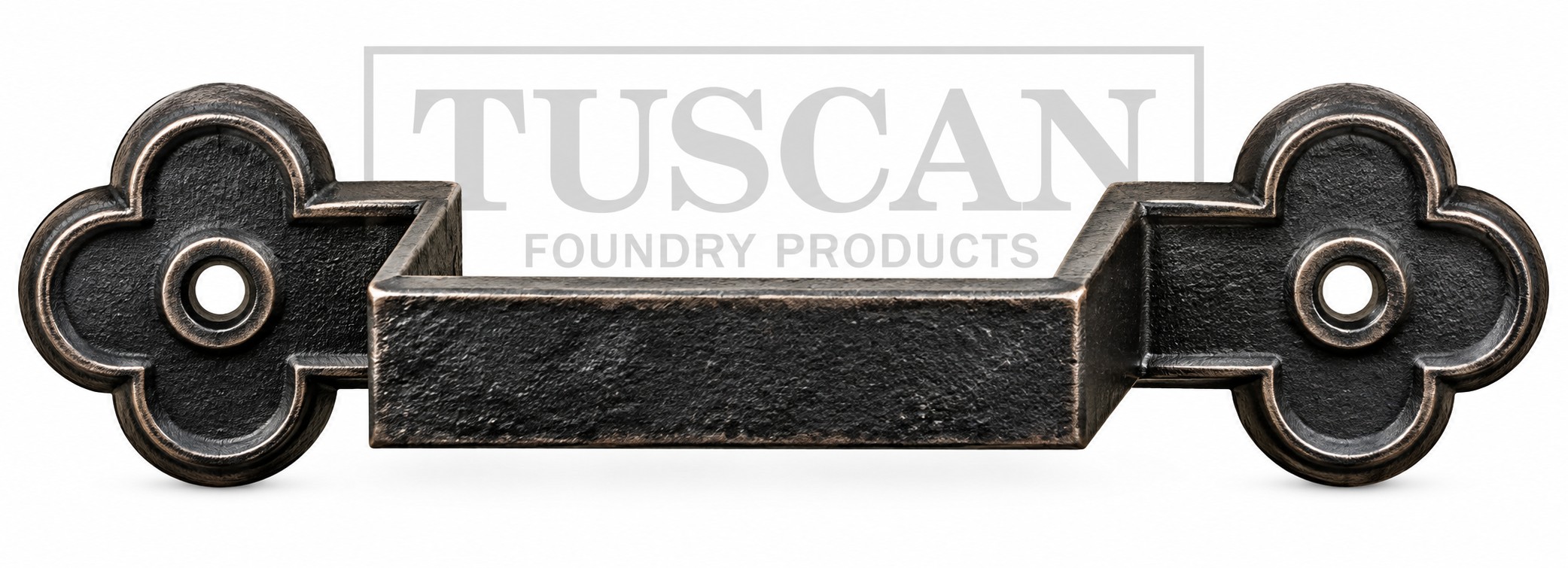
The Square Pipe Ornamental Earband Pattern D is a decorative cast iron collar for square downpipes, with rounded quatrefoil fixing ears. It is specified on conservation and listed building projects where Pattern D matches the surviving ornamental earbands on the original installation, so the restored elevation keeps the correct decorative detail.
Ornamental earbands were a standard feature on formal Victorian and Edwardian facades, including civic buildings, churches, large commercial premises and institutional architecture, where the downpipe run was treated as part of the architectural composition. Cast to BS 460:2002 and available for 75mm x 75mm (3″ x 3″) and 100mm x 100mm (4″ x 4″) square pipe, in primer or black painted finish. Linseed oil and heritage colour finishes are available on request. For specification support, call 0333 987 4452.
| Size/Finish | Primer 75mm x 75mm, Primer 100mm x 100mm, Black Painted 75mm x 75mm, Black Painted 100mm x 100mm |
|---|
The H526 measures 440mm wide x 240mm deep x 460mm high, making it well suited to Victorian and Edwardian townhouses.
Yes. The polished chrome telescopic rooflight hand winder opener is compatible with Lumen Rooflights and most timber-framed skylights. Call 0333 987 4452 to confirm compatibility with a specific rooflight model.
LCC is traditional cast iron socket-and-spigot soil pipe made to BS 416-1:1990. Each length has a socket at one end and a spigot at the other, and joints are packed with caulking cord and finished with a jointing sealant. It is supplied with a black bitumen coating and is the like-for-like choice for external soil stacks on Victorian and Edwardian buildings. See the Traditional LCC range.
Prices for our rooflight openers are shown on each product page. If you need multiple items, have a specific project in mind, or want to discuss compatibility, please call 0333 987 4452 or use the contact form at tuscanfoundry.com and we will be happy to assist.
Please call 0333 987 4452 or use the contact form with the size, quantity and connection details, and we'll provide a quotation.
The School Board Airbrick is suited to Victorian and Edwardian terraced housing, mid-century school buildings, civic halls, public baths, and converted institutional buildings. Its plain square-grid face matches the utilitarian aesthetic of late-Victorian construction and is also appropriate for new heritage-style builds in conservation areas.
A pole winder opener has a fixed-length arm, making it suited to standard rooflight positions with a consistent throw. A telescopic opener has an adjustable shaft, allowing it to accommodate varying rooflight positions and throw requirements. For guidance on which suits your project, call 0333 987 4452.
Cast iron hopper heads from Tuscan Foundry are available in Standard Black (a factory-applied primer and topcoat finish) and Heritage Colours. A linseed oil paint finish is also available, providing a vapour-permeable, historically authentic coating that is particularly appropriate for listed buildings and conservation projects. Full finish specifications are available from the team.
Prices are shown on the product pages at tuscanfoundry.com. For volume orders or project pricing, please call 0333 987 4452 or use the contact form on our website.
Georgian properties typically used Half Round or ogee-style guttering, often in larger sizes to handle the roof areas of substantial period buildings. Large sand cast gutter profiles are appropriate for grander Georgian architecture, particularly country houses, institutions, and formal terraces. If the original guttering has been lost or damaged, a site survey can establish the most appropriate profile from the building