Prices are shown on each product page for both sizes and all three finishes. For project quantities, specification support, or conservation enquiries, call us on 0333 987 4452 or use the contact form on our website.
Established 1893 | BS 460:2002 Certified | UK & International Supply | Expert Technical Support | 0333 987 4452
£152.33 +VAT
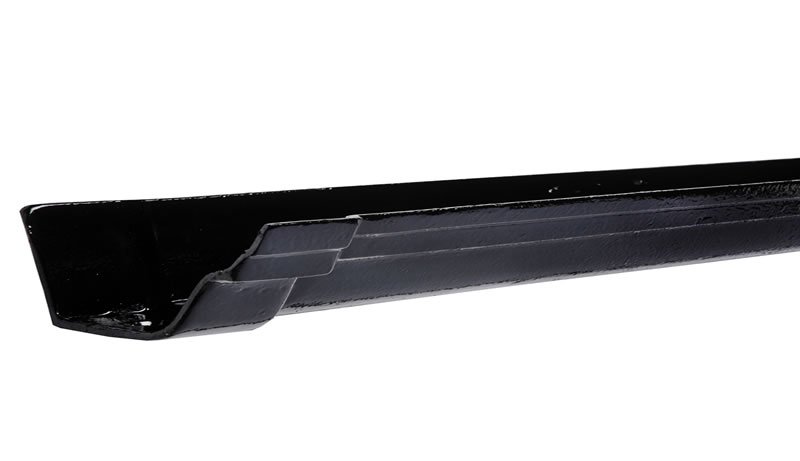
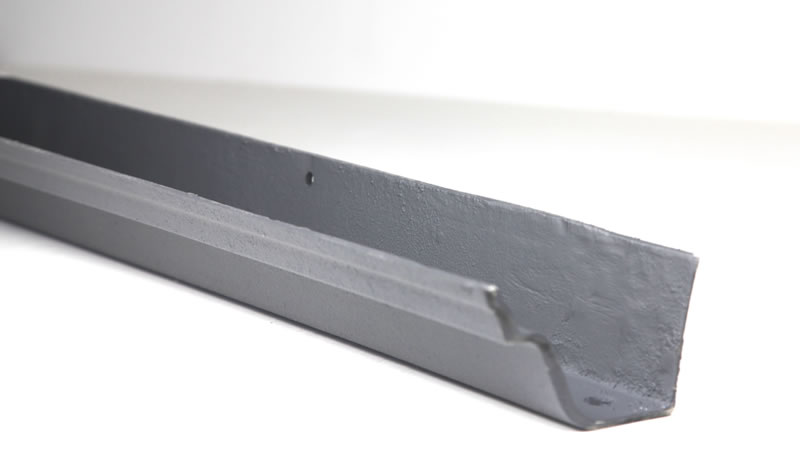
A genuine cast iron rainwater pattern was initially used in and around Nottingham, hence Notts Ogee. The profile is only available in one size (4.5″) and has a flat base, unlike the more traditional ogee (OG) curved pattern.
Cast iron Notts Og guttering: G850
The Notts OG is a cast iron gutter profile with a specific regional identity. Originally developed for and used predominantly in Nottingham and the surrounding East Midlands, it takes its name from its place of origin. The profile shares the ogee family’s characteristic decorative front face but has a more angular, squared-off cross-section compared to the common OG, with a flat base rather than the curved bottom of the standard ogee. This gives the Notts OG both its distinctive silhouette and a greater depth of section relative to its width, increasing flow capacity while maintaining the visual character of a traditional Victorian ogee gutter.
The Notts OG is available in a single size only: 4.5″ (115mm). It is an asymmetric profile — the socket sits consistently on one side of each section and fitting — which means all angles, stop ends, and outlets are handed and cannot be reversed or flipped. Each section has pre-drilled holes in the back face, allowing direct fixing through the gutter back to the fascia without a separate bracket where the construction permits.
This section is 1829mm (6 feet) in length, manufactured in solid cast iron to BS 460:2002. Supplied in primed or factory black finish. Tuscan Foundry Products has been casting this profile since 1893, and it remains the correct heritage-accurate replacement for Nottinghamshire and Midlands properties where the Notts OG is the original installed profile.
Found on Victorian terraced housing, lace-era factory buildings, civic architecture, churches, and period commercial properties throughout Nottingham, Derby, Leicester, and the wider East Midlands. Listed buildings in these areas are typically required to replace like-for-like, making the Notts OG the only appropriate specification where it is the original profile.
Part code: G850. For specification support or a project quotation, call 0333 987 4452.
Prices are shown on each product page for both sizes and all three finishes. For project quantities, specification support, or conservation enquiries, call us on 0333 987 4452 or use the contact form on our website.
Yes. The ornamental foliate pattern was widely used in Victorian construction and is appropriate for Grade II listed buildings and conservation area properties. Its decorative character is often preferable to a plain pattern on prominent or formal elevations. We recommend confirming the pattern with your conservation officer as part of any listed building consent application.
Yes. Cast iron airbricks are frequently specified for listed buildings and conservation area properties precisely because they replicate the material and pattern of the original Victorian and Edwardian ventilation grilles. Local conservation officers and building control typically accept like-for-like cast iron replacements without objection. We can provide product specifications and material datasheets to support applications.
A corner hopper head collects rainwater from two gutters running at right angles and channels it into a single downpipe. They are typically required at internal roof valleys, on hipped roofs, and wherever two runs of gutter converge at a corner. The Regent H1A is designed specifically for this application and is sized to suit the most common gutter profiles.
Yes. Decorative cast iron and brass ventilation grilles of this pattern were widely used in Victorian and Edwardian buildings, and like-for-like replacements are generally accepted by conservation officers for listed building works. We can provide product specifications and material details to support listed building consent applications if required.
The Antique Black cast iron version is suitable for external use. The Polished Lacquered version is best suited to interiors or sheltered external locations where the polished finish will be protected from weathering. The Polished Brass version is suited to interior and semi-exposed locations. For external applications on exposed elevations, the Antique Black finish is the recommended specification.
The Iron Works Patterned Hit & Miss Vent suits Victorian and Edwardian buildings where decorative cast iron or brass ventilation grilles were part of the original specification — including terrace houses, civic buildings, churches, entrance halls, and estate properties. It is appropriate on listed buildings and conservation area properties as a like-for-like decorative vent replacement, and on new heritage-quality construction where period detailing is required.
Yes. Cast iron is the material required by most conservation officers and listed building consents for the replacement or replication of traditional rainwater goods. Our hopper heads are produced in solid cast iron and we can assist with specification notes or material statements for planning purposes if required.
Prices for standard cast iron hopper heads are shown on the product page. For larger quantities, bespoke sizing, heritage colour finishes, or full rainwater system specifications, please call 0333 987 4452 or use the contact form.
Select your required size and finish options from the product page and add to cart for an instant price. For project quantities, bespoke requirements, or any specification queries, please call 0333 987 4452 or use the contact form at tuscanfoundry.com.