
Skip to content
Tuscan Foundry Products Logo Black
Find out more about our products by giving us a call
0333 987 4452
Linkedin Envelope
  • About Us
  • Buildings
    • Churches
    • Industrial
    • Residential
  • Products
  • Support
  • Index
  • Contact
  • News & Articles
  • About Us
  • Buildings
    • Churches
    • Industrial
    • Residential
  • Products
  • Support
  • Index
  • Contact
  • News & Articles
£0.00 0 Basket
Tuscan Foundry Products Logo Black
  • About Us
  • Buildings
    • Churches
    • Industrial
    • Residential
  • Products
  • Support
  • Index
  • Contact
  • News & Articles
  • About Us
  • Buildings
    • Churches
    • Industrial
    • Residential
  • Products
  • Support
  • Index
  • Contact
  • News & Articles
£0.00 0 Basket

Established 1893   |   BS 460:2002 Certified   |   UK & International Supply   |   Expert Technical Support   |   0333 987 4452

Shop / Brackets and Fittings / PVC / Marley / Marley Drive-in Gutter Spike 340mm Galvanised Steel
Drive-in-Spike_Galvanised_Marley_Guttering
Category Marley

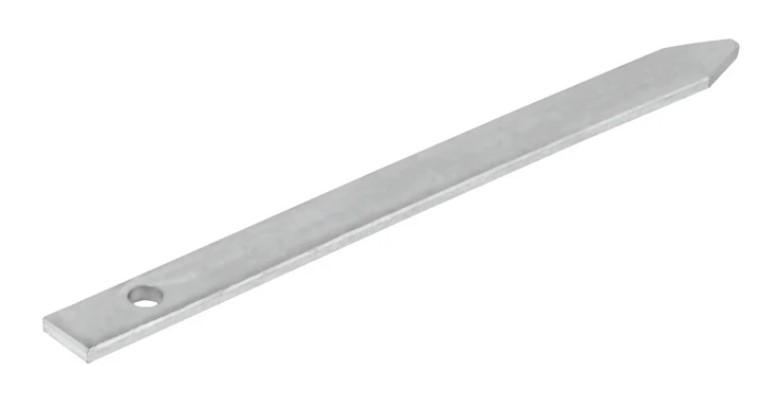
Marley Drive-in Gutter Spike 340mm Galvanised Steel

£3.90 +VAT

Marley Drive in Gutter Spike for Rise & Fall Gutter Brackets. Manufactured in high-grade mild steel and galvanised finished
Suitable for all Marley gutter profiles

Additional information

FAQ Categories

  • Cast Iron Airbricks
  • Cast Iron Airvents
  • Cast Iron Hopper Heads
  • Gutter & Pipe Brackets
  • Gutters & Pipes
  • Heating
  • Rooflight Openers
All FAQ
What is a corner hopper head and when do I need one?

What is a corner hopper head and when do I need one?

A corner hopper head collects rainwater from two gutters running at right angles and channels it into a single downpipe. They are typically required at internal roof valleys, on hipped roofs, and wherever two runs of gutter converge at a corner. The Regent H1A is designed specifically for this application and is sized to suit the most common gutter profiles.

My builder has calculated out our heating requirement in each room of our house in BTU’s. Can you tell me what BTU’s stand for, and is this different to KW.

My builder has calculated out our heating requirement in each room of our house in BTU’s. Can you tell me what BTU’s stand for, and is this different to KW.

BTU stand’s for British Thermal Units. This was the old (Imperial) measurement for heat in connection with plumbing. Although BTU’s is a term still commonly used within the heating and plumbing, the industry is now going over to KW’s Kilowatts.

What building types is the Regent Cast Iron Hopper Head No.1 (H1) suited to?

What building types is the Regent Cast Iron Hopper Head No.1 (H1) suited to?

The Regent H1 is well suited to Victorian and Edwardian terraces, listed commercial buildings, civic and institutional properties, and ecclesiastical buildings where a traditional funnel-form hopper is architecturally appropriate. Its multi-faceted tapering body reads as period-accurate on Gothic and classical building types alike, and it is a commonly specified choice for conservation and listed building projects across the UK.

What types of rooflight opener are available in brass and chrome finishes?

What types of rooflight opener are available in brass and chrome finishes?

Tuscan Foundry supplies screw-jack rooflight openers in polished brass, satin chrome, and polished chrome finishes. Options include telescopic hand-winder openers in 150mm, 250mm, and 300mm sizes, fixed screw-jack stays, and pole-operated handles for high-level rooflights. All are designed for timber-framed rooflights and skylights.

Is a cast iron hopper head suitable for use on a listed building?

Is a cast iron hopper head suitable for use on a listed building?

Yes. Cast iron rainwater goods are widely accepted by conservation officers and historic environment bodies as the appropriate material for listed buildings. Tuscan Foundry's hopper heads are manufactured in solid cast iron to BS 460 specification and are suitable for all listed building grades. A linseed oil paint finish is also available, which is particularly appropriate for conservation projects.

What sizes and weights are available for the Ornamental Airbrick?

What sizes and weights are available for the Ornamental Airbrick?

The Ornamental Airbrick (OAB) is available in three sizes: 225mm × 75mm (2.8kg), 225mm × 150mm (4.1kg), and 225mm × 225mm (5.8kg). All sizes have a uniform depth of 75mm, making them consistent to install across a subfloor ventilation course.

What does “hit and miss” mean on a ventilation grille?

What does “hit and miss” mean on a ventilation grille?

A hit and miss vent has a sliding plate on the reverse of the grille that can be moved to open or close the ventilation apertures. This allows airflow to be regulated without removing or replacing the grille. The vent can be fully open, partially open, or fully closed depending on ventilation requirements.

What building types is the Iron Works Hit & Miss Vent in Antique Black suited to?

What building types is the Iron Works Hit & Miss Vent in Antique Black suited to?

The Antique Black finish suits Victorian, Edwardian, and inter-war buildings where ventilation ironwork was painted rather than polished — estate houses, terrace housing, civic buildings, and rural properties. It is also correct for listed buildings and conservation area properties requiring like-for-like replacement of original ornamental cast iron vents.

What building types is the Cast Iron Louvre Airbrick suited to?

What building types is the Cast Iron Louvre Airbrick suited to?

The Cast Iron Louvre Airbrick suits Victorian and Edwardian terraced housing, semi-detached properties, public houses, agricultural buildings, and workshop structures where the original airbrick was a louvre-face grille. The horizontal fin profile is widely found in British domestic and light industrial construction from the 1870s through to the 1950s.

Do other materials offer the same benefits as cast iron?

Do other materials offer the same benefits as cast iron?

The drainage and guttering market has matured considerably over the past 20 years and there are now many more product choices for consumers to consider.

Despite the influx of new materials it appears that the benchmark for rainwater systems is still cast iron. Cast iron rainwater goods were introduced in the late 18th Century as an alternative to lead. As well as being easier to produce, the material enabled eaves gutters to be installed more simply, since lead could only be used in this location as a lining for timber gutters.

Many modern materials focus on replicating the appearance of cast iron but those materials can vary rarely offer any of the benefits. Cast iron gutters and pipes offer great strength and durability, a proven history of long life, low noise operation and fire resistance. Most old buildings have cast iron rainwater systems that should be maintained and preserved however; these inherent benefits make cast iron an ideal choice for both traditional and modern installations.

It is not uncommon to see modern alternative products marketed with terms like low maintenance or easy to install and cost effective. It has even been said that ‘plastic guttering systems provide a way of achieving a traditional look with modern convenience’. These terms tend to refer to possible cost savings rather than any real product benefits. It is also difficult to quantify the benefits of modern convenience over traditional build quality.

It is worth remembering that all rainwater goods will require some element of maintaining to ensure they are unblocked by debris and remain functional. No rainwater system cleans itself. Today most suppliers of cast iron rainwater systems offer products in both primer or pre-painted with a 10 year protective coating. When describing modern materials, the term ‘cost effective’ is used rather than simply saying cheap. There is no doubt that the initial cost of many modern materials is less than cast iron but you might be surprised to know that over its lifespan, cast iron will cost around a third of plastic.

It is easy to forget about your rainwater system but it does need to be maintained and inspected at least twice a year regardless of the product material. It does not matter whether the property is hundreds of years old or brand new, the message is the same; ‘maintaining your rainwater system contributes to the external appearance of the building as well as keeping it free from damp and structural damage.

Tuscan Foundry Products Logo White

Working together to make the world a brighter place

NuDawn Logo

CONTACT US

Sales & Customer Services:
0333 987 4452

Tyn-Y-Clyn
Llanafarn Fawr
Builth Wells
Powys LD2 3LU
United Kingdom

FOLLOW US

Twitter

MESSAGE US

ABOUT US
  • About Us
  • News
  • Testimonials
  • Gallery
  • About Us
  • News
  • Testimonials
  • Gallery
PRODUCTS
  • Bespoke Commissions
  • Cast Iron Soil Pipes
  • Cast Iron Gutters & Pipes
  • Heating & Cast Iron Radiators
  • Hardware & Spares
  • Cast Iron Radius Guttering
  • Bespoke Commissions
  • Cast Iron Soil Pipes
  • Cast Iron Gutters & Pipes
  • Heating & Cast Iron Radiators
  • Hardware & Spares
  • Cast Iron Radius Guttering
SUPPORT
  • Brochures
  • Delivery
  • Downloads
  • Surveys & Visits
  • Brochures
  • Delivery
  • Downloads
  • Surveys & Visits
CONTACT
  • Contact
  • Referral Scheme
  • FAQ
  • Privacy Policy
  • Terms And Conditions
  • Contact
  • Referral Scheme
  • FAQ
  • Privacy Policy
  • Terms And Conditions
Tuscan Foundry Products Logo Black
Find out more about our products by giving us a call
0333 987 4452

Tuscan Foundry Products, Tyn-Y-Clyn, Llanafan Fawr, Builth Wells, Powys LD2 3LU, United Kingdom

© Tuscan Foundry Products 2026

This website uses cookies to improve your experience. We'll assume you're ok with this, but you can opt-out if you wish.AcceptReject Read More
Privacy & Cookies Policy

Privacy Overview

This website uses cookies to improve your experience while you navigate through the website. Out of these, the cookies that are categorized as necessary are stored on your browser as they are essential for the working of basic functionalities of the website. We also use third-party cookies that help us analyze and understand how you use this website. These cookies will be stored in your browser only with your consent. You also have the option to opt-out of these cookies. But opting out of some of these cookies may affect your browsing experience.
Necessary
Always Enabled
Necessary cookies are absolutely essential for the website to function properly. This category only includes cookies that ensures basic functionalities and security features of the website. These cookies do not store any personal information.
Non-necessary
Any cookies that may not be particularly necessary for the website to function and is used specifically to collect user personal data via analytics, ads, other embedded contents are termed as non-necessary cookies. It is mandatory to procure user consent prior to running these cookies on your website.
SAVE & ACCEPT