
Established 1893 | BS 460:2002 Certified | UK & International Supply | Expert Technical Support | 0333 987 4452
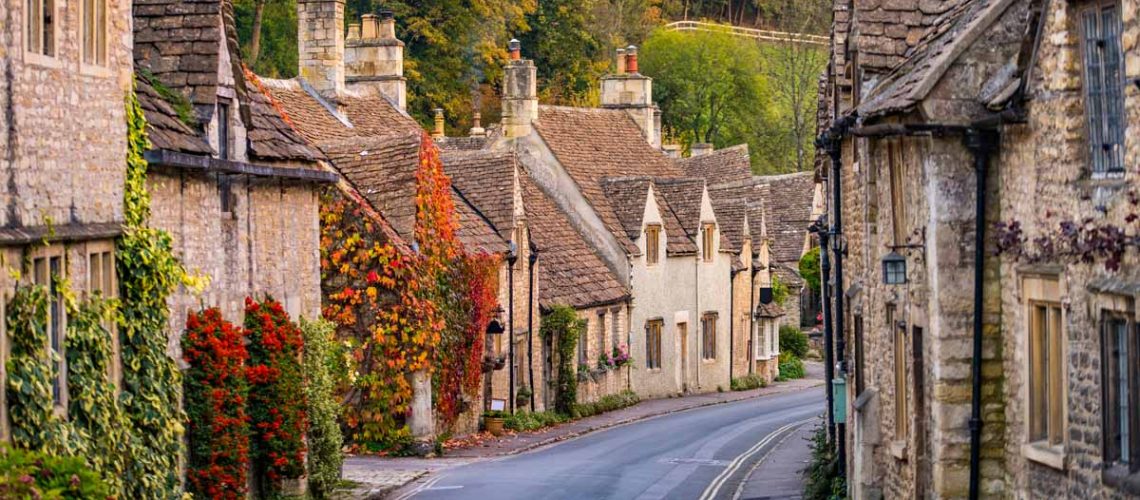
For the vast majority of Wiltshire’s listed buildings, cast iron is the only acceptable material for rainwater goods replacement. Wiltshire’s historic environment is one of the most significant in England — around 12,000 listed buildings, 245 conservation areas, 43 registered historic parks and gardens, and in excess of 1,300 scheduled monuments. From the Chilmark limestone ashlar of Salisbury Cathedral to the cob and flint cottages of the southern chalklands, these buildings represent centuries of continuous occupation, craft, and community. Their rainwater systems — gutters, downpipes, hoppers, and associated fittings — are an integral part of their architectural character, not an afterthought.
Wiltshire Council’s conservation officers, working within the framework of the Planning (Listed Buildings and Conservation Areas) Act 1990, consistently require like-for-like cast iron replacement on designated buildings. Historic England’s guidance is equally clear: wholesale replacement of traditional rainwater goods with modern substitute materials is not generally acceptable on listed buildings, and where replacement is necessary, the new system should match the original in material, profile, and finish. We have supplied heritage cast iron rainwater systems to projects across England, Wales, and beyond since 1893, and Wiltshire’s rich and varied building stock presents some of the most technically rewarding specification challenges we encounter.
Understanding the scale of the task in Wiltshire requires some context. The county contains approximately 300 Grade I listed buildings — structures of exceptional national interest — alongside roughly 660 to 700 Grade II* assets and over 11,000 Grade II listed buildings. Beyond the statutory list, Wiltshire Council maintains local heritage registers identifying non-designated heritage assets in conservation areas, many of which carry enhanced protection through Article 4 directions.
Wiltshire’s distinctive geology divides the county into what was historically described as its ‘chalk and cheese’ landscapes. The southern and eastern chalklands — typified by cob and flint construction — demand entirely different conservation approaches to the limestone country houses and manor estates of the western vales, where Chilmark and Box Ground limestone were quarried for high-status work across many centuries. This geological diversity is directly relevant to the specification of cast iron rainwater goods: the profile, pipe diameter, and fixing method must be calibrated to the building type, roof geometry, and local rainfall patterns.
The Stonehenge and Avebury World Heritage Site adds a further layer of scrutiny. Buildings within or adjacent to the WHS are subject to the setting policies of Wiltshire Council’s 2025 Supplementary Planning Document, which requires that any development — including repair and maintenance work — must not adversely affect the Outstanding Universal Value of the landscape. For estate buildings, farmsteads, and historic structures within the WHS, conservation-compliant cast iron systems are the only credible choice.
The diversity of Wiltshire’s building stock means that a single standard profile rarely covers all requirements on a given estate or conservation area. Ogee gutters predominate on Georgian and Victorian buildings in Salisbury, Bradford on Avon, and Devizes, while Half Round profiles are common on earlier vernacular structures. On grander houses and ecclesiastical buildings — of which Wiltshire has a remarkable concentration — decorative moulded profiles, ornate cast iron rainwater heads, and bespoke hopper configurations are frequently original features that must be matched precisely.
Where original components are damaged, missing, or no longer in production, our copy casting service allows us to replicate virtually any profile from drawings, photographs, or surviving physical samples. Lead times for bespoke and copy cast work are typically 8–10 weeks, and we always advise clients to factor this into their project programme from the outset. Radius and curved gutters — frequently required on Wiltshire’s Regency and Georgian bay windows, bow fronts, and ecclesiastical apses — carry a 12–14 week lead time.
Wiltshire’s chalk geology makes many historic buildings acutely vulnerable to groundwater flooding, a threat that has intensified with climate change. The county’s chalk aquifers absorb large volumes of rainfall before releasing it slowly — often weeks or months after major weather events — saturating the lower masonry of buildings that have stood for centuries. When gutters and downpipes are overwhelmed, water cascades down the face of solid masonry walls, accelerating lime mortar decay, encouraging salt crystallisation, and compromising the structural integrity that proper drainage is designed to protect.
Historic England acknowledges that uprating rainwater capacity — through additional downpipes or increased pipe diameters — is generally acceptable to conservation officers where it can be achieved sympathetically. We can advise on system capacity calculations and profile options that meet both the functional and aesthetic requirements of a listed building specification. An early on-site survey is particularly valuable on complex or multi-phase buildings where drainage patterns are not immediately obvious from drawings alone.
The finish applied to cast iron rainwater goods is a material consideration for conservation officers on listed buildings. We supply linseed oil paint specifically formulated for cast iron — a breathable, period-appropriate coating that is accepted by Historic England and most local planning authorities as the correct finish for conservation work. Linseed oil paint is flexible, long-lived, and sympathetic to the movement behaviour of cast iron in the British climate — qualities that conventional paints cannot match over the long term. For the many Wiltshire buildings that sit within conservation areas or are subject to Article 4 directions, a linseed oil finish removes any ambiguity from the finish specification.
Wiltshire has a remarkable density of medieval parish churches — well over 400 — many of which hold Grade I or Grade II* listed status. Church rainwater systems present particular challenges: high-level gutters with limited access, complex valley configurations, and the need to manage large volumes of water from steeply pitched medieval roofs. We have extensive experience working with churches and ecclesiastical buildings and can support architects, surveyors, and church wardens through every stage of the specification and procurement process, from initial profile identification to delivery and technical support on site.
For church projects where components are damaged or non-standard, a professional site survey before specification is finalised will almost always pay for itself by eliminating the risk of incorrect orders, mismatched profiles, or poorly resolved junction details. We provide site survey services as a chargeable professional engagement, and the findings inform a clear, accurate specification that a contractor can work from with confidence.
We supply the full range of standard profiles from stock, available for prompt despatch to Wiltshire addresses and across the UK. Our product catalogue covers Ogee, Half Round, and a range of moulded heritage profiles in a variety of sizes, together with downpipes, hoppers, bends, offsets, and all associated fittings. For projects requiring bespoke or copy cast components, we ask clients to provide as much reference material as possible — drawings, photographs, dimensions, and where available, a physical sample — so that we can produce an accurate quotation and pattern for casting.
Whether you are a conservation architect specifying a complex multi-building estate, a building surveyor managing a church repair programme, or an estate manager dealing with a failing system on a Grade II listed farmhouse, we welcome early enquiries. Call us on 0333 987 4452 or visit tuscanfoundry.com/contact to discuss your project.
Lacock Abbey, founded as an Augustinian nunnery in 1230 and later home to photography pioneer William Henry Fox Talbot, presents an exceptional cast iron conservation challenge. The estate’s unbroken ownership by one family until 1958 preserved an intact ensemble of medieval, Tudor, and Georgian rainwater systems across the abbey, cloister ranges, and adjacent village. Restoration work here demands careful profile matching across multiple building phases, with Ogee and Half Round gutters co-existing on a single site — a task requiring both archive research and precise copy casting.
The 83-acre Cathedral Close at Salisbury contains the greatest concentration of Grade I listed buildings in Wiltshire, including the medieval close wall, the Cathedral itself, and a series of canonical houses dating from the 13th century onwards. Decades of atmospheric pollution and water ingress, highlighted by the Major Repair Programme begun in 1985, demonstrated how compromised rainwater systems accelerate stone decay. Conservation work on the close’s ancillary buildings regularly requires the reinstatement of original cast iron downpipe runs, with careful attention to fixing positions and period-appropriate finishes.
One of the most complete surviving examples of a late medieval English manor house, Great Chalfield was built between 1467 and 1480 for the clothier Thomas Tropenell. The house features an intricate roofscape of gabled elevations and oriel windows whose rainwater management is critical to protecting the historic stonework below. Cast iron rainwater goods here are not merely functional infrastructure — they are a visible element of the building’s conservation story, requiring profiles consistent with the Arts and Crafts restoration carried out by Sir Harold Brakspear in the early 20th century.
Avebury Manor, a cross-passage house incorporating monastic foundations dating to approximately 1557, sits within the UNESCO Stonehenge and Avebury World Heritage Site — one of the most closely scrutinised heritage landscapes in the world. Any work to the manor’s external fabric, including its rainwater goods, is subject to both listed building consent and the stringent setting policies of Wiltshire Council’s World Heritage Site SPD. Cast iron systems are the only material acceptable here, and replacement or repair work must be documented carefully as part of the heritage asset’s ongoing record.
Bradford on Avon’s compact medieval and Georgian town centre holds one of the highest densities of listed buildings in Wiltshire, including the Saxon Church of St Laurence (Grade I), the 14th-century Tithe Barn, and a dense run of weavers’ cottages and wool merchants’ houses. The town’s hillside topography creates challenging rainwater management conditions, with high rainfall runoff concentrating on steep-pitched roofs. Conservation work here frequently involves uprating downpipe capacity whilst maintaining the original cast iron profile, finishes, and fixing positions — exactly the kind of technically precise specification we are well placed to support.
We have been supplying heritage cast iron rainwater goods since 1893 — long enough to understand that every listed building in Wiltshire presents its own distinct set of challenges, and that a considered, technically accurate specification is the foundation of every successful conservation project. Whether the project is a Grade I manor house in the Avon Valley, a medieval parish church on the Wiltshire downs, or a terrace of Georgian townhouses in Bradford on Avon, we bring the same depth of knowledge and commitment to quality that has defined our work for over a century.
We supply standard stock profiles for prompt despatch, offer a bespoke and copy casting service for profiles no longer in production, and provide professional site survey services for complex or high-risk projects. Our team is available to support conservation architects, building surveyors, estate managers, and church wardens at every stage — from initial profile identification through to final specification. To discuss a Wiltshire heritage project, call us on 0333 987 4452 or visit tuscanfoundry.com/contact.
Yes, in most cases. Under the Planning (Listed Buildings and Conservation Areas) Act 1990, any alteration that affects the character of a listed building requires Listed Building Consent. Wiltshire Council conservation officers typically require like-for-like replacement in cast iron.
Ogee is the most prevalent profile on Georgian and Victorian properties across Wiltshire. Half Round profiles are common on earlier vernacular buildings. On grander country houses and ecclesiastical buildings, moulded and decorative profiles may be original.
The starting point is always an accurate survey of the existing system. For complex or multi-elevation buildings, a professional site survey before finalising the specification is recommended.
Standard stock items are available for prompt despatch. Bespoke and copy cast components typically carry a lead time of 8-10 weeks. Radius and curved gutters require 12-14 weeks.
Wiltshire’s chalk aquifers and clay soils make many historic buildings particularly vulnerable to increased rainfall. Uprating the capacity of a cast iron system is generally accepted by conservation officers where it can be achieved with minimal visual impact.
Yes. Linseed oil paint is breathable, flexible, and long-lasting — accepted by Historic England and most local conservation officers as a period-appropriate finish for cast iron.
Yes. We offer professional site surveys as a chargeable service. For complex restorations or projects where copy casting is required, a site survey is invaluable. Contact us on 0333 987 4452.