
Established 1893 | BS 460:2002 Certified | UK & International Supply | Expert Technical Support | 0333 987 4452
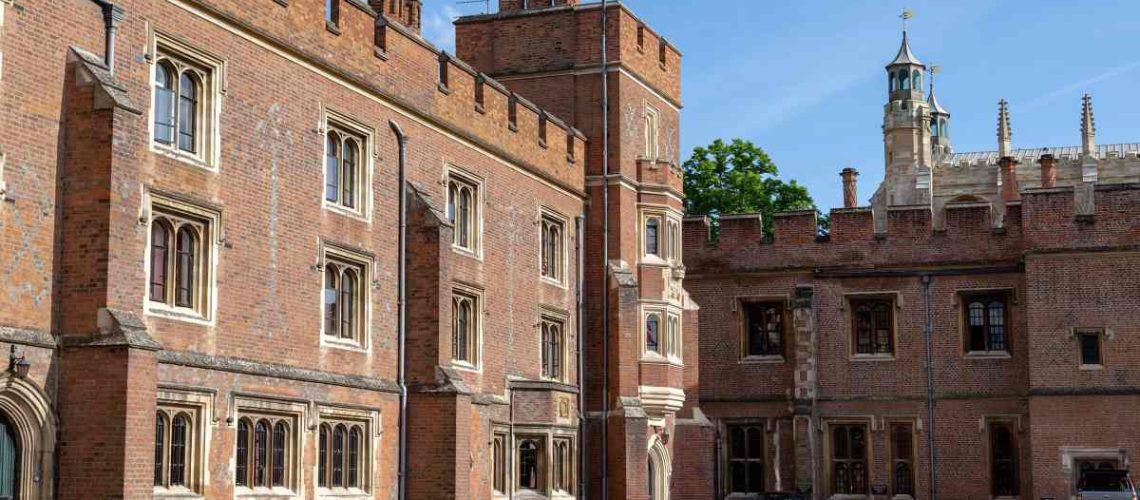
Listed building protection in England and Wales is governed by a three-tier designation system administered through national heritage registries. In England, buildings are recorded on the National Heritage List for England (NHLE), maintained by Historic England. In Wales, the equivalent register is Cof Cymru, maintained by Cadw. Scotland operates a parallel system through Historic Environment Scotland, using Category A, B, and C designations rather than grades.
Grade I buildings are considered of exceptional national interest — a threshold applied to roughly 2.5% of listed structures in England, and approximately 1.6% in Wales. Grade II* (Grade Two Star) covers buildings of more than special interest, representing around 5.8% of the English register and 7.1% in Wales. Both grades carry the highest level of statutory protection under the Planning (Listed Buildings and Conservation Areas) Act 1990 in England, and — following legislative devolution — under the Historic Environment (Wales) Act 2023 in Wales.
It is important to understand that statutory listing protects the entire physical entity — not merely the exterior. Protection extends to the interior layout, original fittings, and any object or structure fixed to the building, as well as ancillary structures within its curtilage that pre-date 1 July 1948. For rainwater systems, this means that gutters, downpipes, hopper heads, and their fixings are all within the scope of Listed Building Consent — even where the proposed works appear minor.
Listed Building Consent is required for any works of demolition, extension, or alteration that affect the character of a listed building as a structure of special architectural or historic interest. For Grade I and Grade II* buildings, the threshold for what constitutes an alteration affecting character is applied rigorously. Routine, like-for-like repairs using identical materials and traditional techniques may not require consent — but the definition of like-for-like is deliberately narrow. Any change in material composition, profile dimension, or application method requires a formal LBC application.
Applications for LBC must be submitted in full — they cannot be made in outline form, as planning authorities require precise drawings to evaluate the physical impact of proposals. In England, applications must include a detailed Heritage Statement describing the significance of the asset and explaining how the proposed works will affect that significance, in accordance with the National Planning Policy Framework. In Wales, the requirement is more structured still: under Regulation 4 of the Listed Buildings and Conservation Areas (Procedure and Interest Rate) (Wales) Regulations 2024, applicants must submit a formal Heritage Impact Statement produced from a structured Heritage Impact Assessment process, aligned with Cadw’s Conservation Principles.
For Grade I buildings in England, Historic England is a statutory consultee on LBC applications. Its guidance consistently emphasises reversibility, authenticity of materials, and the preservation of historic significance. Conservation officers advising on buildings of this grade will typically refuse proposals to replace cast iron with any other material. A well-prepared application, supported by accurate product specifications and — where appropriate — evidence from a professional on-site survey, is a sound investment in the consent process.
The enforcement regime for listed building control is among the most stringent in British planning law — and for conservation professionals advising clients on Grade I and Grade II* buildings, understanding it is essential. Carrying out unauthorised alterations to a listed building is a criminal offence of strict liability under Section 9 of the Planning (Listed Buildings and Conservation Areas) Act 1990. The prosecution is not required to prove intent. It is no defence for a property owner, contractor, or architect to claim ignorance of the listing or of the consent requirement.
On conviction in the Crown Court, offenders face a maximum penalty of two years’ imprisonment and an unlimited fine. Courts are legally required to take into account any financial benefit accrued from the unauthorised works when setting the level of the fine. Beyond criminal prosecution, a local planning authority may serve a Listed Building Enforcement Notice compelling full restoration to the building’s former state.
Two principles make enforcement exposure particularly serious for owners of Grade I and Grade II* buildings. First, there is no limitation period for issuing a Listed Building Enforcement Notice — a local authority can issue one decades after the unauthorised works were completed, regardless of changes in ownership. Second, liability to comply with an enforcement notice runs with the land rather than the individual. A purchaser inherits full civil liability for reversing any unauthorised alterations made by a previous owner, which can make a property difficult to sell and place the entire cost of restoration on the incoming buyer. These are powerful arguments for instructing specialist conservation professionals from the outset, and for ensuring that all external works — including rainwater systems — are correctly specified and consented.
The conservation case for cast iron on Grade I and Grade II* buildings is not simply aesthetic — it is rooted in a broader principle of material authenticity that underpins heritage practice. Traditional buildings constructed before the mid-twentieth century operate as moisture-open, breathable systems. Their walls, mortars, and external finishes are designed to absorb and release moisture rather than exclude it. The inappropriate use of impermeable modern materials disrupts this balance and causes progressive, often irreversible damage to historic fabric.
For rainwater goods, this principle is expressed in two material choices: cast iron as the substrate and linseed oil paint as the finish. Linseed oil paint is vapour-permeable, period-authentic, and recommended by conservation bodies including the Society for the Protection of Ancient Buildings (SPAB) and the Institute of Historic Building Conservation (IHBC). It bonds to cast iron in a way that modern synthetic coatings cannot replicate, accommodates the seasonal expansion and contraction of the metal, and is accepted by conservation officers as an appropriate finish for the highest-graded buildings.
The sustainability credentials of cast iron are also increasingly relevant in the context of energy performance and net-zero requirements. Cast iron is 100% recyclable without degradation of its properties. Its longevity — well-maintained Victorian systems are still in service today — means that whole-life cost and whole-life carbon compare favourably with any modern alternative. Research cited by Historic England and Cadw indicates that wet masonry conducts heat significantly better than dry masonry, meaning that a sound rainwater system can improve thermal performance by up to 30% without any intervention to the historic fabric itself.
One of the defining challenges of working on Grade I and Grade II* buildings is that the rainwater goods are frequently unique to the building or specific to a regional foundry tradition that no longer produces standard stock. Where original profiles survive — even in a damaged or incomplete state — there is a conservation obligation to replicate them accurately rather than substitute a standard alternative. This is not merely best practice: it is typically a condition of Listed Building Consent.
Our copy casting service is designed precisely for these projects. We can work from physical samples, measured drawings, or high-quality photographs to produce pattern-accurate replacement sections cast in iron to the original dimensions, finished to a standard indistinguishable from original ironwork in service. The process involves creating a new pattern from the reference material and hand-finishing each piece to match the patina and profile of the surviving fabric.
Lead times for bespoke and copy-cast work are typically 8–10 weeks and should be built into the project programme from the outset. For complex commissions involving multiple profiles or large quantities, we recommend early engagement — ideally at the pre-consent stage — so that we can provide the product specifications and supporting documentation that strengthen a LBC application. Please contact our team to discuss the specific requirements of your project.
The financial management of the highest-graded listed buildings is complex. The removal of zero-rating for VAT on listed building alterations in October 2012 means that virtually all repair and maintenance works — including rainwater system replacement — are now subject to the standard 20% VAT rate. A limited 5% reduced rate applies to conversions of non-residential buildings into dwellings, and to the renovation of residential properties that have been unoccupied for at least two consecutive years, but these reliefs are narrow and depend on use type rather than listed status.
However, Grade I and Grade II* buildings are precisely the assets that public grant programmes prioritise. In England, Historic England’s Repair Grants for Heritage at Risk targets these highest grades and scheduled monuments, with variable project awards based on financial need. In Wales, Cadw’s Historic Buildings Maintenance and Repair Grant covers up to 75% of eligible works to a maximum of £25,000 per property — explicitly including gutter repairs — while the Listed Building Regeneration Grant Scheme offers up to 50% of eligible conservation costs to a maximum of £250,000 for buildings demonstrating community benefit. The National Lottery Heritage Fund provides time-limited project grants ranging from £10,000 to £10 million for non-profit-managed heritage assets, and the Architectural Heritage Fund offers working capital and capital project loans for charities and social enterprises.
For ecclesiastical buildings, the Places of Worship Renewal Fund (administered by DCMS) provides grants of up to £25,000 to help offset the VAT burden on repair works to listed churches and ecclesiastical buildings. Awareness of these funding routes at the specification stage can make a material difference to project viability.
For Grade I and Grade II* projects, specialist professional accreditation is essential rather than optional. The strict liability nature of listed building control means that using generalist contractors or design professionals without demonstrable conservation credentials exposes the building owner — and potentially the professional team — to significant legal risk. It also greatly increases the likelihood of specifying inappropriate materials that cause long-term damage to irreplaceable historic fabric.
For design and LBC applications, appoint an architect registered on the RIBA Conservation Register, or the Royal Incorporation of Architects in Scotland (RIAS) for Scottish projects. For condition assessments, structural pathology, and defect diagnosis, engage a building surveyor with RICS Building Conservation Accreditation. Conservation officers are typically members of the Institute of Historic Building Conservation (IHBC), whose Historic Environment Service Provider Recognition (HESPR) scheme also provides a vetted directory of heritage consultancies capable of managing complex impact assessments and LBC negotiations. For physical works, use contractors with a proven portfolio of heritage projects, sourced through the Building Conservation Directory or by direct referral from your conservation officer.
We regularly work alongside accredited conservation professionals across all these disciplines and understand the documentation and technical detail that a robust LBC application requires. Our on-site survey service is designed to complement the work of the professional team — identifying rainwater system condition, profile specification, and access considerations before any design or consent work is committed to paper. It is a chargeable service, and on the most significant buildings we regard it as indispensable.
Yes — for Grade I and Grade II* listed buildings, replacing external rainwater goods almost always requires Listed Building Consent, even where you intend to use the same material and profile. The definition of like-for-like under LBC is narrow: any change in material composition, profile, or fixing method constitutes an alteration requiring formal consent. In Wales, applications must be accompanied by a formal Heritage Impact Statement under the Historic Environment (Wales) Act 2023. Early engagement with your conservation officer is essential, and we strongly recommend a professional site survey before specification is finalised.
The penalties are severe and the liability is absolute — the prosecution does not need to prove intent. Under Section 9 of the Planning (Listed Buildings and Conservation Areas) Act 1990, unauthorised works to a listed building carry a maximum penalty of two years’ imprisonment and an unlimited fine. Courts are legally required to take into account any financial benefit accrued from the unauthorised works when setting the level of the fine. Critically, there is no limitation period for issuing a Listed Building Enforcement Notice, and liability for restoration transfers to future owners — making unauthorised works a serious risk at the point of property sale.
Both grades sit in the top 8.3% of the listed building register and carry the highest level of statutory protection. Grade I buildings — approximately 2.5% of all listed structures in England — are of exceptional architectural or historic interest. Grade II* represents around 5.8% of the register and covers buildings of more than special interest. Both grades require Listed Building Consent for material external works, but Grade I buildings will typically attract Historic England as a statutory consultee. In Wales, Grade I buildings represent 1.6% of listed stock and Grade II* approximately 7.1%, governed under the Historic Environment (Wales) Act 2023.
Yes — copy casting is one of our core specialisms and is especially well-suited to Grade I and Grade II* projects where profile accuracy is critical for the LBC application. We can work from physical samples, measured drawings, or high-quality photographs to replicate existing or damaged gutter and downpipe sections with a high degree of accuracy. Lead time for bespoke and copy-cast work is typically 8–10 weeks, which should be factored into the project programme from the outset. For complex or multi-component commissions, a chargeable site survey in advance is strongly recommended.
We regard linseed oil paint as the most appropriate finish for cast iron rainwater goods on listed and historic buildings of any grade. It is vapour-permeable, historically authentic, and well-regarded by conservation bodies including SPAB and the IHBC. This aligns with the wider conservation principle that traditional buildings operate as moisture-open systems. Conservation officers and Historic England consistently favour breathable, period-appropriate coatings, and linseed oil satisfies this requirement in a way that modern synthetic finishes do not.
Yes — Grade I and Grade II* buildings are prioritised by the major public grant programmes. In England, Historic England’s Repair Grants for Heritage at Risk target these highest grades. In Wales, Cadw’s Historic Buildings Maintenance and Repair Grant covers up to 75% of eligible works to a maximum of £25,000 per property — explicitly including gutter repairs — while the Listed Building Regeneration Grant Scheme covers up to 50% of conservation costs to a maximum of £250,000. The National Lottery Heritage Fund also funds repair and reuse projects for listed structures managed by non-profit entities.
For the highest-graded listed buildings, specialist accreditation is essential rather than optional. For design and LBC applications, appoint an architect on the RIBA Conservation Register or RIAS (in Scotland). For condition assessments and defect analysis, engage a building surveyor with RICS Building Conservation Accreditation. Conservation officers are typically members of the IHBC, whose HESPR scheme provides a vetted directory of heritage consultancies. For physical works, use contractors with a demonstrable portfolio of heritage projects sourced through the Building Conservation Directory or direct referral from your conservation officer.