
Established 1893 | BS 460:2002 Certified | UK & International Supply | Expert Technical Support | 0333 987 4452
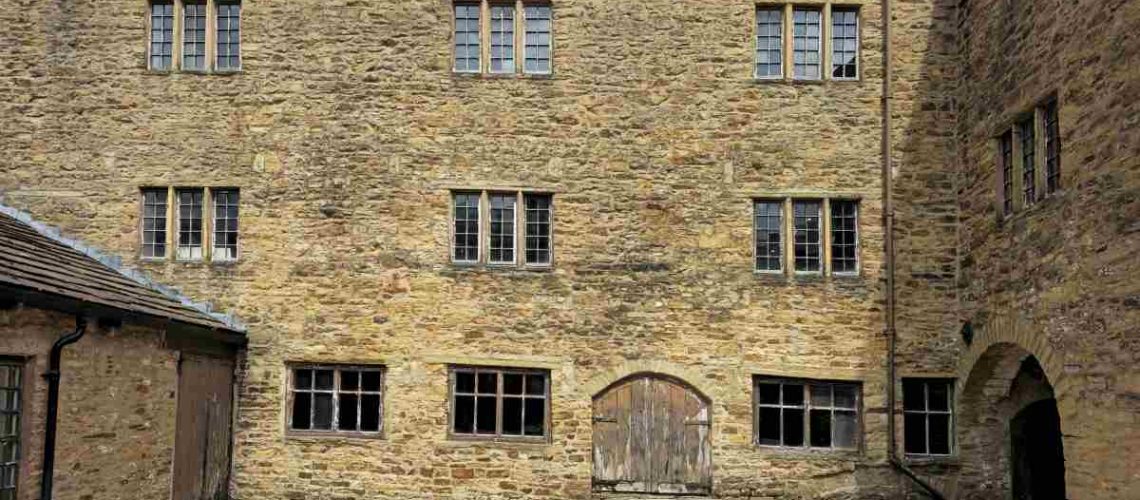
Lancashire is defined, architecturally, by its industrial past. The county’s expansion during the nineteenth century was driven by the cotton trade — a global industry centred on a relatively small cluster of towns in east and central Lancashire. Blackburn, Burnley, Nelson, Colne, Preston, and dozens of smaller mill towns grew rapidly from the 1820s onwards, producing a built environment that is almost entirely Victorian in character.
Lancashire’s cotton mills are the most architecturally significant industrial buildings in England. Constructed largely in millstone grit — the dark, coarse-grained sandstone quarried from the Pennine edges — the mills present a distinctive aesthetic: massive, robust, and deliberately assertive. Many survive as listed buildings, with Historic England recognising their extraordinary industrial heritage value. Reuse as apartments, offices, and cultural spaces is common, and restoration of original fabric — including rainwater systems — is a standard condition of conversion projects.
The cast iron gutters and downpipes that served the original mills were substantial in scale. Large-bore downpipes, high-capacity gutters, and bespoke hopper heads designed to handle industrial-scale roof drainage were commonplace. Where originals survive, they are often the most authentic guide to what replacement should look like. Where they have been lost or damaged, copy casting from surviving fragments or archive drawings is frequently the most appropriate approach.
Alongside the mills, Lancashire contains one of the highest concentrations of Victorian terraced housing in England. Workers’ terraces — typically two-storey, millstone grit or brick, with small rear yards and shared gable walls — line the streets of every mill town. Their rainwater systems are generally modest: standard half-round or Ogee gutters, 68mm or 100mm round downpipes, and cast iron hoppers at junctions.
Many terraces have been altered over the decades, with original cast iron replaced piecemeal with plastic. In conservation areas, this can present a compliance problem when full-scale restoration is undertaken. The requirement to reinstate cast iron is frequently imposed by conservation officers, and should be anticipated in any specification.
Beyond the mill towns, Lancashire contains a significant stock of Georgian and early Victorian market town buildings, particularly in Lancaster, Clitheroe, Garstang, and Kirkham. These properties — many of them listed — were built with the characteristic restraint of the Georgian tradition: clean proportions, sash windows, painted stonework, and rainwater systems in Ogee or moulded profiles appropriate to the period.
Rural Lancashire — particularly the Ribble Valley, the Forest of Bowland, and the Trough of Bowland — contains a stock of farmhouses, barns, and estate cottages built in local sandstone. These are generally smaller-scale properties with simpler rainwater systems, though the case for like-for-like replacement on listed buildings is the same.
Lancashire has approximately 2,600 listed buildings — a high figure reflecting both the quality of its industrial heritage and the density of Victorian town building. Conservation areas are widespread across the mill towns and market towns, and several areas — including parts of Lancaster city centre and a number of rural villages in the Ribble Valley — carry the highest levels of protection.
The Forest of Bowland Area of Outstanding Natural Beauty (AONB) covers a significant swathe of rural Lancashire and includes numerous listed farmhouses and field barns. Consent requirements for any works affecting external appearance apply equally here.
Specifying cast iron rainwater systems for Lancashire buildings requires an understanding of both the architectural tradition and the practical demands of the county’s climate. The industrial towns built from millstone grit were also exposed to significant atmospheric pollution from the cotton trade — coal burning, dye works, and bleacheries contributed to an environment that accelerated the corrosion of metal components.
For Lancashire’s terraced rows and mill-worker housing, the standard profiles are half-round and Ogee. Half-round gutter in 100mm and 125mm sizes, combined with 68mm or 100mm round downpipes, covers the vast majority of residential and light industrial applications. Ogee gutter — particularly the Victorian Ogee profile — is more characteristic of properties built from the 1860s onwards.
For mill buildings themselves, the specification is typically larger in scale. Industrial-grade half-round or box gutter in 150mm or larger sections, with substantial downpipes in 100mm or 150mm diameter, is common. Where original profiles are unusual, copy casting from surviving components is both possible and, on listed buildings, often the most appropriate approach.
Compliance with BS 460:2002, the British Standard for cast iron rainwater goods, is a baseline requirement on heritage and listed building projects. Tuscan Foundry’s product range meets this standard across all sizes and profiles.
Replacing gutters, downpipes, or hoppers on a listed building requires Listed Building Consent (LBC) from the local planning authority in almost all cases. The material, profile, finish, and method of fixing must be acceptable to the conservation officer, and cast iron — particularly like-for-like replacement — is generally approved without difficulty.
Many conservation officers in Lancashire will refuse consent for plastic rainwater goods on listed buildings as a matter of policy. Cast iron is the original material, it is durable, it is repairable, and it is the appropriate choice.
Lancashire’s mill heritage generates a steady volume of bespoke casting enquiries. Mill buildings often have unusual profiles, non-standard sizes, and distinctive hopper heads or decorative brackets that were cast specifically for them. Copy casting — the process of producing a new pattern from a surviving example and casting new components to match — is frequently the most appropriate approach.
Lead times for bespoke and copy cast items are typically 8–10 weeks from pattern approval. For mill conversion projects with tight programmes, early engagement with a specialist supplier is essential.
A site survey is not a luxury on complex heritage projects — it is, in most cases, the most cost-effective investment you can make before specification is finalised. The difference between a desk-based specification and one developed after a proper site assessment can be considerable on Lancashire’s mill buildings in particular.
Cotton mills present specific survey challenges. Rooflines are often complex, with varying gutter runs, multiple drainage outlets, and changes in level between sections built at different periods. Internal valley gutters — common on larger mill buildings — may have been partially replaced in inappropriate materials.
Access is frequently a complicating factor. The height of mill buildings means that ground-level observation is insufficient; eaves may be 12 to 15 metres above ground level. An aerial platform or cherry picker survey provides a level of information that desktop review cannot match.
A thorough site survey will typically identify: the full extent and condition of existing cast iron components; the presence of non-original materials; joint failures, bracket corrosion, or graphitisation not visible from ground level; and structural issues at fascia or wall plate that affect how replacement components will need to be fixed.
For listed buildings, a survey record also provides valuable documentation of the existing fabric — useful for the consent application and for the building’s historic environment record.
Tuscan Foundry offers both ground-level site surveys and aerial platform surveys as chargeable professional services. A site survey is a professional assessment of the building’s rainwater system, its condition, its specification requirements, and the practical constraints of replacement or repair. The cost of a survey is modest relative to the cost of a specification error on a complex project.
For enquiries involving complex bespoke work, damaged or missing components, or sites with significant access challenges, we will typically recommend a survey before finalising any specification.
The finish applied to cast iron rainwater goods is as important as the specification of the goods themselves. A correctly specified system, finished with an inappropriate coating, will deteriorate faster and look wrong on a heritage building.
Linseed oil paint is the traditional finish for cast iron architectural metalwork in Britain. For heritage buildings — particularly listed buildings and properties in conservation areas — linseed oil paint is not simply a stylistic preference; it is, in many cases, the only finish consistent with the building’s character and the expectations of the conservation officer.
Linseed oil paint penetrates the metal surface rather than forming a purely surface film, creating a bond more resistant to the freeze-thaw cycling that causes conventional paints to peel and crack. It remains flexible as it ages, and it is permeable — allowing the metal to breathe and reducing the risk of trapped moisture.
For Lancashire’s mill towns, the dominant aesthetic is dark and robust — millstone grit walls, slate roofs, and the deep blacks and dark greys of Victorian industrial architecture. Standard black is the most common and appropriate finish, consistent with the original specification and the visual character of the buildings.
Where properties call for a more nuanced approach — lighter colours for Georgian properties in Lancaster, or specific heritage tones for estate buildings in the Ribble Valley — Tuscan Foundry offers a range of heritage colours as linseed oil finishes. Request the current colour chart directly from the team.
Linseed oil paint requires correct surface preparation to perform well. Cast iron should be shot-blasted or wire-brushed, primed with a compatible primer, and finished with two or more topcoats. For Lancashire’s industrial buildings, where a legacy of pollution exposure may have compromised the metal surface, thorough preparation is particularly important.
Maintenance intervals for linseed oil-finished cast iron are typically five to ten years for thorough inspection and localised re-coating — considerably less frequent than conventional paints in the same environment.
Lancashire’s position as the cradle of the global cotton industry means that mill restoration is a recurring part of the county’s heritage maintenance programme. The most common issues encountered are: loss of original cast iron through piecemeal replacement; failure of joints and seals; bracket and fixings corrosion; and mismatching of non-standard profiles when partial replacement has been attempted without proper reference to the original.
Copy casting is the most authentic approach to mill restoration where profiles are unusual or non-standard. The typical lead time of 8–10 weeks must be built into the project programme, and the cost of pattern-making should be factored into the project budget as a one-time capital cost.
Lancashire’s post-industrial environment presents particular challenges. Decades of atmospheric pollution have left a legacy of mildly acidic rainfall in many parts of the county. Enhanced surface preparation — shot blasting to Sa2.5 standard rather than simple wire brushing — is recommended for mill and industrial buildings in east and central Lancashire.
Lancashire’s coastline presents different challenges. Salt-laden air accelerates corrosion, and cast iron without enhanced specification may require attention within five to ten years in an unprotected coastal position. Marine-grade specification is recommended: shot blasting, a marine-grade zinc-rich primer, and a minimum of two linseed oil topcoats. Maintenance intervals should be reduced to three to five years.
The Victorian seafront architecture of Blackpool and Morecambe — pier parades, guest houses, and civic buildings — is particularly exposed, and much of it is listed or within conservation areas.
Whether you are specifying rainwater systems for a mill conversion, a listed terrace, a rural farmhouse in the Ribble Valley, or a Victorian seafront property in Blackpool, the process follows the same sequence: enquiry, survey (where needed), specification, supply, and ongoing technical support through installation.
The most useful information you can provide at enquiry stage is a clear description of the building and the scope of work, together with photographs of the existing rainwater system. For straightforward replacement work, this may be sufficient to begin a quotation. For more complex projects, a site survey is generally the most efficient way to move forward.
Tuscan Foundry supplies both standard catalogue products — available for prompt dispatch from stock — and bespoke and copy cast items to order. Standard stock items include Ogee, half-round, and Victorian Ogee gutters in a range of sizes; round and square downpipes; and a comprehensive range of fittings, brackets, and hoppers. Bespoke and copy cast items carry a lead time of 8–10 weeks from pattern approval.
To discuss a Lancashire project, contact Tuscan Foundry Products directly with photographs, drawings, and an outline of the project scope and programme. The team will advise on the most appropriate specification approach and confirm lead times.
Tuscan Foundry Products: 0333 987 4452 | info@tuscanfoundry.co.uk | tuscanfoundry.com