
Established 1893 | BS 460:2002 Certified | UK & International Supply | Expert Technical Support | 0333 987 4452
Choosing authentic materials protects the character, and the value, of a period property
‘I am sure that I feel the same way as many other listed property owners; that we are truly fortunate to be custodians of such wonderful historic buildings.’ Mrs Taylor, Listed Property Owner, Wiltshire.
The UK has around half a million listed buildings, and many more period properties sit within conservation areas and National Landscapes (formerly Areas of Outstanding Natural Beauty). Together they form an important part of the country’s history, and they record building techniques and designs that would otherwise be lost.
Bodies such as Historic England, Cadw and Historic Environment Scotland exist to protect the historic environment and to ensure that its past is researched and understood. Supporting that work is SPAB, the Society for the Protection of Ancient Buildings, founded by William Morris in 1877 to counter the destructive ‘restoration’ of medieval buildings practised by many Victorian architects.
Today SPAB is the largest, oldest and most technically expert national pressure group fighting to save old buildings from decay, demolition and damage. They represent the practical and positive side of conservation and have a firm set of principles about how old buildings should be repaired and the practical knowledge to show how these can be put into effect.
Their successes are visible across the country. Thousands of historic buildings survive which would have been lost, mutilated or badly repaired without their intervention.


Yet for all these successes, period buildings are still being repaired with materials that do not suit them. With budgets under pressure and a growing range of products designed to look traditional rather than to perform like traditional materials, there is a real risk of these buildings losing the very fabric that gives them their character.
Owners today are offered imitation lead, pre-fabricated chimneys, ‘cast iron effect’ rainwater goods and bulky rooflights sold as ‘conservation style’, often with claims of environmental benefit. The appeal on price is understandable, but an imitation reproduces the appearance of a material, not its behaviour or its lifespan. Cast iron rainwater goods installed today will give a lifetime of service, exactly as the originals have.


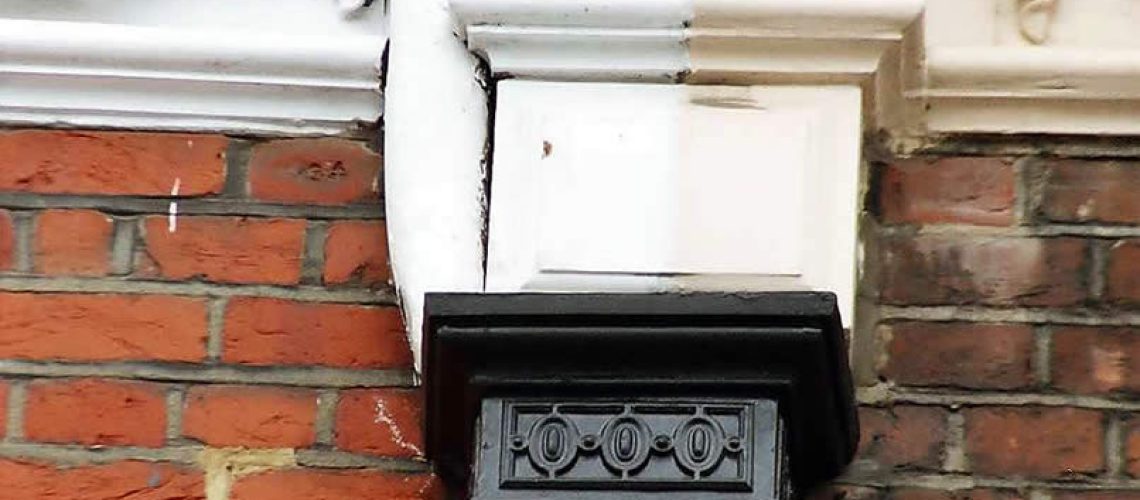
Cast iron has been the material of choice for gutters, hoppers and downpipes on British buildings for more than two centuries, and the evidence is on the buildings themselves: rainwater systems fitted in the Georgian and Victorian eras are still carrying water today. We have been casting since 1893, and that record in demanding conditions is one no substitute material can yet match.
A cast iron rainwater system is not a short-term purchase. Correctly fitted and periodically repainted, it will outlast the people who specify it, which is why so many surviving historic systems can be repaired and extended rather than replaced. Where sections are damaged or missing, we can copy cast them to match the original profile; bespoke castings typically take 8–10 weeks, so it is worth raising them early in a project.
The usual arguments against cast iron are its initial cost and the need to repaint it. Neither stands up well on a period building. Few owners choose a period property because it is cheap or maintenance-free; these buildings have history, need care and are usually a labour of love. Measured over its working life, a cast iron system is a cost-effective choice, and a linseed oil paint finish keeps maintenance straightforward, because it can be cleaned and re-oiled rather than stripped back.
The Listed Property Owners Club is an organisation helping Listed property owners to be kept informed about their rights and responsibilities. Membership gives access to detailed advice, information and support for just about every conceivable issue associated with ownership.
Kellymarie Smith comments:
‘Many owners buy listed properties because they fall in love with the character of the building, they are also proud to own a little piece of our heritage. Most owners enjoy researching the history of their property and sharing its story making the property come alive. It’s very disappointing when owners replace original architectural items with modern materials which detract from the character, quite often it is a lack of knowledge on the owners part when they don’t realise the visual and sometimes detrimental damage they are doing to their building. We try to recommend owners think about the quality of the repairs and maintenance they are doing, rather than just looking at the price tag. It is also important for them to remember they will need to consult their conservation officer with changes such as the rainwater goods – if the builder says it’s ok owners should still get a 2nd opinion.’
Membership of LPOC will help you avoid potentially expensive pitfalls and stay on the right side of your conservation officer and ensure that owning a listed building becomes less of a chore and more of a pleasure.
Many manufacturers have identified a lucrative market in the refurbishment of older properties, taking products designed for modern buildings and presenting them as something they are not. The so-called conservation rooflight is a familiar example: a bulky framed unit that sits proud of the roof line, with a glazing bar fixed to the front for effect. Too many owners and contractors choose this type of product over a genuine conservation rooflight on price rather than quality.
Whoever you buy from, choose materials that suit the building. Remember the period features that first attracted you to the property: an inappropriate material may save money in the short term, but at the expense of the building’s character and, ultimately, its value. If you are unsure what a building originally had, or what will satisfy the conservation officer, talk to us before you specify.
Listed Property Owners Club Ltd
Tel: 01795 844939
www.lpoc.co.uk
SPAB
Tel: 020 7377 1644
www.spab.org.uk