Established 1893 | BS 460:2002 Certified | UK & International Supply | Expert Technical Support | 0333 987 4452
£265.40 – £444.00Price range: £265.40 through £444.00 ex VAT (£318.48 – £532.80 inc VAT)
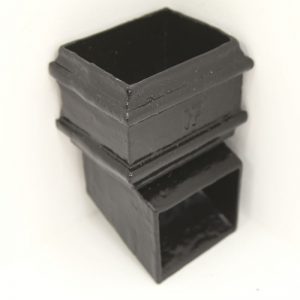
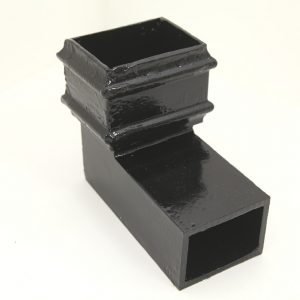
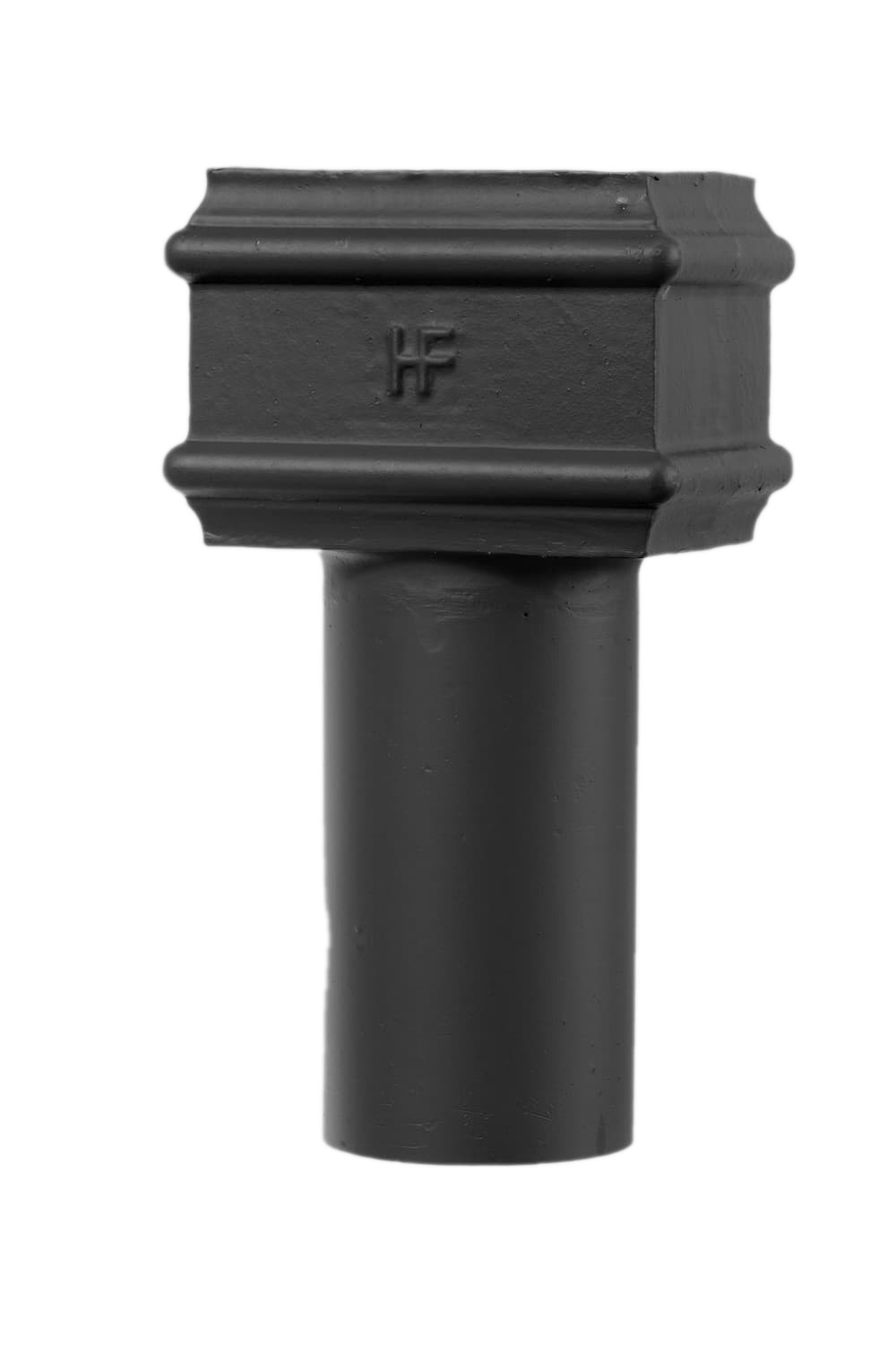
Cast iron connector from 100x75mm to 150x100mm rectangular downpipe to 65mm, 75mm or 100mm round, in primer or black painted finish.
UK delivery from £45. Longer items are despatched palletised. See delivery rates.
The Rectangular Pipe to Round Connector changes a rectangular downpipe to a round section, for connection to a round pipe, a round gully inlet or an underground drain socket.
It is used at the foot of a run where the below-ground drainage takes a round pipe, or where a rectangular run must join an existing round system.
Round outlets are 65mm, 75mm or 100mm. The 100mm round outlet is not made for 125mm x 70mm pipe.
All fittings in our rectangular range are cast iron to BS 460:2002, made to the same moulded profile so pipes and fittings line up neatly on the elevation. Every fitting is supplied either in primer, ready for painting on site, or in factory black. For listed buildings and conservation areas we also offer hand-applied linseed oil paint in heritage colours, which stays breathable and flexible and is straightforward to maintain. Stocked items are usually dispatched within 5 to 7 working days; allow around 6 to 7 weeks where a linseed oil finish is specified.
Rectangular pipe sizes: 100mm x 75mm (4″ x 3″), 125mm x 70mm, 125mm x 100mm (5″ x 4″) and 150mm x 100mm (6″ x 4″).
Suitable for listed buildings, conservation areas and heritage restoration. For specification support or a project quotation, call 0333 987 4452.
| Size/Finish | Primer 100mm x 75mm, Primer 125mm x 70mm, Primer 125mm x 100mm, Primer 150mm x 100mm, Black Painted 100mm x 75mm, Black Painted 125mm x 70mm, Black Painted 125mm x 100mm, Black Painted 150mm x 100mm |
|---|---|
| Round Outlet | 65mm, 75mm, 100mm |
Rooflight opener handles can be ordered directly through tuscanfoundry.com. For volume orders or project-specific queries, please call 0333 987 4452 or use the contact form on our website.
Yes. Cast iron rainwater goods are widely accepted by conservation officers and historic environment bodies as the appropriate material for listed buildings. Tuscan Foundry's hopper heads are manufactured in solid cast iron to BS 460 specification and are suitable for all listed building grades. A linseed oil paint finish is also available, which is particularly appropriate for conservation projects.
Yes. Cast iron is the original material for external soil stacks on most period buildings, and like-for-like replacement in cast iron is usually what conservation officers expect. Check with your local planning authority whether listed building consent is needed for the works.
Yes. Cast iron ornamental vents in period patterns are frequently specified on listed buildings and conservation area properties as like-for-like replacements for original Victorian ironwork. Conservation officers generally accept cast iron in period patterns without objection. We can supply specifications to support planning and listed building consent applications.
A hit and miss vent has a sliding plate on the reverse of the grille that can be moved to open or close the ventilation apertures. This allows airflow to be regulated without removing or replacing the grille. The vent can be fully open, partially open, or fully closed depending on ventilation requirements.
Yes. Cast iron hopper heads are the historically correct choice for listed and period buildings, and a like-for-like cast iron replacement is generally accepted without objection by conservation officers. We manufacture to BS 460 for genuine heritage character and durability.
Yes. Cast iron hopper heads are the historically correct choice for listed and period buildings, and a like-for-like cast iron replacement is generally accepted without objection by conservation officers. We manufacture to BS 460 for genuine heritage character and durability.
Please call 0333 987 4452 or use the contact form with the size, quantity and connection details, and we'll provide a quotation.
The Brass Rooflight Hand Winder Opener – Telescopic is available in 150mm, 250mm, and 300mm sizes. The telescopic mechanism provides flexibility to accommodate varying rooflight positions and throw requirements. Throw: 165mm.
We manufacture a wide variety of brackets for many different cast iron gutter and pipe profiles. More common types are the rise and fall, top fix and side fix rafter and the holderbat or pipe clip.
We can also offer traditional drive brackets, repair brackets and fascia brackets in both steel and cast iron.
It is always advisable to replace like with like because quite often the brackets form and important part of the buildings architecture. Occasionally buildings have special decorative brackets and our UK manufacturing allows us to produce small quantities of bespoke brackets when required.