Our cast iron airbricks are available in a choice of finishes including primer and painted options. If you require a specific finish for a conservation project or to match existing ironwork, please call us on 0333 987 4452 to discuss.
Established 1893 | BS 460:2002 Certified | UK & International Supply | Expert Technical Support | 0333 987 4452
£181.64 – £321.65Price range: £181.64 through £321.65 +VAT
Premiere LCC Soil Range provides a comprehensive offering of traditional socket and spigot pipes and fittings for soil and waste installations on the external facade of buildings.
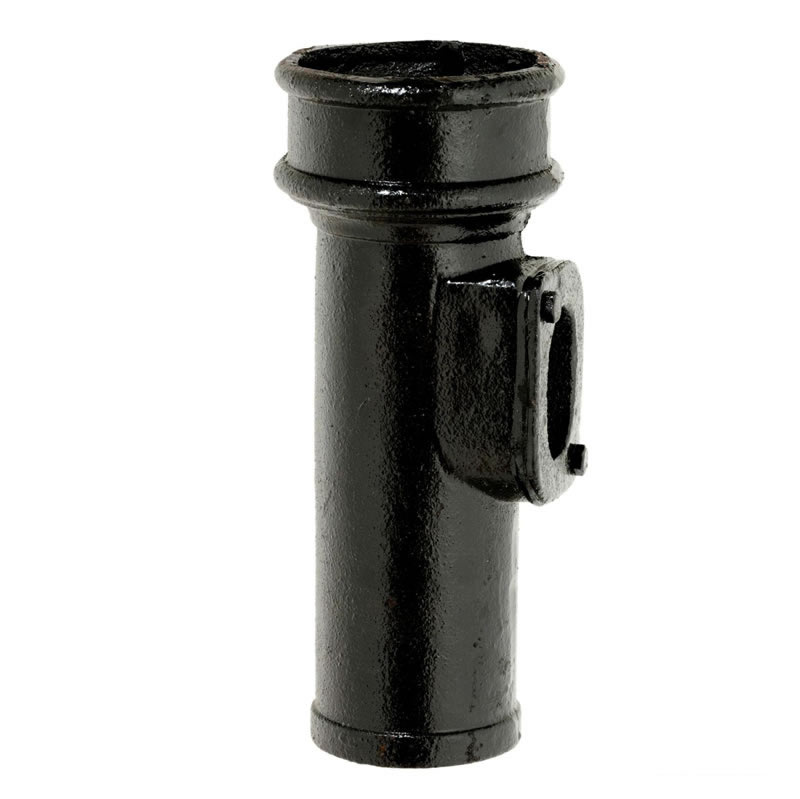
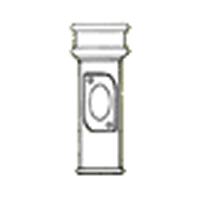
The LCC Soil Pipe Access is a cast iron soil pipe section with an integral hinged access door, allowing the pipe run to be inspected and rodded without dismantling the stack. Essential on any above-ground cast iron soil installation where blockages may need to be cleared — the access pipe allows a cleaning rod or inspection tool to be inserted without disturbing pipe joints or the surrounding masonry.
Specified on listed buildings and conservation projects where maintenance access to the soil pipe run is a requirement. Available in the standard LCC diameter range: 50mm, 65mm, 75mm, 90mm, 100mm, and 150mm. Manufactured in cast iron. For specification support, call 0333 987 4452.
Our cast iron airbricks are available in a choice of finishes including primer and painted options. If you require a specific finish for a conservation project or to match existing ironwork, please call us on 0333 987 4452 to discuss.
The Antique Black finish is cast iron with a blackened surface — the most historically accurate finish for cast iron ironwork and the most appropriate for the majority of heritage applications. Polished Lacquered is cast iron with a bright polished surface sealed with clear lacquer, suited to interiors and sheltered locations where polished ironwork is the specification. Polished Brass is solid polished brass throughout — the correct choice where existing building fittings are in brass or where a warm metal tone is required.
The Cast Iron Louvre Airbrick suits Victorian and Edwardian terraced housing, semi-detached properties, public houses, agricultural buildings, and workshop structures where the original airbrick was a louvre-face grille. The horizontal fin profile is widely found in British domestic and light industrial construction from the 1870s through to the 1950s.
A corner hopper head collects rainwater from two gutters running at right angles and channels it into a single downpipe. They are typically required at internal roof valleys, on hipped roofs, and wherever two runs of gutter converge at a corner. The Regent H1A is designed specifically for this application and is sized to suit the most common gutter profiles.
The Polished Lacquered finish suits buildings where period ironwork was finished bright rather than painted — formal entrance elevations, listed properties, and settings where the grille contributes to the decorative programme of the facade. It is appropriate for conservation specifications and high-specification heritage new build.
Satin chrome has a brushed, low-sheen finish suited to contemporary interiors, while polished chrome has a bright mirror finish. Both are available in the telescopic hand winder range at Tuscan Foundry. The choice typically depends on the existing ironmongery specification.
Prices are shown on each product page. For project quantities, specification advice, or a formal quotation, please call 0333 987 4452 or use the contact form.
Yes. A polished brass finish is historically appropriate for period buildings and is generally acceptable to conservation officers for listed building projects. If you are unsure about the specification requirements for your project, we are happy to advise — call 0333 987 4452.
Polished chrome has a bright mirror finish, while satin chrome has a brushed, low-sheen appearance. Both are available in the telescopic hand winder range. The finish choice typically depends on the ironmongery specification for the project.
Our cast iron airbricks are supplied in primed finish, ready for on-site painting. This allows them to be finished to match the existing ironwork or masonry colour of the building. Standard black gloss is the most common finish for conservation and heritage projects.