Skip to content
Tuscan Foundry Products Logo Black
Find out more about our products by giving us a call
0333 987 4452
Linkedin Envelope
  • About Us
  • Products
  • Support
  • Index
  • Contact
  • About Us
  • Products
  • Support
  • Index
  • Contact
£0.00 0 Basket
Tuscan Foundry Products Logo Black
  • About Us
  • Products
  • Support
  • Index
  • Contact
  • About Us
  • Products
  • Support
  • Index
  • Contact
£0.00 0 Basket

The Beauty of Matte: Non-Glossy Paint Finishes for Historic Buildings

  • January 12, 2026
Back
Why Flat, Low Sheen and Linseed Oil Paint Finishes Matter for Period Properties
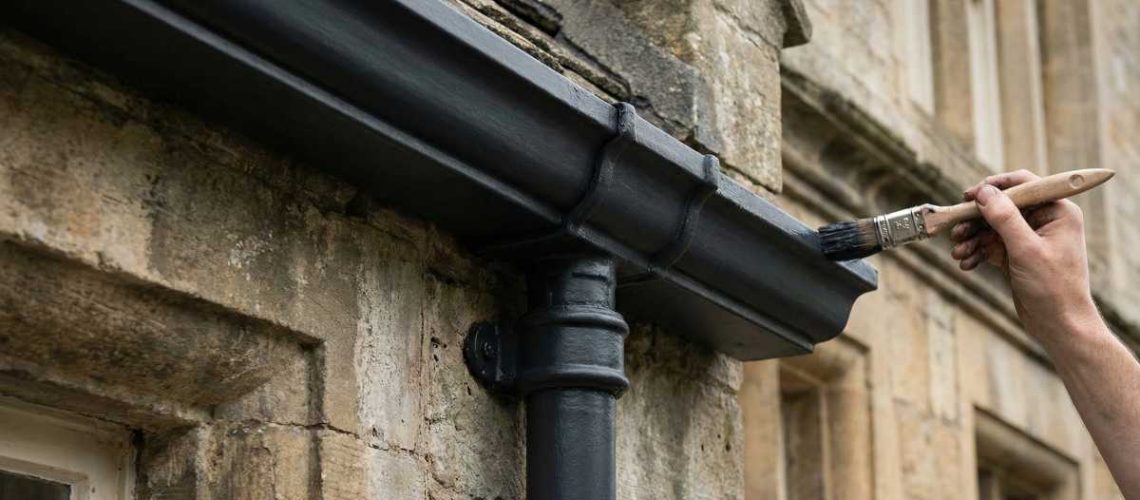
Traditional-matte-paint_non-glossy-finishes_cast-iron-gutters-and-pipes

When specifying rainwater goods and architectural metalwork for historic, listed, or sensitive period buildings, the finish you choose isn’t just cosmetic — it’s a critical part of protecting the heritage fabric and preserving authentic aesthetics. Glossy, high-sheen coatings may look modern and bright, but they often visually clash with traditional materials and can even detract from the architectural integrity of heritage elevations.

At Tuscan Foundry Products, our cast iron guttering, downpipes and accessories are available with a range of heritage paint finishes, including matte, flat, low-sheen and linseed oil options, tailored to conservation-grade projects and specification-driven restorations. In this guide, we explain what these terms mean, why they’re preferred in historic contexts, and how the right finish enhances both performance and appearance.

Understanding Matte and Non-Glossy Paint Finishes

In architectural specification, a paint’s finish — sometimes called its sheen or sheen level — describes how much light it reflects.

Key Descriptive Terms

  • Matte / Ultra‑matte: Very low reflectivity, almost no shine — ideal for historic buildings where surfaces shouldn’t appear modern or glazed.
  • Flat: Another word for minimal sheen; produces a soft, non-reflective surface.
  • Low‑sheen: Slight sheen but still understated and subtle.
  • Dull / Heritage finish: Often used in conservation literature to describe non-gloss coatings that visually recede rather than stand out.

These finishes deliver a velvety, non-reflective look that respects the depth and texture of historic materials, from stone façades to cast-iron elements, helping them blend harmoniously with the existing fabric.

Why Finish Matters on Historic Buildings

Architects, heritage consultants, and surveyors routinely specify non-gloss finishes for several practical reasons:

  • Visual Compatibility: High‑gloss paints can look out of place next to aged stone, brick or timber. Matte finishes integrate more naturally.
  • Conservation Best Practice: Conservation guidance often prioritises finishes that reflect the character of the original fabric.
  • Perceived Age‑Appropriate Aesthetic: Flat surfaces echo traditional finishes seen on buildings long before modern synthetic coatings existed.

In listed building consent applications or tender documents, specifying appropriate finish terms — e.g., heritage matte linseed oil paint finish — can help satisfy conservation officers and design review panels.

The Heritage Advantage: Linseed Oil Paint Finishes

Among non-gloss options, linseed oil paint stands apart for historic and period properties.

What Is Linseed Oil Paint?

Linseed oil paint is formulated from flaxseed oil (a natural drying oil), pigments, and minimal additives. It has been used historically on metal, wood, masonry and plaster before petrochemical paints existed. (Tuscan Foundry Products)
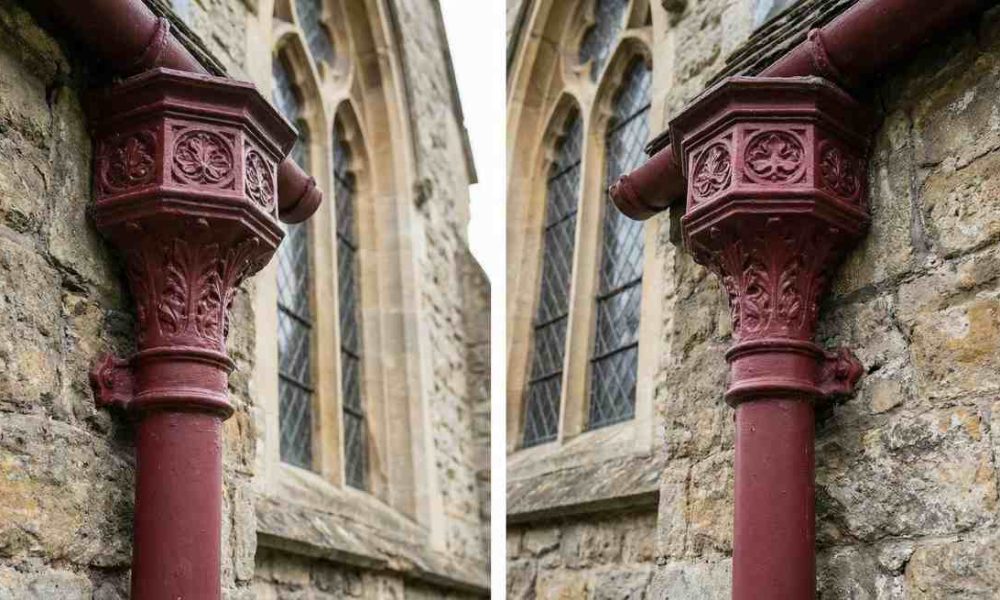
Matte_Non-Gloss-Finishes_Church_Cast-Iorn-Pipes-and-Hoppers_Linseed-Oil-Paints

Key Benefits for Historic Projects

  • Breathable and Flexible: Allows moisture vapour to pass through surfaces, reducing trapped moisture risk — vital for preventing paint failure and corrosion on cast iron. (Tuscan Foundry Products)
  • Natural, Sustainable Composition: Free from high VOC solvents typical of modern paints, aligning with environmental and sustainability goals. (Tuscan Foundry Products)
  • Extended Lasting Protection: A properly applied linseed oil finish can withstand decades of weathering without flaking or peeling.
  • Soft, Low‑Sheen Appearance: Linseed oil’s inherent finish results in a finely subdued look that complements traditional elevations.

While linseed oil paint has a rich history, modern formulations from Tuscan Foundry Products combine this traditional finish with high-quality pigments suited for cast iron guttering and pipework, ensuring both heritage appeal and performance. (Tuscan Foundry Products)

The Evolving Beauty of Linseed Oil Paint Over Time

Unlike modern synthetic paints that may peel or crack as they age, linseed oil paints mature gracefully, forming a tough, breathable finish that weathers naturally. Over time, the surface undergoes subtle changes that add to its historic character:

  • Initial Soft Sheen: Freshly applied, linseed oil paint often appears with a slight soft lustre — somewhere between matte and satin.
  • Gradual Mattifying: As it oxidises and weathers, the finish becomes more matte, blending in beautifully with traditional building materials.
  • Patina: The surface may develop a slight patina, adding to its charm and reflecting the building’s age and authenticity.
  • Recoat Friendly: Unlike modern paints, linseed finishes don’t flake — making touch-ups and recoats far simpler and more sustainable.

This natural evolution is especially appreciated by conservation professionals and architects looking for subtle ageing rather than synthetic uniformity.

Modern vs Traditional Paint Finishes: Comparing Performance

PropertyModern Gloss/Synthetic PaintsMatte / Linseed Oil Finishes
Gloss LevelHigh reflectivity and shineLow, flat, non‑refining
BreathabilityLimitedExcellent – reduces moisture trapping
Visual Suitability (Heritage)Often too brightPerfectly subdued
DurabilityGood but may peelExcellent flexibility; long life
Environmental ImpactOften high VOCsNatural, low VOC

For retrofit or conservation specifications, low‑sheen linseed oil systems provide an ideal balance of traditional aesthetics and long‑term performance.

How Matte, Linseed and Non-Gloss Finishes Are Applied

Our paint finishing process reflects heritage craft standards:

  1. Surface Preparation – Cast iron components are meticulously cleaned and primed to ensure adhesion and longevity. (Tuscan Foundry Products)
  2. Primer Coats – Traditional linseed oil primer (often red oxide) is applied to anchor the top coats. (Tuscan Foundry Products)
  3. Top Coats – Multiple thin layers of linseed oil paint provide a breathable, protective coating with a matte finish. (Tuscan Foundry Products)
  4. Expert Hand Application – Hand‑painting ensures even coverage and richness, especially on intricate profiles and fittings. (Tuscan Foundry Products)

This method delivers longevity and visual consistency with period architectural language.

Historic Building Examples (and Finish Considerations)

Here are notable buildings where matte, low‑sheen and linseed oil paint finishes would be appropriate when restoring rainwater goods and cast iron work:

  1. Windsor Castle, Berkshire

As a globally recognised heritage site, materials and finishes need to match centuries-old aesthetics. Cast iron guttering with a low‑sheen finish ensures rainwater goods remain visually subordinate to the historic stonework.

  1. Bath Abbey, Somerset

With limestone façades and rich detailing, Bath Abbey benefits from traditional cast iron and matte paint finishes that echo historic tones without reflective distraction.

  1. Edinburgh’s New Town Georgian Terraces

Uniformity and understated surfaces are core to the Georgian style. Low‑sheen finishes help guttering, and pipework blend with mellow ashlar stone elevations.

  1. Hampton Court Palace, Greater London

Restoration work here frequently requires materials and coatings that reflect the 16th- and 17th-century palette — including soft-matte, authentic linseed oil paints on cast iron.

  1. Blenheim Palace, Oxfordshire

The grand Baroque elevation is enhanced, not overwhelmed, by well-chosen non-gloss finishes that preserve architectural harmony.

Conclusion: Choosing the Right Finish for Historic Integrity

Selecting the right paint finish — particularly matte, low‑sheen and linseed oil options — is as important as choosing the right material itself when dealing with historic and listed buildings. These finishes enhance visual harmony, longevity and technical performance, while preserving the architectural language of period structures.

At Tuscan Foundry Products, we combine traditional craftsmanship with conservation expertise to deliver cast iron guttering, pipes and finishes that respect history and perform for the future. Whether specifying for a significant restoration, a sensitive retrofit, or conservation-grade detailing, our heritage paint finishes deliver authentic, durable, and beautiful results.

Tuscan Foundry_Bespoke Cast Iron Guttering and Pipes

FAQs: Matte & Linseed Oil Paint Finishes for Period Properties

  1. What is a matte paint finish?
    A matte finish is a non-reflective, low-sheen surface, ideal for aligning with traditional building materials.
  2. Why choose linseed oil paint over synthetic alternatives?
    Linseed oil paint is breathable, sustainable, and produces a heritage-appropriate, low‑sheen finish with excellent long-term performance. (Tuscan Foundry Products)
  3. Are matte finishes durable on exterior metal like cast iron?
    Yes — when applied adequately with appropriate priming and multiple coats, matte linseed oil finishes protect metal across decades. (Tuscan Foundry Products)
  4. Can I specify custom colours in a matte finish?
    Absolutely; Tuscan Foundry offers heritage-grade colours to match period palettes. (Tuscan Foundry Products)
  5. Do matte finishes hide imperfections?
    Yes, low‑sheen coatings are forgiving visually, masking minor surface irregularities better than glossy paints.
  6. How do matte linseed oil paints perform in wet climates?
    Their breathability helps reduce moisture trapping—a key benefit in wetter regions.
  7. Is hand-painting necessary?
    Hand painting ensures uniform, even coats and is the preferred approach for conservation-level quality. (Tuscan Foundry Products)
Facebook
Twitter
LinkedIn
Pinterest
PrevPrevious
NextNext

Why Cast Iron Guttering Is Ideal for Period and Listed Properties

Cast iron offers an authentic appearance that complements traditional architecture. It’s also robust, long-lasting, and often required to meet listed building consent conditions. Unlike plastic alternatives, cast iron guttering retains the historic integrity of a building and weathers beautifully over time.

It’s also worth noting that modern cast iron systems benefit from factory-applied protective coatings, making them easier to maintain and install than in decades past. Cast iron offers seamless integration into any historic elevation when matched carefully to the existing system or surrounding details.

Tuscan Foundry Products Logo White

Working together to make the world a brighter place

NuDawn Logo

CONTACT US

Sales & Customer Services:
0333 987 4452

Tyn-Y-Clyn
Llanafarn Fawr
Builth Wells
Powys LD2 3LU
United Kingdom

FOLLOW US

Twitter

MESSAGE US

ABOUT US
  • About Us
  • News
  • Testimonials
  • Gallery
  • About Us
  • News
  • Testimonials
  • Gallery
PRODUCTS
  • Bespoke Commissions
  • Cast Iron Soil Pipes
  • Cast Iron Gutters & Pipes
  • Heating & Cast Iron Radiators
  • Hardware & Spares
  • Cast Iron Radius Guttering
  • Bespoke Commissions
  • Cast Iron Soil Pipes
  • Cast Iron Gutters & Pipes
  • Heating & Cast Iron Radiators
  • Hardware & Spares
  • Cast Iron Radius Guttering
SUPPORT
  • Brochures
  • Delivery
  • Downloads
  • Surveys & Visits
  • FAQ
  • Privacy Policy
  • Terms And Conditions
  • Brochures
  • Delivery
  • Downloads
  • Surveys & Visits
  • FAQ
  • Privacy Policy
  • Terms And Conditions
CONTACT
  • Contact
  • Referral Scheme
  • Contact
  • Referral Scheme
Tuscan Foundry Products Logo Black
Find out more about our products by giving us a call
0333 987 4452

Tuscan Foundry Products, Tyn-Y-Clyn, Llanafan Fawr, Builth Wells, Powys LD2 3LU, United Kingdom

© Tuscan Foundry Products 2022

This website uses cookies to improve your experience. We'll assume you're ok with this, but you can opt-out if you wish.AcceptReject Read More
Privacy & Cookies Policy

Privacy Overview

This website uses cookies to improve your experience while you navigate through the website. Out of these, the cookies that are categorized as necessary are stored on your browser as they are essential for the working of basic functionalities of the website. We also use third-party cookies that help us analyze and understand how you use this website. These cookies will be stored in your browser only with your consent. You also have the option to opt-out of these cookies. But opting out of some of these cookies may affect your browsing experience.
Necessary
Always Enabled
Necessary cookies are absolutely essential for the website to function properly. This category only includes cookies that ensures basic functionalities and security features of the website. These cookies do not store any personal information.
Non-necessary
Any cookies that may not be particularly necessary for the website to function and is used specifically to collect user personal data via analytics, ads, other embedded contents are termed as non-necessary cookies. It is mandatory to procure user consent prior to running these cookies on your website.
SAVE & ACCEPT