How Traditional Foundry Techniques and Modern Technology Create Perfect Replicas of Historic Cast Iron Rainwater Systems
When a Grade I listed manor house loses its ornate Victorian hopper head to decades of weathering, or a centuries-old church discovers its cast-iron guttering beyond repair, the challenge isn’t simply finding a replacement—it’s about creating a replica that honours the building’s heritage. This is where the ancient craft of copy casting meets modern conservation science, and it’s a speciality we’ve perfected over more than 130 years at Tuscan Foundry Products.
Copy casting is far more than simply making a mould from an existing piece. It’s a forensic exercise in historical preservation that requires metallurgical knowledge, artisanal skill, and an understanding of how buildings age. From our base in Mid Wales, we’ve supplied replicated castings of everything from delicate Victorian ornamental hoppers to massive sand-cast gutters for civic buildings, ensuring that Britain’s architectural heritage remains authentic for generations to come.
The Victorian and Edwardian eras left Britain with an extraordinary legacy of cast-iron rainwater systems. During the Industrial Revolution, thousands of regional foundries produced unique gutter profiles, ornate hopper heads, and decorative downpipes—each with distinctive characteristics that reflected local architectural traditions. Many of these foundries closed decades ago, taking their original patterns and moulds with them.
Today, when these historic components fail or require replacement, we face a significant problem: modern off-the-shelf alternatives rarely match the original profiles. For listed buildings, this isn’t merely an aesthetic concern—it’s a legal requirement. Listed Building Consent typically mandates “like-for-like” replacement, meaning conservation officers expect to see exact replicas, not approximate substitutes.
This is where our expertise becomes invaluable. At Tuscan Foundry Products, we have access to one of the UK’s most extensive libraries of historical patterns—over 50 ornamental hopper head designs and 19 distinct gutter profiles, from standard Half-Round and Victorian Ogee to large sand-cast sections required for institutional roofs. But when even our extensive catalogue doesn’t contain the right match, we turn to the specialised craft of copy casting.
Copy casting is a meticulous process that transforms a surviving architectural element into a reproducible pattern. It requires understanding not just the traditional foundry techniques that created the original, but also the physics of how molten iron behaves as it cools and solidifies.
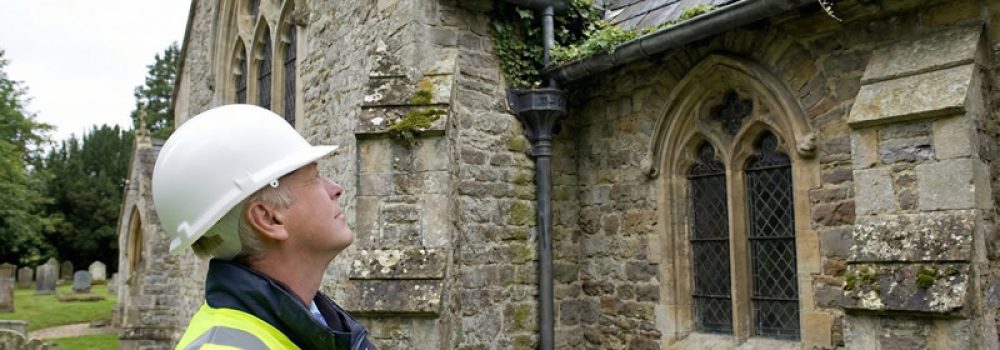
The process begins with detailed documentation. We offer comprehensive site surveys, including ground-level inspections and aerial platform assessments for high or inaccessible features. During this phase, we photograph, measure, and create templates of the existing ironwork. For complex profiles, we may remove a sample piece and return it to our foundry for detailed analysis.
This documentation is crucial because many historic components have been painted numerous times over their century-long lifespans. Thick paint layers can obscure the sharp detail of original carvings and casting marks, so we need to see the true form beneath. (Find out More)
Once we have the original piece, it will be shot blasted back to bare metal. This reveals the authentic detail—the tool marks, the ornamental flourishes, the maker’s marks—that define the component’s character. Even pieces that appear heavily corroded often retain structural integrity beneath the rust.
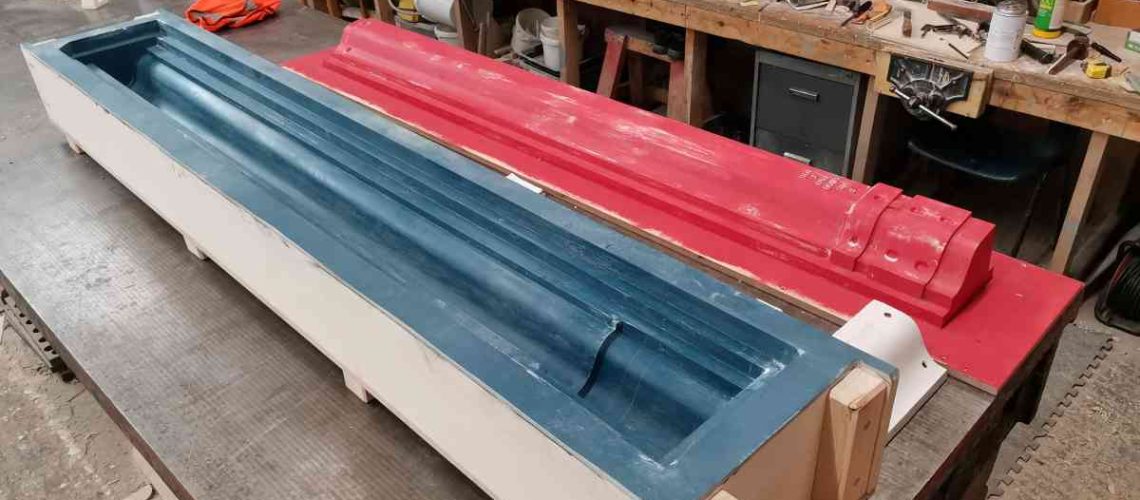
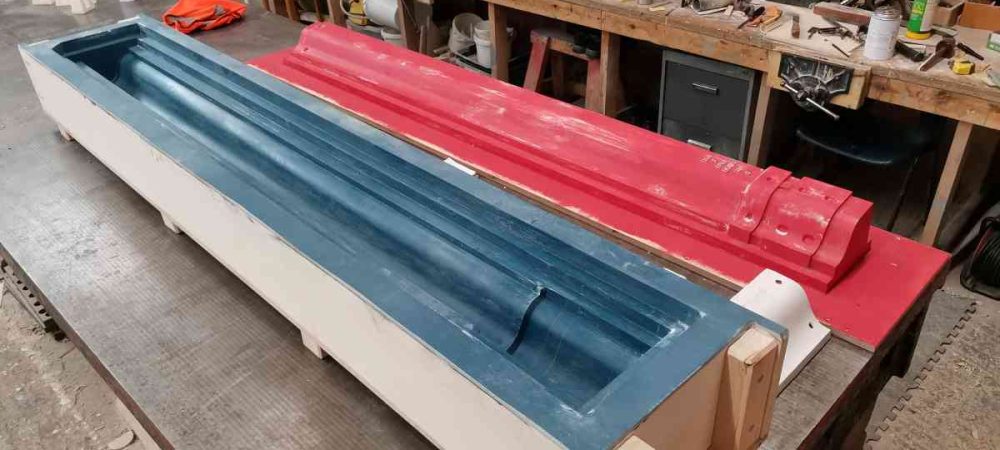
For highly ornate Victorian features, such as decorative hoppers with dates, initials, or coats of arms, new patterns will be hand-carved in stable hardwoods, such as mahogany. This artisanal skill—the “pattern maker’s craft”—has been practised for centuries and remains essential for the finest restoration work. Modern resin-based patterns are also used to create “matchplates,” which enable faster, more consistent mould production.
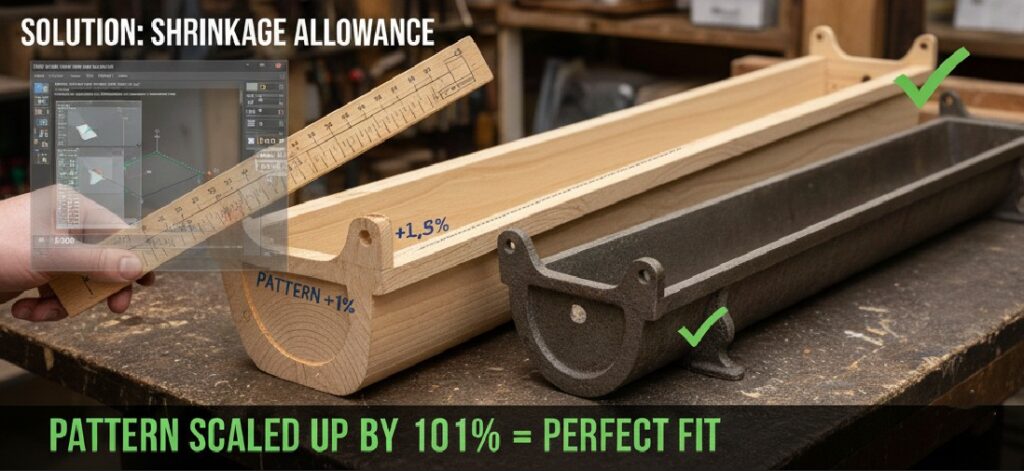
Here’s where copy casting becomes a precise science. Molten cast iron contracts by approximately 1% as it cools from liquid to solid. If making a mould directly from an original component, the new casting will be 1% smaller—roughly 18mm shorter over a standard 1.8-meter gutter length.
This might seem trivial, but in heritage conservation, it’s catastrophic. The new piece won’t fit into the existing bracket intervals. Joints won’t align. The entire installation becomes compromised.
To solve this, our pattern makers use specialised “contraction rules”—measuring tools that scale the pattern up by approximately 101% to compensate for the shrinkage. When working digitally, CAD software is used to scale 3D, ensuring the final casting matches the original’s exact dimensions.
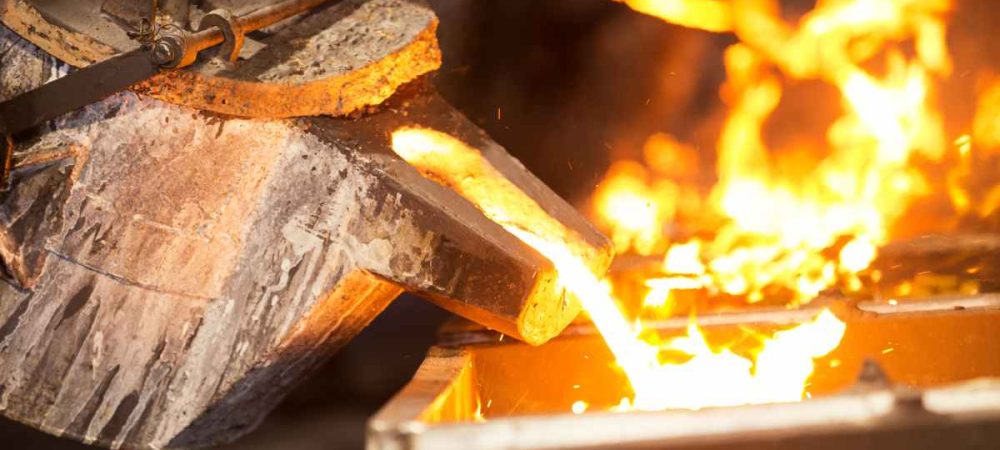
Traditional green sand moulding produces bespoke cast iron components. Damp sand with bentonite clay forms the mould cavity. The pattern is pressed into the sand and removed, then molten grey iron—heated to 1,350–1,500°C—is poured in.
For precision items such as round rainwater pipes and half-round gutters, centrifugal casting is used. Molten iron enters a rapidly rotating cylindrical mould, producing pipes with consistent wall thickness and an integral socket.
After casting, each piece undergoes fettling—grinding, cleaning, and finishing—to achieve the required surface quality. Components are then factory-coated or prepared for traditional finishes, including linseed oil paint.
While hand-carving patterns remains our gold standard for the finest restoration work, we’ve embraced modern technology to enhance precision and reduce lead times. 3D laser scanning has revolutionised how we approach bespoke pattern making.
Using handheld 3D scanners, we can capture the precise geometry of an architectural element in situ, without removing fragile components from the building. These scanners create a detailed digital “point cloud” accurate to within 0.01mm—far more precise than traditional templating methods.
The digital workflow offers remarkable advantages for heritage conservation: • Virtual Damage Repair: Design software can digitally remove corrosion and wear, restoring the original profile before we create the pattern • Automatic Scaling: Software precisely scales the model to 101% to compensate for iron shrinkage, ensuring dimensionally perfect replicas • Mirroring and Symmetry: Missing decorative elements can be recreated by scanning surviving pieces, mirroring them digitally, and producing perfectly balanced replacements • Archival Documentation: Digital models create permanent records of historic components, preserving them for future conservation efforts.
Once finalised, these digital models can be 3D printed into physical patterns using resin, which offers exceptional detail resolution and longevity in the humid foundry environment.
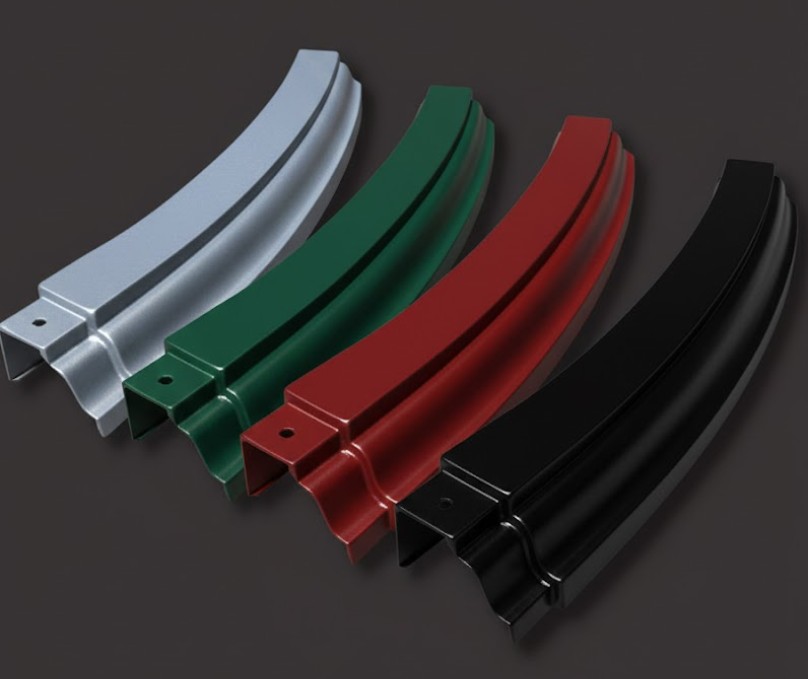
One of our most requested specialised services is radius and curved guttering—cast iron gutters specifically manufactured to fit the curved rooflines of bay windows, turrets, oast houses, and castle architecture. This is where copy casting becomes both an engineering challenge and an art form.
Creating a perfect radius gutter requires precise geometry. We use the “chord and rise” method: the chord is the straight-line distance between the curve’s endpoints, while the rise is the distance from that line to the deepest point of the arc. Using these measurements, we calculate the exact radius needed and craft wooden templates to shape the sand mould for the bespoke curved section.
True radius guttering provides the most aesthetically pleasing result and is essential for high-fidelity restoration. The alternative—welding together angled segments of straight guttering to approximate a curve—may work for some applications. Still, it rarely meets the standards required for sensitive conservation projects on Grade I and II listed buildings.
Our bespoke casting services extend beyond drainage to include pavement lights, ornamental benches, and heavy-duty civil castings, such as gully grates rated to D400 load standards. We can manufacture site-specific items finished in any RAL or BS colour, or custom colour-matched from samples provided by conservation architects.
Our copy casting expertise has contributed to some of Britain’s most significant conservation projects. Here are examples of historic buildings where authentic replication has proven essential:
CHATSWORTH HOUSE, DERBYSHIRE
One of England’s most magnificent stately homes, Chatsworth House features extensive Victorian cast-iron rainwater systems across its grand façade. The restoration of such Grade I listed properties requires exact pattern matching of ornate hopper heads featuring the Cavendish family crest and distinctive period gutter profiles. The challenge with Chatsworth-style estates is replicating the elaborate decorative elements while maintaining modern drainage performance. Copy casting allows conservators to preserve the building’s aristocratic character, maintaining the visual harmony between the golden stone and the aged patina of authentic cast iron that has defined the estate’s appearance for generations.
THE ROYAL CRESCENT AND GEORGIAN TERRACES, BATH
Bath’s UNESCO World Heritage architecture presents unique conservation challenges due to the predominant use of soft Bath stone. The Georgian terraces typically feature parapet guttering—hidden behind stone walls at the roofline—feeding into cast iron downpipes in round, square, and rectangular profiles. Because Bath stone is porous and “breathes,” it requires compatible materials that won’t trap moisture. Modern plastic alternatives can cause the limestone to spall and deteriorate. Our bespoke downpipe replication services ensure exact millimetre measurements match those of 18th-century designs, protecting both the structural integrity and the aesthetic unity of these internationally significant streets.
SOUTHWELL MINSTER, NOTTINGHAMSHIRE
This Norman cathedral, renowned for its striking Early English Gothic Chapter House with intricate stone carvings, requires exceptional care in material selection. The minster’s weathered stonework is highly susceptible to moisture damage, making proper water management critical. Conservation work here requires large-scale cast-iron components that meet strict heritage standards while providing reliable drainage performance. Copy casting becomes essential when replacing failing Victorian-era systems, ensuring that restored components blend seamlessly with surviving original ironwork. The spiritual and architectural significance of ecclesiastical buildings demands that drainage systems remain invisible to worshippers while performing flawlessly for another century.
WINDSOR CASTLE, BERKSHIRE
As the oldest and largest occupied castle in the world, Windsor Castle presents conservation challenges on a monumental scale. The 1992 fire that devastated the State Apartments highlighted the critical importance of water management systems in preventing and containing building disasters. Restoration of such a significant royal residence requires custom-manufactured cast-iron guttering that replicates medieval and Victorian profiles across the castle complex. The variety of architectural periods within Windsor’s walls means each area demands period-appropriate ironwork, from Gothic downpipes to elaborate Victorian hopper heads. Copy casting expertise ensures that replacement components maintain the authentic character expected of a working royal palace and UNESCO World Heritage Site.
THE ROWS, CHESTER
Chester’s unique medieval shopping galleries, known as The Rows, feature distinctive black-and-white timber-framed buildings with continuous covered walkways at first-floor level. These Grade I and II listed structures demand careful attention to rainwater management to protect both the timber framing and the stone foundations. The architectural complexity—with multiple roof levels, overhanging galleries, and intricate façade details—requires bespoke hopper heads and custom offsets to guide water away from vulnerable timber elements. Many original Victorian cast iron systems have been replaced over the years with inappropriate modern materials, and current conservation efforts focus on reinstating authentic ironwork. Copy casting from surviving original components allows us to restore visual consistency along these historically significant streets while preserving Chester’s character as one of Britain’s best-preserved walled cities.
For owners of listed buildings, maintaining and replacing cast iron rainwater goods isn’t merely good practice—it’s often a legal requirement. Listed status applies to the entire building fabric, and any alteration affecting its character requires Listed Building Consent from the local planning authority.
Conservation officers typically mandate cast iron for listed buildings for two critical reasons: • Aesthetic Harmony: Plastic or aluminum systems lack the distinctive texture, thickness, and weathered appearance that complements traditional masonry and soft limestone • Structural Compatibility: Inappropriate materials can hide blockages and cause moisture damage to historic fabric, while traditional cast iron systems sit clear of masonry and allow for proper inspection.
All our cast iron drainage products comply with BS 460:2002 (+A2:2007)—the British Standard for cast iron rainwater goods. This ensures our components meet the mechanical properties and dimensions required by Building Regulations, while remaining interchangeable with older, imperial-sized systems found on historic buildings.
While the initial investment in bespoke cast iron systems exceeds that of plastic alternatives, the whole-life cost calculation reveals a different story. uPVC guttering typically lasts 20-30 years before becoming brittle and requiring complete replacement—at which point it heads to landfill.
In contrast, properly maintained cast iron rainwater systems routinely exceed 100 years of service. Most castings are produced using recycled scrap iron and steel. At the end of their exceptionally long life, cast iron components are 100% recyclable—they can be returned to the foundry and remelted into new products.
For projects requiring traditional finishes, we recommend linseed oil paints, which offer breathable, durable, and historically authentic protection that aligns with conservation best practices.
This combination of longevity, recyclability, and reduced carbon footprint makes cast iron an environmentally responsible choice that satisfies both heritage requirements and modern sustainability standards.
When you engage us for copy casting or bespoke replication, we follow a collaborative process designed to ensure perfect results: • Initial Consultation: We discuss your project requirements, whether you’re a conservation architect specifying materials for a listed building, a contractor managing a restoration, or a homeowner preserving a period property • Site Assessment: For complex projects, we conduct site visits to document existing systems, take templates, and provide technical advice on matching profiles and finishes • Pattern Development: create or adapt patterns to match your requirements, accounting for shrinkage and incorporating any custom elements like dates, initials, or coats of arms • Manufacturing and Delivery: Components are cast, finished to your specification, and delivered with full technical support for installation.
Lead times for bespoke and radius work typically run 12-14 weeks, reflecting the careful and casting processes involved. We also provide guidance on listed building consent applications and can supply technical drawings and specifications for your conservation officer.
Copy casting represents the intersection of artisanal tradition and modern technology, where centuries-old foundry techniques meet 3D scanning and digital modelling. It’s a specialised craft that requires not just technical skill, but genuine respect for architectural heritage and an understanding of the materials that have protected Britain’s buildings for generations.
At Tuscan Foundry Products, we’ve been part of this heritage since 1893. By continuing to employ the time-honoured techniques that created the original Victorian and Edwardian ironwork now gracing Britain’s finest buildings. When those components finally reach the end of their remarkable service lives, we’re here to ensure their replacements honour the craftsmanship of the past while providing another century of protection.
Whether you’re restoring a Grade I listed manor house, preserving a Victorian terrace, or maintaining a historic church, our copy casting and bespoke replication services ensure that Britain’s architectural legacy remains authentic for generations to come.
The timeline for bespoke copy casting typically ranges from 12 to 14 weeks, though this can vary based on project complexity. This includes site survey and documentation, pattern creation or modification, sample casting for approval (if required), and full production manufacturing. For standard profiles from our existing pattern library, lead times are considerably shorter. Rush services may be available for urgent conservation projects—don’t hesitate to get in touch with us to discuss your specific timeline requirements.
Yes, in most cases. When we receive a corroded original, we shot blast it back to bare metal to reveal the underlying detail. Often, what appears heavily degraded retains excellent structural integrity and sharp detail beneath the rust and paint layers. Our artisans can then hand-restore details that may be partially obscured. For severely damaged pieces, we can use 3D scanning and CAD software to digitally repair and complete the profile before creating the pattern. If you have photographs or architectural drawings of the original component in its pristine state, these also help us recreate authentic details.
The pattern library contains over 50 ornamental hopper head designs and 19 gutter profiles that cover the majority of common Victorian and Edwardian styles. If your building features one of these standard profiles, we can supply components relatively quickly without creating new patterns. Copy casting becomes necessary when your building has a unique regional profile, custom decorative elements, or non-standard dimensions that don’t match our existing patterns. We’ll assess your requirements during the initial consultation and recommend the most appropriate and cost-effective approach—whether that’s using an existing pattern, modifying one, or creating an entirely new bespoke pattern through copy casting.
If your building has listed status (Grade I, II*, or II), you typically require Listed Building Consent for any alterations that affect its character, including replacing rainwater goods. Conservation officers generally insist on “like-for-like” replacement, meaning exact replicas of the original cast iron profiles rather than modern alternatives. Even in conservation areas, planning authorities may require specific materials. We can provide technical drawings, specifications, and material samples to support your consent application. We also work directly with conservation architects and heritage consultants who can guide you through the approval process. It’s always advisable to consult your local planning authority before beginning any work on a listed building.
This is one of the most critical technical aspects of copy casting. Cast iron contracts by approximately 1% as it cools from molten liquid to solid metal. To compensate, we use specialised “contraction rules”—measuring tools that automatically scale patterns up by 101%. When working with 3D-scanned models, we use CAD software to scale the entire model to account for shrinkage uniformly. This ensures that the final casting, after cooling, matches the original’s exact dimensions. This precision is essential for fitting new components into existing bracket spacing and ensuring proper joints with surviving original ironwork. It’s a technical detail that separates professional foundry work from amateur attempts at replication.
Absolutely. Personalising hopper heads with dates, initials, family crests, or building names is one of our specialities. This was common practice in the Victorian era, and we continue this tradition for estate properties, institutional buildings, and private residences. Our pattern makers hand-carve these custom elements into the pattern before casting. Whether you’re restoring a historic hopper that originally featured such details, or you’re creating new bespoke components for a contemporary project, we can incorporate virtually any decorative element. We work from provided artwork, historical photographs, or heraldic references to ensure the details are historically appropriate and beautifully executed.
We offer several finishing options to suit conservation requirements and personal preferences. Standard components come in grey primer or black painted finish. For listed buildings requiring specific heritage aesthetics, we provide traditional linseed oil paint finishes in a range of period-appropriate colours—these breathable paints are ideal for historic ironwork and align with conservation best practices. We also offer factory-applied colour finishes in any RAL or BS colour, or we can custom colour-match from samples you provide. For maximum longevity, particularly in coastal environments, our Extra and Coastal finishes feature industrial-grade polyurethane coatings with 10-15 year life expectancy. During consultation, we’ll recommend the most appropriate finish based on your building’s location, exposure, and conservation requirements.
Since 1893, we’ve been at the forefront of traditional metalwork for Britain’s most significant buildings. From our base in Mid Wales, we specialise in supplying authentic cast iron rainwater systems, bespoke architectural ironwork, and traditional radiators for period, listed, and conservation-area properties throughout the UK and Ireland.
By combining time-honoured techniques with modern precision engineering, ensuring every component produced meets the exacting standards required for heritage conservation. Whether you’re a conservation architect specifying materials for a Grade I listed project, a specialist contractor managing a church restoration, or a homeowner preserving a Victorian terrace, we offer the technical expertise, extensive pattern library, and bespoke supply capability to meet your requirements.
From ornamental hopper heads featuring custom heraldry to complex radius guttering for castle turrets, our copy casting services ensure that Britain’s architectural heritage remains authentic and protected for future generations. Contact us at +44 (0)333 947 4452 to discuss your project.