Established 1893 | BS 460:2002 Certified | UK & International Supply | Expert Technical Support | 0333 987 4452
£9.70 – £17.90Price range: £9.70 through £17.90 ex VAT (£11.64 – £21.48 inc VAT)
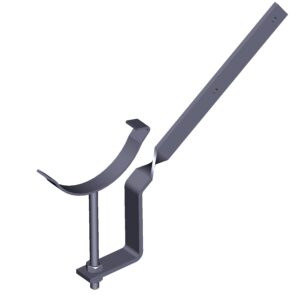
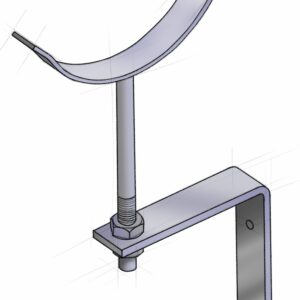
Our top fix rafter bracket for beaded half round cast iron gutter is a
British manufactured mild steel brackets for cast iron rainwater goods.
Supplied in silver zinc plated finish as standard ready for on site painting.
Sizes Available:
100mm (4″) cast iron beaded half round gutter
115mm (4.5″) cast iron beaded half round gutter
125mm (5″) cast iron beaded half round gutter
150mm (6″) cast iron beaded half round gutter
Top rafter bracket for cast iron half round beaded guttering: HB4041, HB4541, HB5041, HB6041, XHB4041, XHB4541, XHB5041, XHB6041
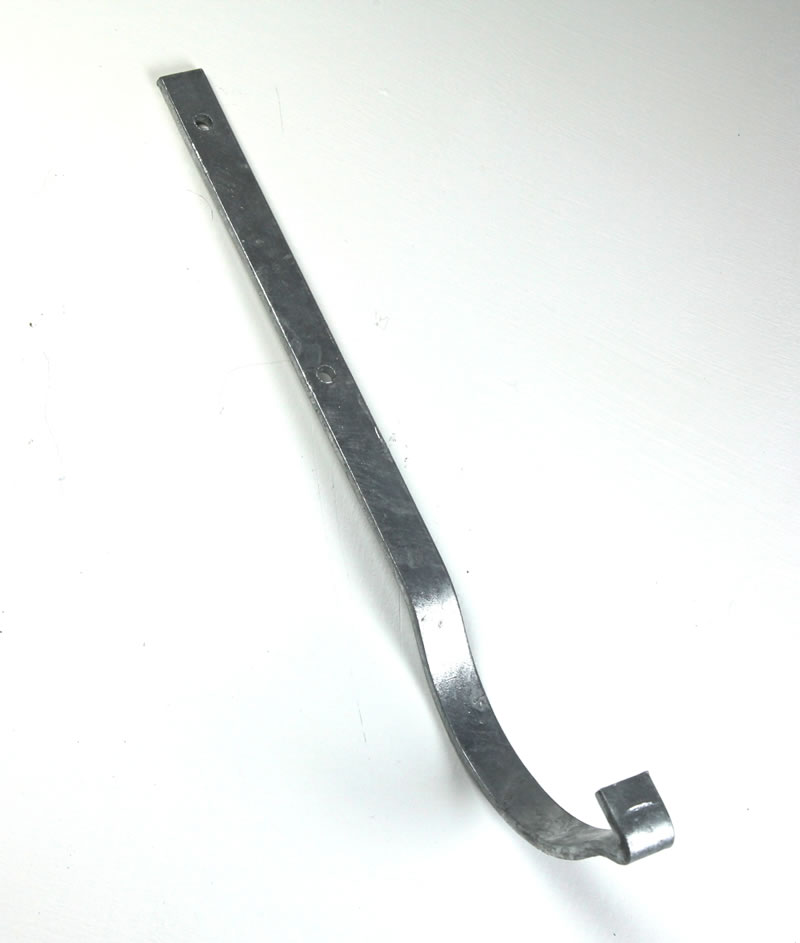
Our drive-in rise and fall bracket for deep half round cast iron gutter are suited to
most period property renovations. These brackets are a heavy steel bracket that is
zinc plated for a long life.
UK delivery from £30. Fittings are despatched boxed. See delivery rates.
Tuscan Foundry Products offer one of the UK’s widest ranges of metal brackets. As well as a large stock range we can also manufacture bespoke products to match your existing brackets if required.
Our range includes top fix, side fix, rise and fall, fascia, repair and drive brackets as well as pipe clips for cast iron rain and soil pipe. Brackets are available in a range of profiles including Half Round, Ogee (OG), Deep Half Round, Notts Ogee, Moulded (G46), Beaded and Box gutter profiles.
| Size/Finish | Primer 100mm, Primer 115mm, Primer 125mm, Primer 150mm, Black 100mm, Black 115mm, Black 125mm, Black 150mm |
|---|
Please call 0333 987 4452 or use the contact form with the size, quantity and connection details, and we'll provide a quotation.
Select your required size and finish options from the product page and add to cart for an instant price. For project quantities, bespoke requirements, or any specification queries, please call 0333 987 4452 or use the contact form at tuscanfoundry.com.
A hit and miss vent has a sliding plate on the reverse of the grille that can be moved to open or close the ventilation apertures. This allows airflow to be regulated without removing or replacing the grille. The vent can be fully open, partially open, or fully closed depending on ventilation requirements.
Yes. Cast iron rainwater goods are widely accepted by conservation officers and historic environment bodies as the appropriate material for listed buildings. Tuscan Foundry's hopper heads are manufactured in solid cast iron to BS 460 specification and are suitable for use on all listed building classes. A linseed oil paint finish is also available, which is particularly appropriate for conservation projects.
The Antique Black cast iron version is suitable for external use. The Polished Lacquered version is best suited to interiors or sheltered external locations where the polished finish will be protected from weathering. The Polished Brass version is suited to interior and semi-exposed locations. For external applications on exposed elevations, the Antique Black finish is the recommended specification.
The H526 measures 440mm wide x 240mm deep x 460mm high, making it well suited to Victorian and Edwardian townhouses.
Yes. Cast iron airbricks are frequently specified for listed buildings and conservation area properties precisely because they replicate the material and pattern of the original Victorian and Edwardian ventilation grilles. Local conservation officers and building control typically accept like-for-like cast iron replacements without objection. We can provide product specifications and material datasheets to support applications.
Please call 0333 987 4452 or use the contact form with the size, quantity and connection details, and we'll provide a quotation.
LCC soil pipe and fittings are available in 50mm, 65mm, 75mm, 90mm, 100mm and 150mm. Traditional Express is available in 50mm and 100mm. LCC pipe comes in 1829mm, 1219mm, 914mm and 610mm lengths, with eared and plain double socket lengths for cutting on site.
The Iron Works Patterned Hit & Miss Vents are available in two sizes: 225mm × 82mm (single-course, suitable for standard airbrick positions) and 225mm × 150mm (double-course format). Both sizes are available in all three finishes: Antique Black, Polished Lacquered, and Polished Brass.