Established 1893 | BS 460:2002 Certified | UK & International Supply | Expert Technical Support | 0333 987 4452
£46.13
| App_Timber | Yes |
| App_UPVC | Yes |
| Application | uPVC & Timber |
| Finish | Silver Grey |
| Finish Group | Silver |
| Length mm | 45mm |
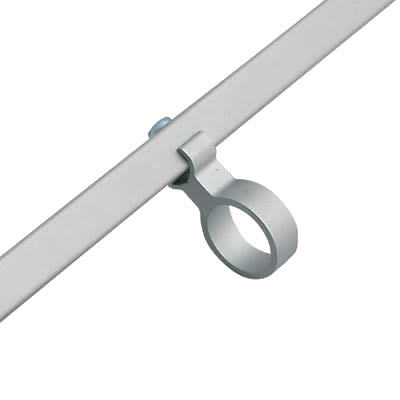
| Option | Centre Ring |
| Price | 0 |
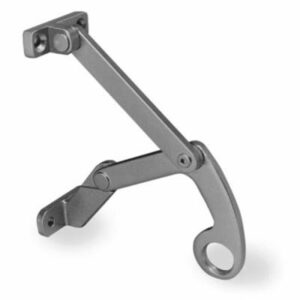
| Type | Quadilent Stays |
Prices are shown on each product page. For project quantities, conservation specifications, or to discuss suitability for a listed building, call 0333 987 4452 or use the contact form.
Our cast iron hopper heads are available in a standard primed and black-painted finish, ready for on-site topcoats. Heritage colour finishes and factory-applied linseed oil paint are available on request. Linseed oil paint is a vapour-permeable, period-appropriate finish particularly well suited to listed buildings and conservation area properties.
Yes. Cast iron airbricks are frequently specified for listed buildings and conservation area properties precisely because they replicate the material and pattern of the original Victorian and Edwardian ventilation grilles. Local conservation officers and building control typically accept like-for-like cast iron replacements without objection. We can provide product specifications and material datasheets to support applications.
Yes. All our mild steel brackets are supplied in either silver or black zinc plate. This coating protects the metal however, both will need painting prior to installation.
We have chosen to use zinc plating for two reasons; firstly that it is a more environmentally friendly than galvanising and secondly that it does not block up the threaded part of the rise and fall cups in the way that galvanising does.
Cast iron radiators cost no more to run than modern steel or aluminium radiators. Cast iron is a very efficient material at emitting heat, thus you have items like le creuset cast iron pans. Cast iron holds it’s heat extremly well, which means that the radiators stay warm for longer.
Yes. Polished brass ironmongery is historically appropriate for period buildings and is generally acceptable to conservation officers for listed building projects. If you require confirmation for your specific scheme, we are happy to advise — call 0333 987 4452.
The School Board Airbrick (F020801AFC) is available in three standard sizes: 225mm × 75mm, 225mm × 150mm, and 225mm × 225mm. These correspond to one-, two-, and three-brick-course heights and allow ventilation requirements to be met across a range of subfloor and wall opening sizes.
Our cast iron airbricks are available in a choice of finishes including primer and painted options. If you require a specific finish for a conservation project or to match existing ironwork, please call us on 0333 987 4452 to discuss.
The Cast Iron Louvre Airbrick suits Victorian and Edwardian terraced housing, semi-detached properties, public houses, agricultural buildings, and workshop structures where the original airbrick was a louvre-face grille. The horizontal fin profile is widely found in British domestic and light industrial construction from the 1870s through to the 1950s.
The Gothic foliate tracery design of the Ornamental Airbrick provides a good free-flow ventilation area relative to its face size. The open area is comparable to other standard cast iron airbrick patterns. The visual density of the pattern at a distance reads as solid ironwork, which suits formal and decorative elevations without compromising subfloor ventilation effectiveness.