BTU stand’s for British Thermal Units. This was the old (Imperial) measurement for heat in connection with plumbing. Although BTU’s is a term still commonly used within the heating and plumbing, the industry is now going over to KW’s Kilowatts.
Established 1893 | BS 460:2002 Certified | UK & International Supply | Expert Technical Support | 0333 987 4452
£25.85 – £29.15Price range: £25.85 through £29.15 +VAT
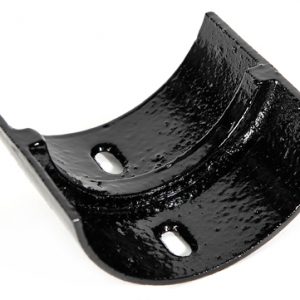
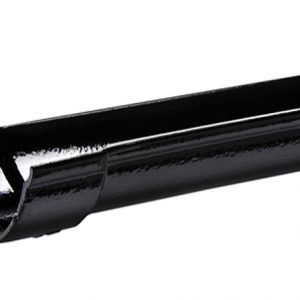
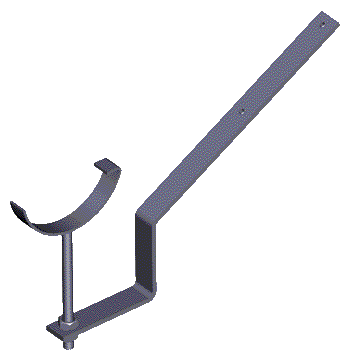
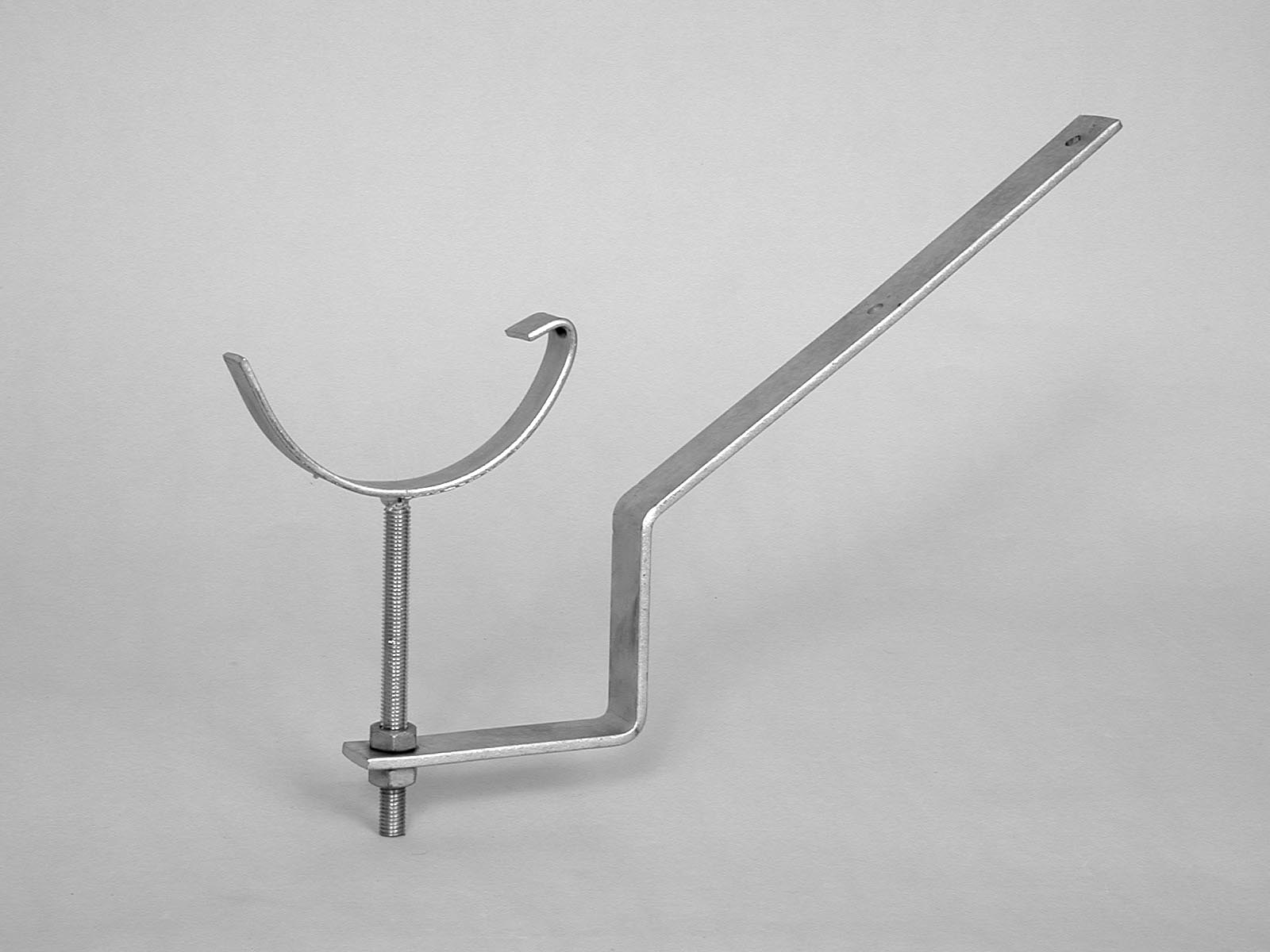
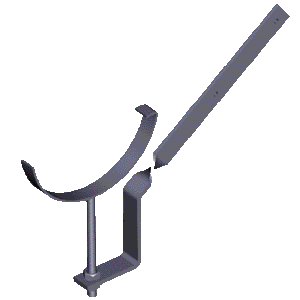
Top rafter rise and fall bracket for half round cast iron guttering. Our zinc plated
top rafter rise and fall gutter bracket is available in the following sizes:
100mm (4″)
115mm (4.5″)
125mm (5″)
150mm (6″)
The RB500 is a zinc-plated top rafter rise and fall bracket for plain half round cast iron guttering. Where a fixed bracket is not appropriate — on open eaves, cut roof constructions, or where the rafter provides the only available fixing point — the top rafter bracket provides a secure, adjustable support mounted directly to the top surface of the rafter.
The bracket features a zinc-plated steel rafter arm for top-surface fixing, combined with a threaded rise and fall cup that allows gutter fall to be set precisely at each bracket position. Available in four sizes to suit all standard cast iron half round gutter profiles: 100mm (4″), 115mm (4.5″), 125mm (5″), and 150mm (6″).
Suited to new construction with exposed rafters, heritage restoration projects where a continuous fascia board is absent, and any situation where top rafter fixing is structurally preferred. Commonly specified alongside cast iron half round gutter sections and angle fittings on period and listed building projects where precise fall control is critical to long-term performance.
The rise and fall mechanism eliminates the need to pack or shim the bracket, allowing accurate gradient setting across long gutter runs on uneven or complex roof lines. Zinc-plated finish provides corrosion resistance for outdoor use.
Compatibility: Cast iron half round gutter profiles 100mm, 115mm, 125mm, and 150mm. For technical queries or project specification support, call 0333 987 4452.
| Size | 100mm, 115mm, 125mm, 150mm |
|---|
BTU stand’s for British Thermal Units. This was the old (Imperial) measurement for heat in connection with plumbing. Although BTU’s is a term still commonly used within the heating and plumbing, the industry is now going over to KW’s Kilowatts.
The Cast Iron Louvre Airbrick suits Victorian and Edwardian terraced housing, semi-detached properties, public houses, agricultural buildings, and workshop structures where the original airbrick was a louvre-face grille. The horizontal fin profile is widely found in British domestic and light industrial construction from the 1870s through to the 1950s.
The Paxton H82 is a large-format hopper with decorative collar mouldings, making it particularly well suited to late Victorian and Edwardian buildings where the rainwater system forms part of the architectural composition. Typical applications include commercial heritage buildings, civic buildings, large detached houses, institutional premises, and warehouse conversions where a more substantial fitting is appropriate.
The School Board Airbrick suits Victorian and Edwardian institutional, civic, and residential buildings where the square-grid airbrick pattern was standard — including school buildings, civic halls, estate housing, terrace houses, and warehouses. It is also appropriate on listed buildings and conservation area properties as a like-for-like replacement for worn square-grid cast iron vents.
Yes. The Louvre Airbrick is dimensioned to standard brick course openings and is suitable for direct replacement of worn, broken, or missing original cast iron louvre grilles. If you are unsure of the size required, measure the opening in the brickwork rather than the existing damaged grille.
Yes. Cast iron rainwater goods are widely accepted by conservation officers and historic environment bodies as the appropriate material for listed buildings. Tuscan Foundry's hopper heads are manufactured in solid cast iron to BS 460 specification and are suitable for all listed building grades. A linseed oil paint finish is also available, which is particularly appropriate for conservation projects.
The Paxton H82 accepts round, square, and rectangular pipe connections. Round: 65mm, 75mm, and 100mm. Square: 75×75mm, 100×100mm, and 125×125mm. Rectangular: 100×75mm, 125×100mm, and 150×100mm. Bespoke adaptations including double pipe connections are also available on request. Please confirm your required connection type when ordering.
Yes. Polished brass ironmongery is historically appropriate for period buildings and is generally acceptable to conservation officers for listed building projects. If you require confirmation for your specific scheme, we are happy to advise — call 0333 987 4452.
The Brass Rooflight Pole Winder Opener 300mm is a screw-jack operated rooflight opener designed for manual control of timber-framed skylights and Lumen Rooflights. The 300mm fixed arm is suited to standard rooflight positions and is finished in polished brass.
Yes. Cast iron rainwater goods are widely accepted by conservation officers and historic environment bodies as the appropriate material for listed buildings. Tuscan Foundry's hopper heads are manufactured in solid cast iron to BS 460 specification and are suitable for all listed building classes. A linseed oil paint finish is also available, which is particularly appropriate for conservation projects.