Established 1893 | BS 460:2002 Certified | UK & International Supply | Expert Technical Support | 0333 987 4452

£154.47 +VAT
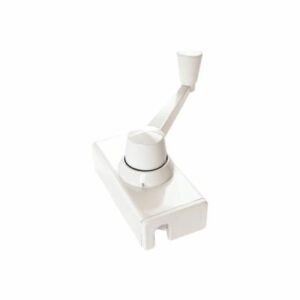
| App_Timber | Yes |
| Application | Timber |
| Finish | Bright Zinc Plated |
| Finish Group | Zinc Plated |
| Length mm | 305mm |
| Option | Fanlight Opener |
| Price | 0 |
| Throw mm | 262mm |
| Type | Cord Operated |
Please call 0333 987 4452 or use the contact form with the size, quantity and connection details, and we'll provide a quotation.
Yes. Cast iron is the material required by most conservation officers and listed building consents for the replacement or replication of traditional rainwater goods. Our hopper heads are produced in solid cast iron and we can assist with specification notes or material statements for planning purposes if required.
The Paxton H82 is a large-format hopper with decorative collar mouldings, making it particularly well suited to late Victorian and Edwardian buildings where the rainwater system forms part of the architectural composition. Typical applications include commercial heritage buildings, civic buildings, large detached houses, institutional premises, and warehouse conversions where a more substantial fitting is appropriate.
Our cast iron hopper heads are available with 65mm, 75mm and 100mm round outlets, 75mm, 100mm and 125mm square outlets, and 100x75mm, 125x100mm and 150x125mm rectangular outlets, to match the downpipe already on site or specified for the project.
Hopper heads are supplied in red oxide primer ready for on-site painting, or pre-finished in black. A full range of Heritage Colours in traditional linseed oil paint is also available on request — please contact us for the swatch chart.
A pole winder opener has a fixed-length arm, making it suited to standard rooflight positions with a consistent throw. A telescopic opener has an adjustable shaft, allowing it to accommodate varying rooflight positions and throw requirements. For guidance on which suits your project, call 0333 987 4452.
We do offer a range of Ogee patterned gutters in both straight and radius profiles. The straight profiles are much more common and as such cost less.
Our cast iron hopper heads are available in a standard primed and black-painted finish, ready for on-site topcoats. Heritage colour finishes and factory-applied linseed oil paint are available on request. Linseed oil paint is a vapour-permeable, period-appropriate finish particularly well suited to listed buildings and conservation area properties.
Bespoke and copy cast iron rainwater goods typically have a lead time of 8 to 10 weeks from order confirmation. This covers pattern-making, casting, finishing, and quality inspection. Standard stock items are available for prompt dispatch. We always recommend confirming lead times at enquiry stage so your project programme is not affected.
The H534 measures 430mm wide x 240mm deep x 366mm high, making it well suited to Victorian villas and townhouses.