It is possible for us to supply towel warmers with an electric heating element in them. The Electrad system is a unique system available to us, that enables independent heating of towel rails and radiators via the properties electrical system.
Established 1893 | BS 460:2002 Certified | UK & International Supply | Expert Technical Support | 0333 987 4452
£31.70 – £48.00Price range: £31.70 through £48.00 +VAT
A genuine cast iron rainwater pattern the G46 or No.46 is available in two profile sizes. The profile is a larger version of the more traditional ogee (OG) curved pattern and offers increased capacity.
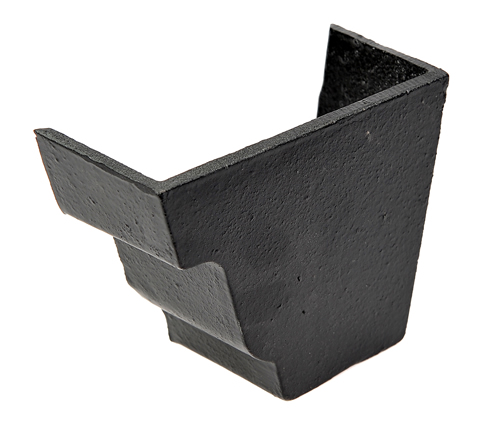
The cast iron G46 moulded gutter stop end closes the open end of a G46 gutter run. The full moulded section is maintained through the stop end, completing the run neatly at a gable end, chimney return, or other point of termination on the large Victorian and Edwardian properties where the G46 is the standard profile.
Manufactured in solid cast iron to BS 460:2002. Available in both G46 profile sizes: 125mm (5″) and 150mm (6″). Supplied in primed or factory black finish. The G46 stop end is not interchangeable with common ogee fittings — always specify the correct G46 stop end to ensure profile match.
Specified on listed buildings and heritage restoration projects where the G46 moulded pattern is the historically correct profile. Accepted by conservation officers as the appropriate fitting for period rainwater work on substantial Victorian, Edwardian, and later period buildings.
Compatibility: G46 moulded cast iron gutter 125mm and 150mm only. For specification support, call 0333 987 4452.
| Size/Finish | Primer 100mm x 75mm, Primer 125mm x 100mm, Black 100mm x 75mm, Black 125mm x 100mm |
|---|---|
| Socket | Internal, External |
It is possible for us to supply towel warmers with an electric heating element in them. The Electrad system is a unique system available to us, that enables independent heating of towel rails and radiators via the properties electrical system.
This opener is particularly well suited to period and heritage properties — Georgian and Victorian terraces, conservation area houses, traditional orangeries, and listed buildings where a brass finish is required to complement existing ironmongery. It is compatible with Lumen Rooflights and most timber-framed skylights.
Prices are shown on the product pages at tuscanfoundry.com. For project or volume enquiries, please call 0333 987 4452 or use the contact form on our website.
The School Board Airbrick suits Victorian and Edwardian institutional, civic, and residential buildings where the square-grid airbrick pattern was standard — including school buildings, civic halls, estate housing, terrace houses, and warehouses. It is also appropriate on listed buildings and conservation area properties as a like-for-like replacement for worn square-grid cast iron vents.
Yes. Cast iron ornamental vents in period patterns are frequently specified on listed buildings and conservation area properties as like-for-like replacements for original Victorian ironwork. Conservation officers generally accept cast iron in period patterns without objection. We can supply specifications to support planning and listed building consent applications.
The Gothic foliate tracery design of the Ornamental Airbrick provides a good free-flow ventilation area relative to its face size. The open area is comparable to other standard cast iron airbrick patterns. The visual density of the pattern at a distance reads as solid ironwork, which suits formal and decorative elevations without compromising subfloor ventilation effectiveness.
The H460 is well suited to Georgian, Regency, and Victorian buildings where a plain, undecorated rectangular hopper is the appropriate choice — particularly listed properties, conservation area buildings, and institutional or commercial buildings in historic town centres. Its clean, restrained form makes it equally appropriate on modern heritage-style construction where period accuracy is required without ornamental detail.
The Ornamental Airbrick is most appropriate on Victorian Gothic buildings — churches, chapels, vicarages, almshouses, collegiate buildings, and high-specification estate architecture — where decorative ironwork was part of the original design. It suits listed building replacements in kind and heritage new build where period accuracy in detailing is expected.
Prices are shown on each product page. For project quantities, specification advice, or a formal quotation, please call 0333 987 4452 or use the contact form.
The Cast Iron Louvre Airbrick suits Victorian and Edwardian terraced housing, semi-detached properties, public houses, agricultural buildings, and workshop structures where the original airbrick was a louvre-face grille. The horizontal fin profile is widely found in British domestic and light industrial construction from the 1870s through to the 1950s.