Established 1893 | BS 460:2002 Certified | UK & International Supply | Expert Technical Support | 0333 987 4452
£82.50 – £145.40Price range: £82.50 through £145.40 ex VAT (£99.00 – £174.48 inc VAT)
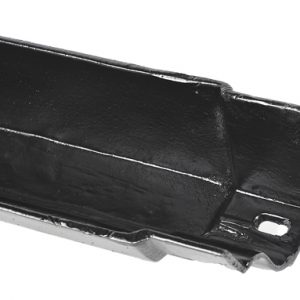
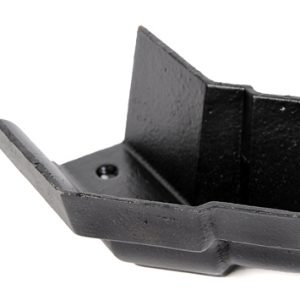
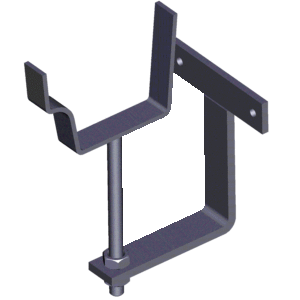
A genuine cast iron rainwater pattern the G46 or No.46 is available in two profile sizes. The profile is a larger version of the more traditional ogee (OG) curved pattern and offers increased capacity.
UK delivery from £30. Fittings are despatched boxed. See delivery rates.
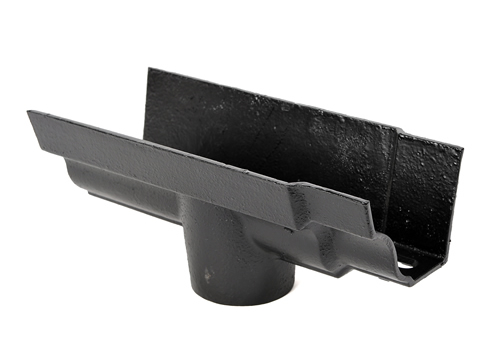
The cast iron G46 moulded gutter nozzle outlet connects the G46 gutter run to the downpipe, forming the transition between horizontal drainage and the vertical pipe drop. The full G46 moulded profile is maintained at the outlet, preserving the visual consistency of the installation on the large Victorian and Edwardian buildings where this pattern is commonly found.
Manufactured in solid cast iron to BS 460:2002. Available in both G46 profile sizes: 125mm (5″) and 150mm (6″). Supplied in primed or factory black finish. Connects to a standard round cast iron downpipe at the base. The G46 nozzle outlet is not interchangeable with common ogee fittings.
Specified on listed buildings and heritage restoration projects where the G46 moulded pattern is the historically correct profile. Accepted by conservation officers as the appropriate fitting for period rainwater work on substantial Victorian, Edwardian, and later period buildings.
Compatibility: G46 moulded cast iron gutter 125mm and 150mm only. For specification support, call 0333 987 4452.
| Size/Finish | Black 125mm x 100mm to 100mm x 75mm Rect Out, Black Painted 125mm x 100mm to 100mm Out, Black Painted 125mm x 100mm to 65mm Out, Black Painted 125mm x 100mm to 75mm Out, Primer 100mm x 75mm to 65mm Out, Primer 100mm x 75mm to 75mm Out, Primer 125mm x 100mm to 65mm Out, Primer 125mm x 100mm to 75mm Out, Primer 125mm x 100mm to 100mm x 75mm Rec Out, Primer 125mm x 100mm to 100mm Out, Black Painted 100 x 75mm to 65mm Out, Black Painted 100 x 75mm to 75mm Out |
|---|
Please call 0333 987 4452 or use the contact form with the size, quantity and connection details, and we'll provide a quotation.
Hopper heads are supplied in red oxide primer ready for on-site painting, or pre-finished in black. A full range of Heritage Colours in traditional linseed oil paint is also available on request — please contact us for the swatch chart.
Our cast iron hopper heads are available with 65mm, 75mm and 100mm round outlets, 75mm, 100mm and 125mm square outlets, and 100x75mm, 125x100mm and 150x125mm rectangular outlets, to match the downpipe already on site or specified for the project.
The H542A measures 240mm wide x 240mm deep x 290mm high, making it well suited to a compact square profile suited to smaller Georgian and Victorian properties, extensions and outbuildings.
Yes. The ornamental foliate pattern was widely used in Victorian construction and is appropriate for Grade II listed buildings and conservation area properties. Its decorative character is often preferable to a plain pattern on prominent or formal elevations. We recommend confirming the pattern with your conservation officer as part of any listed building consent application.
Hopper heads are supplied in red oxide primer ready for on-site painting, or pre-finished in black. A full range of Heritage Colours in traditional linseed oil paint is also available on request — please contact us for the swatch chart.
Prices are shown on the product pages at tuscanfoundry.com. For project or volume enquiries, please call 0333 987 4452 or use the contact form on our website.
Rooflight opener handles are available in polished brass, polished chrome, and satin chrome finishes. The polished brass version is the most popular choice for heritage and period interiors. For the full range, visit tuscanfoundry.com or call 0333 987 4452.
Prices are shown on each product page for both sizes and all three finishes. For project quantities, specification support, or conservation enquiries, call us on 0333 987 4452 or use the contact form on our website.
Yes — we strongly recommend painting all products before installation to ensure full coverage on every surface, which reduces long-term maintenance. Standard Premier Rainwater products are supplied in a grey metal primer with rust inhibitors and need two undercoats and one top coat (or one undercoat and two top coats) of a good quality exterior paint.