
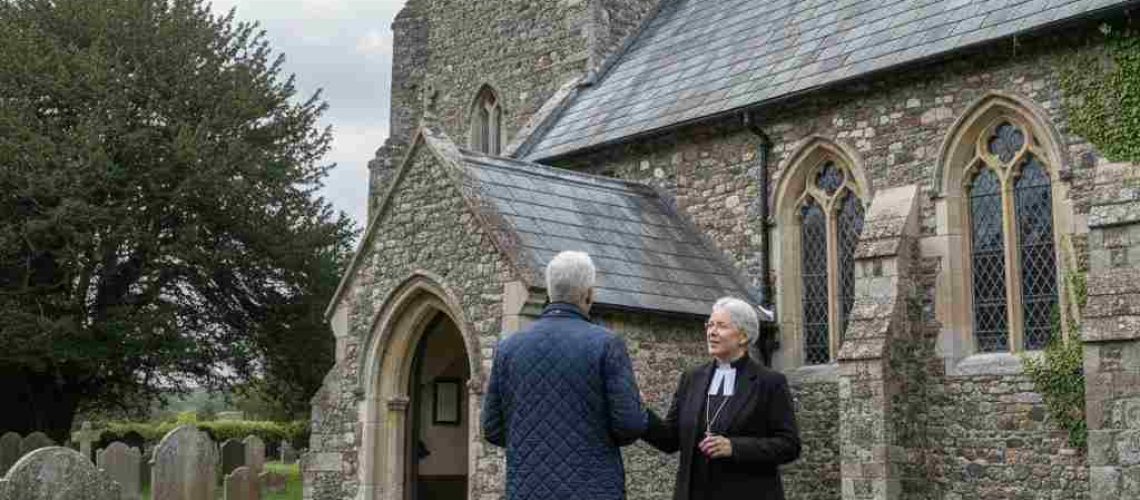
For more than a millennium, the stewardship of Britain’s churches has depended not only on faith and devotion but also on practical, informed care for buildings that embody national history, local identity, and spiritual life. Today’s churchwardens and building professionals stand at the crossroads of heritage conservation, legal responsibility, environmental change, and financial constraint. At Tuscan Foundry, we work alongside parishes, dioceses, architects, and surveyors to support this stewardship in a way that is both technically robust and deeply respectful of ecclesiastical tradition.
This article explores the modern role of the churchwarden and the wider professional team, with a particular focus on building care, surveying, and conservation. Drawing on our extensive experience working with historic churches across the UK, we examine how informed inspection, traditional materials, and long-term planning can safeguard sacred spaces for generations to come.
The office of churchwarden is one of the oldest lay roles in the Christian Church, yet it has never been more demanding than it is today. Churchwardens are officers of the bishop and, by virtue of their position on the Parochial Church Council, charity trustees with personal legal responsibilities. They are charged with maintaining order during worship, caring for the well-being of the clergy, and representing the laity. Increasingly, however, their most time-consuming and technically challenging duty is the care of the church building itself.
Most parish churches are listed structures, often constructed using materials and techniques no longer common in modern building practice. Stone, timber, lime mortar, lead, and cast iron all behave very differently from contemporary materials. Churchwardens must therefore act as informed clients, capable of commissioning appropriate surveys, interpreting professional reports, and ensuring that repairs are carried out sympathetically. This is where experienced heritage specialists, such as Tuscan Foundry, become essential partners rather than simple suppliers.
Effective stewardship begins with understanding. Too many costly church repairs arise not from neglect, but from a lack of clear information about how a building is performing. Water ingress, thermal inefficiency, and structural movement are often symptoms of underlying issues that only become visible when damage is advanced.
The Quinquennial Inspection (QI) is the cornerstone of church building care. Conducted every five years by an appropriately accredited professional, it provides a comprehensive assessment of the fabric, from roof coverings and rainwater goods to masonry, windows, floors, and services. However, a QI should be seen as the beginning of a conversation rather than a static document.
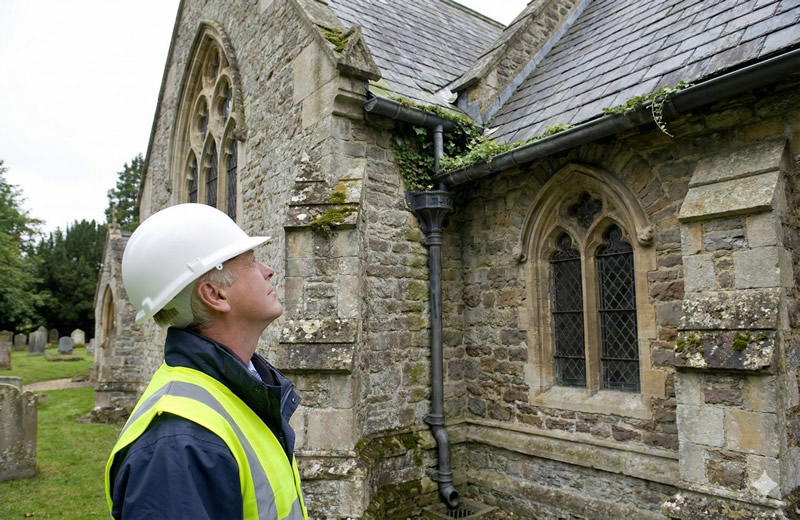
At Tuscan Foundry, we regularly work alongside inspecting architects and surveyors to interpret QI findings and translate them into practical, phased solutions. Our experience shows that parishes benefit most when survey data is combined with product-specific knowledge. For example, understanding how failing rainwater goods accelerate stone decay enables targeted intervention with durable, heritage-appropriate cast-iron systems rather than repeated short-term fixes.
Any significant work to a church building requires permission under the Faculty Jurisdiction system. This process exists to protect the historic and liturgical significance of churches, but it can feel daunting to volunteers without technical backgrounds. Clear evidence and professional justification are therefore critical.
Our role often includes supporting Faculty applications by providing detailed specifications, technical drawings, and heritage statements for elements such as rainwater goods, rooflights, and heating components. Because our products are designed specifically for historic environments, they are regularly accepted by Diocesan Advisory Committees as appropriate solutions.
More importantly, we help churchwardens understand the long-term implications of their choices. A cheaper, short-life alternative may appear attractive when funds are limited, but repeated replacement cycles can ultimately undermine both fabric and finances. Faculty submissions that demonstrate durability, minimal intervention, and compatibility with historic materials are far more likely to gain approval and deliver lasting value.
The First Line of Defence
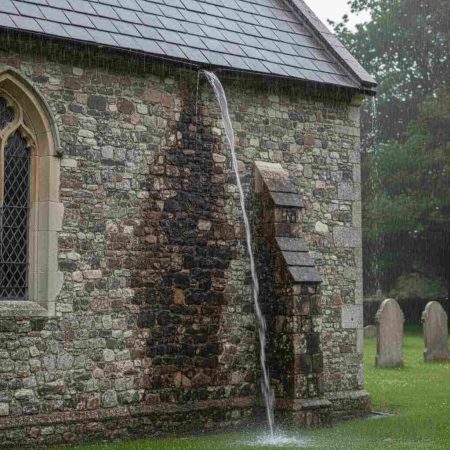
Water is the greatest threat to church buildings. Blocked gutters, undersized downpipes, and failing outlets can cause serious damage to masonry, interiors, and foundations.
Proper rainwater management is therefore essential to long-term conservation.
Common Problems
Blocked or poorly maintained gutters
Undersized or damaged downpipes
Poorly positioned or failing outlets
Raised ground levels affecting drainage
Later alterations disrupting original water flow
Why Cast Iron?
Service life exceeding 100 years
Strong and impact resistant
Stable in changing temperatures
Visually appropriate for historic settings
Repairable in sections without full replacement
Tuscan Foundry surveys, specifies, and supplies cast iron rainwater systems for ecclesiastical buildings. Each project begins with a site assessment to review layouts, outlet positions, and discharge points. Where past alterations have caused damp or drainage failure, we help restore effective water management while respecting the building’s character.
Well-designed rainwater systems do more than manage water — they protect the fabric of the building for generations.
Churchwardens are increasingly asked to balance heritage conservation with environmental responsibility. The Church of England’s commitment to net-zero carbon emissions by 2030 places significant pressure on historic buildings that were never designed to meet modern expectations of thermal comfort.
At Tuscan Foundry, we support this transition by advising on heating solutions that work with, rather than against, historic fabric. Cast iron radiators, for example, are particularly well suited to churches. Their high thermal mass allows them to deliver steady, radiant heat at lower flow temperatures, making them compatible with modern heat sources while reducing thermal shock to historic materials.
We frequently collaborate with surveyors and mechanical engineers to assess existing heating performance and explore incremental improvements. These may include zoning, improved controls, or selective upgrades rather than wholesale replacement. Such an approach not only supports Faculty approval but also aligns with limited parish budgets.
Successful church projects depend on collaboration. Architects, surveyors, contractors, diocesan officers, and manufacturers all play distinct roles. Our experience shows that outcomes are strongest when these relationships are established early.
Tuscan Foundry is often consulted during the survey and specification stages, not simply at procurement. This allows us to advise on feasibility, detailing, and lifecycle costs before decisions are fixed. For churchwardens, this integrated approach reduces risk and builds confidence that proposals are both appropriate and achievable.
We also provide ongoing technical support once projects are complete, advising on maintenance regimes and inspection intervals. This continuity is particularly valuable in parishes where churchwardens change regularly, but buildings endure.
Caring for a church is rarely about dramatic transformation. More often, it is about steady, informed decisions repeated over many years. Regular inspections, prompt minor repairs, and the use of compatible materials collectively make the difference between buildings that struggle and those that thrive.
At Tuscan Foundry, we see ourselves as part of this long-term stewardship. Our surveying support, heritage-focused manufacturing, and technical guidance are all aimed at helping churchwardens and professionals make confident, responsible choices. By combining traditional craftsmanship with modern understanding, we help ensure that sacred spaces remain safe, functional, and inspiring well into the future.

What is the most important maintenance task for a church building?
Keeping rainwater goods clear and functional is critical. Water ingress causes more damage than almost any other factor.
How often should additional surveys be carried out?
In addition to the Quinquennial Inspection, targeted surveys should be conducted whenever recurring issues, such as damp or corrosion, persist.
Why is cast iron still recommended for historic churches?
Cast iron is durable, repairable, visually appropriate, and compatible with traditional building materials.
Can heritage buildings realistically achieve Net Zero targets?
Yes, but usually through incremental improvements rather than radical alteration. Fabric-first and system optimisation approaches are key.
How can churchwardens strengthen Faculty applications?
By providing clear technical justification, heritage statements, and evidence of long-term benefit.
What support can manufacturers like Tuscan Foundry provide beyond supplying products?
We assist with surveying input, specifications, drawings, Faculty support, and long-term maintenance advice.
Why take a long-term approach when budgets are tight?
Because well-considered, durable solutions almost always cost less over the life of the building than repeated short-term repairs.