
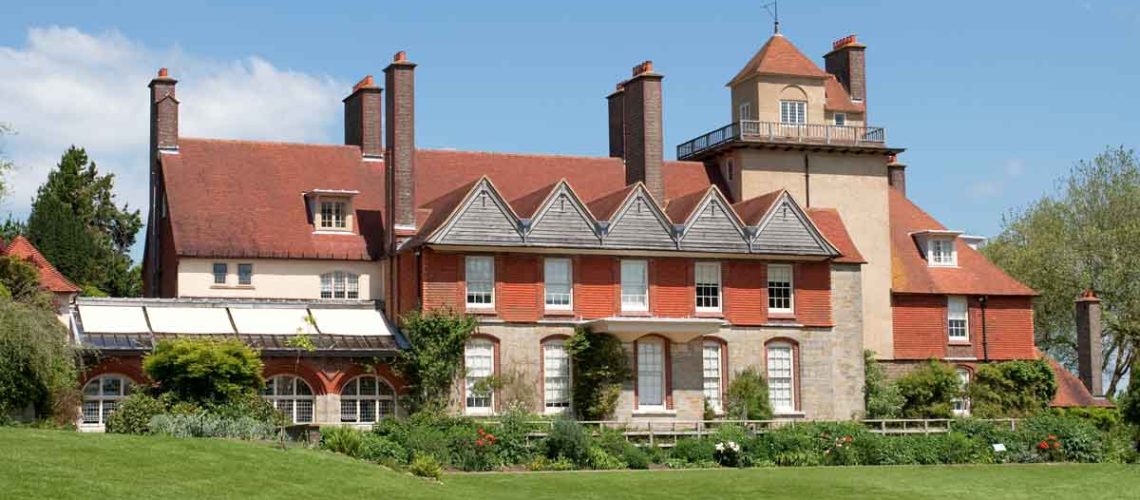
The Arts and Crafts Movement (c. 1880–1920) developed as a response to the rapid industrialisation and mass production of the late nineteenth century. Designers and architects began to push back against the uniform, heavily decorated styles of the Victorian era, instead favouring traditional craftsmanship, natural materials and honest building techniques. While cast iron was used far more sparingly than before, it did not disappear altogether. It remained an important material for functional elements such as rainwater goods, door furniture and subtle decorative details, where its durability and character supported the movement’s emphasis on quality, authenticity and well-made design.
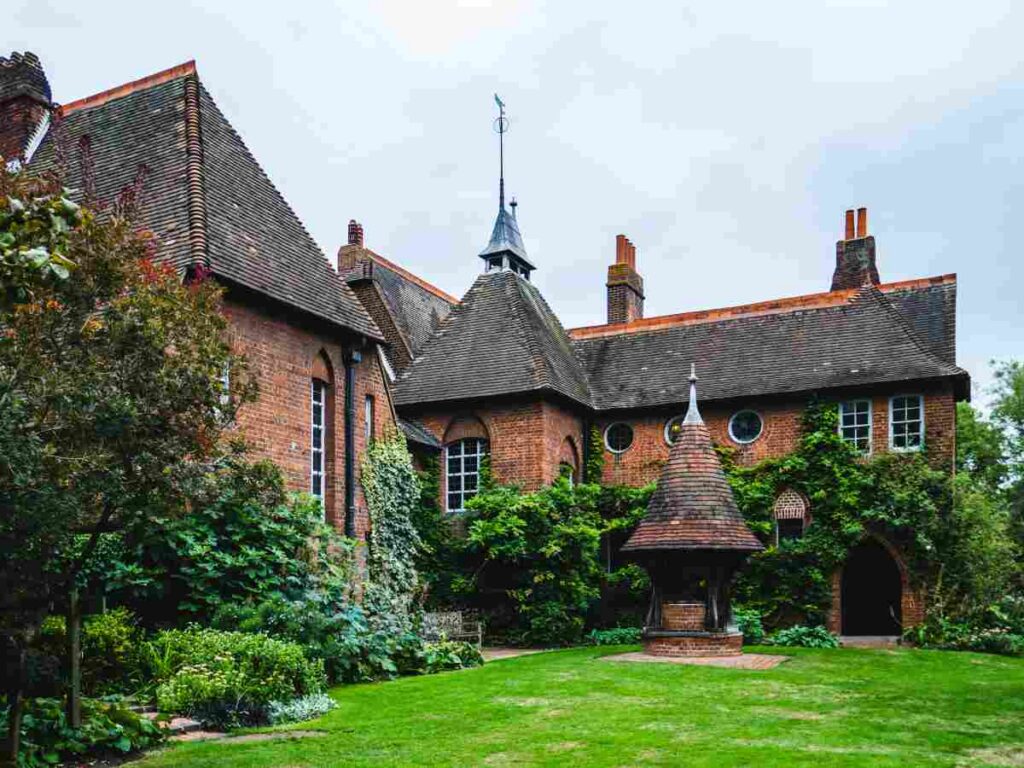
Figure 1. Red House is a striking example of Arts and Crafts Architecture – its steep rooflines, irregular, asymmetrical form, use of a L-plan and local clay roof tiles and bricks are iconic of the movement. Photo by Polsq1 (2019).
Like Gothic Revival architecture, Arts and Crafts referenced the ‘golden’ Middle Ages in its structural forms and detailed features. However, it also engaged deeply in the revival of traditional crafts, rejecting the technological innovations that defined much of Victorian architecture. The Arts and Crafts style celebrated the use of local, natural materials, challenging the rapid growth of industry and mass production. Materials such as stone, timber, brick, and handmade tiles were favoured over Victorian mass-produced materials like glass, steel, and iron, with traditional building techniques used to champion craftsmanship. Arts and Crafts buildings were often asymmetrical and informal in their composition, rejecting the classical symmetry of the Victorian period and instead taking inspiration from local vernacular styles. The L-shaped plan, along with sweeping rooflines, deep eaves, and prominent chimneys, became some of the most recognisable features of the movement. Windows were typically casement in form, often with leaded lights, and frequently incorporated bay or oriel windows to add depth and variation. Craftsmanship was clearly visible and actively celebrated, even in the finest details of joinery, artisanal plasterwork, and hand-carved timber. Excessive Victorian ornamentation was firmly rejected, with emphasis instead placed on ‘truth to materials’, allowing the natural qualities of each material to remain honest and expressive.
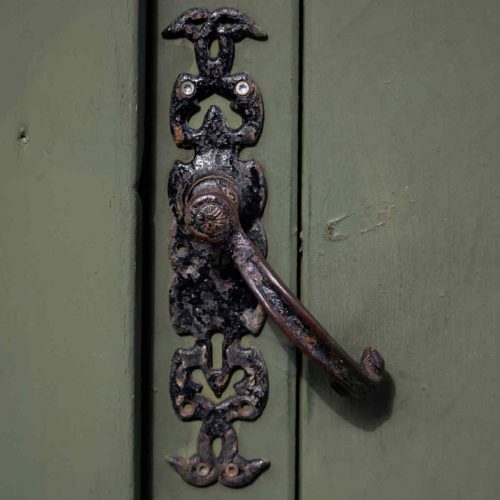
Figure 2. An example of the use of cast metalwork in Arts and Craft design – a decorative dark cast metal door handle subtly matched with the natural tones of a green wooden door. Photo by dba87 (2025).
The rejection of industrial techniques and the renewed emphasis on craftsmanship meant ironwork played an important role within the Arts and Crafts movement. Hand-forged wrought iron was particularly valued for its strength, functionality, and subtle decorative quality, and was commonly used for brackets, hinges, latches, door knockers, and window fittings. Rather than being purely ornamental, ironwork was carefully integrated to balance form and function. Alongside iron, metals such as copper and brass were also embraced for architectural features, including gates, railings, hinges, and weathervanes, as well as for domestic items like fireplace tools and utensils.
Simplicity of form remained a priority; decoration was typically understated and often informed by natural motifs, reflecting the organic influence of local craftsmanship and acting as a precursor to Art Nouveau. The quality of ironwork was judged not by its elaboration, but by the skill of the maker and the integrity of the materials used. As a result, functional elements such as rainwater systems were often cast in iron with plain, honest profiles, designed to complement the building rather than draw attention away from its overall craftsmanship.
During a movement that strongly criticised industrial materials, cast iron became a considered exception when used honestly and appropriately for its practical qualities. It was primarily employed where strength and longevity were essential, particularly in external elements exposed to unpredictable elements. Gutters, downpipes, hoppers, and structural brackets were made of cast iron in a functional way, with designs deliberately kept modest through straightforward profiles and minimal ornamentation. Rather than drawing attention, these elements were intended to work quietly in support of the building as a whole. Cast iron offered durability and ease of maintenance, aligning with the movement’s emphasis on quality, longevity, and honest construction. When used with care and restraint, high-quality cast iron was seen as compatible with the broader Arts and Crafts ethos, despite the wider rejection of industrial materials.
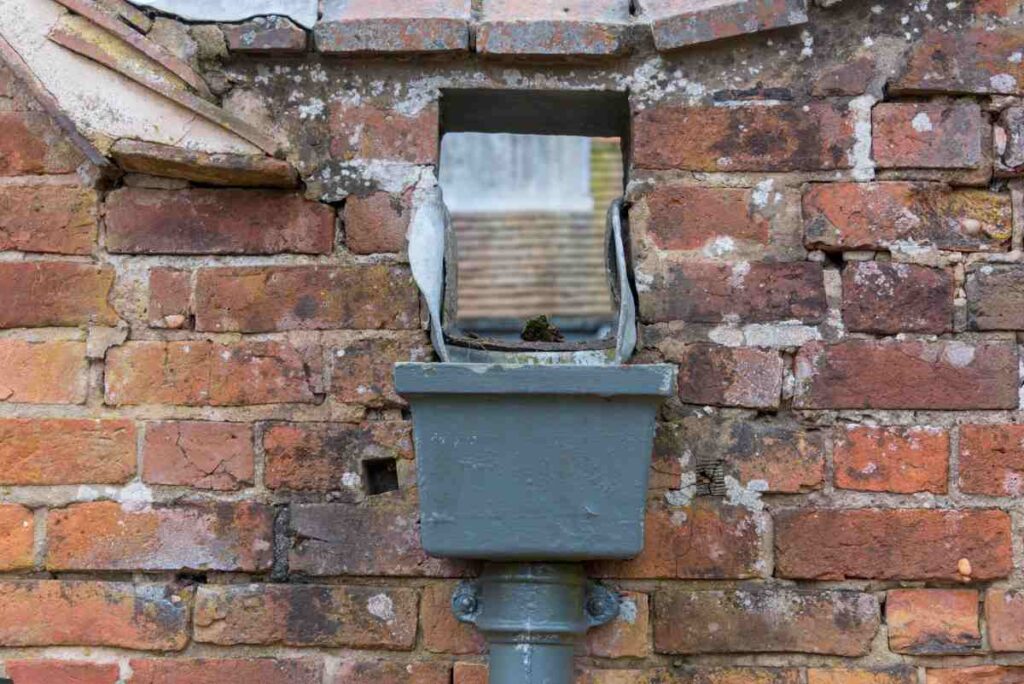
Figure 3. A modest cast iron hopper head, complementing the surrounding brickwork. Photo by Paul Rushton (2018).
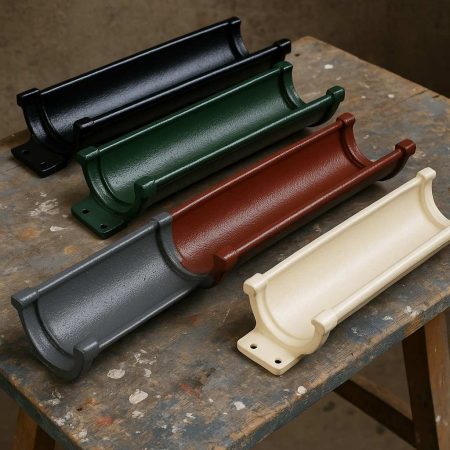
As a product of industry, iron needed to sit comfortably alongside natural materials in order to be accepted within the Arts and Crafts movement. It was therefore typically finished in dark, muted colours such as black, oxide red, or deep green, allowing ironwork to blend quietly with stone, brick, and timber rather than stand apart from them.
This approach continues to influence conservation practices today. Cast iron remains the preferred material for the restoration of Arts and Crafts buildings, as it preserves the authenticity of original designs while offering the durability expected of traditional rainwater goods. Specialist suppliers, such as Tuscan Foundry, play an important role in this process, helping to replicate historic profiles and retain the movement’s characteristic restraint and understated detailing.
Arts and Crafts architecture represented a conscious return to craftsmanship, simplicity, and honesty in design, challenging the excesses of industrialisation and mass production. By valuing local materials, traditional techniques, and visible workmanship, the movement created buildings that felt both purposeful and deeply connected to their surroundings. Every element was considered, with quality and integrity placed firmly above ornament or display.
Within this context, cast iron—used carefully and with restraint—played a vital supporting role. Though industrial in origin, it provided the strength, durability, and reliability required for essential building elements, while its modest forms and finishes allowed it to sit comfortably alongside handcrafted materials. When used honestly and appropriately, cast iron complemented rather than contradicted the Arts and Crafts ethos, helping to preserve the balance between function and craftsmanship that continues to define the movement today.

At Tuscan Foundry, we’re proud to play a role in preserving the legacy of Arts and Crafts architecture through our specialist cast iron products. Our commitment to authentic craftsmanship, traditional profiles, and high-quality materials makes us a trusted supplier for restoration and conservation projects across the UK. From bespoke rainwater goods to finely detailed architectural ironwork, we help maintain the original character and integrity of these historic buildings. Just as the Arts and Crafts movement celebrated honest materials and skilled making, our work continues to support these timeless principles—combining heritage with durability.
1. Why was cast iron still used in Arts and Crafts architecture despite its industrial origins?
While the movement largely rejected industrial mass production, cast iron was appreciated for its durability and functional value. When used honestly, without excessive ornamentation, it aligned with the ethos of craftsmanship and longevity.
2. What types of architectural features used cast iron in Arts and Crafts buildings?
Common features included rainwater goods (gutters, downpipes, hopper heads), brackets, hinges, and other practical fittings. These were designed with simplicity and integrity to blend seamlessly with traditional materials.
3. What finishes were typically applied to cast iron in Arts and Crafts buildings?
Cast iron was usually painted in muted tones such as black, deep green, or oxide red to harmonise with natural materials like brick, stone, and timber, avoiding contrast or decorative emphasis.
4. How does Tuscan Foundry support Arts and Crafts restoration projects today?
Tuscan Foundry manufactures and supplies traditional cast iron products based on historic designs, helping architects, conservationists, and homeowners maintain the authenticity and structural integrity of Arts and Crafts properties.
5. Can modern cast iron replicate the quality of historical products?
Yes, with skilled manufacturing and high-grade materials, modern cast iron can match or even exceed the quality of historical pieces, especially when made to traditional profiles like those offered by Tuscan Foundry.
6. What makes Arts and Crafts architecture unique?
It focuses on traditional craftsmanship, natural materials, asymmetrical forms, and visible handiwork, often inspired by local vernacular styles and a philosophy of ‘truth to materials’.
7. Is cast iron suitable for new builds in the Arts and Crafts style?
Absolutely. Cast iron remains a durable, sustainable choice for new builds or extensions in the Arts and Crafts tradition, offering timeless appeal and functionality when designed with sensitivity.